
Intermodal Routing
Utilize TLI’s network of intermodal carriers to move freight cost effectively. Start bringing sustainability to your program.
Start OptimizingIntermodal Freight Services
TLI partners with reliable and cost-effective rail shipping carriers. Rail freight shipping combines the flexibility of trucking with the efficiency of rail to move your goods across the country. Our team of logistics experts will help you choose the best intermodal transportation option to meet your specific needs. And we make it easy on the pickup & delivery side.
How TLI can evaluate your intermodal opportunities
- Review your shipping history
Identify recurring truckload lanes, shipment frequency, weights, origins, destinations, and required delivery dates.
- Screen lanes for intermodal suitability
Evaluate distance, rail service availability, drayage requirements, freight characteristics, and delivery flexibility.
- Compare total transportation costs
Compare available intermodal options with current truckload costs, including pickup, rail, delivery, fuel, and applicable accessorial charges.
- Identify the right lanes to test
Prioritize lanes where the potential economic benefit justifies the service and operational considerations.
- Measure results after implementation
Compare actual freight cost, on-time performance, transit time, and exceptions against the original baseline before expanding the program.
What is Intermodal Shipping?
Intermodal Freight shipping is defined as utilizing two modes of transportation to move freight. While this is the definition, in most cases the definition refers to the utilization of truck and rail for the shipping. This type of carrier loads the shipping container onto a freight train for cost-effective freight routing.
Benefits of Intermodal Freight Services
There are several benefits including being cost effective and sustainable. Freight shippers typically find savings through this mode, while also lowering their carbon footprint compared to over-the-road trucking.
When Should a Shipper Utilize Rail
Shipping via rail extends transit time due to rail schedules, picking up the container, and other factors of the rail. If a shipper has the flexibility for a shipment delivery, then intermodal is a great option.
Equipment Used in Intermodal
Intermodal uses a container and truck with a chassis to move freight. The shipper loads freight into a container provided by the carrier, either live or as a drop. The carrier then takes the container off the chassis to move via the rail. At destination, the carrier places the container on another chassis to deliver.
Start Making Shipping Easy.
Get in touch with an expert to discuss your challenges and start managing freight effectively.
Partnering with an Expert: TLI
50+
Industries
1994
Founder Led
85M+
2025 total Miles
535M+
2025 total Pounds
Which freight lanes are good candidates for intermodal?
Intermodal is worth evaluating when a shipper has recurring full-truckload freight, longer-distance routes, and enough scheduling flexibility to accommodate rail transit and terminal operations. However, distance alone does not determine whether intermodal will be cost-effective.
A useful initial review considers five factors:
- Lane consistency: Do you ship regularly between the same origins and destinations?
- Transit flexibility: Can your operation accommodate a potentially longer or more variable transit time than direct truckload?
- Shipment characteristics: Can your freight fit within the available container’s weight, dimensions, and loading requirements?
- Rail and drayage access: Are suitable rail services and origin and destination drayage available?
- Total delivered cost: Does the complete intermodal rate offer an advantage after accounting for every transportation segment and related expense?
A lane does not need to meet a universal mileage threshold to deserve consideration. The economics depend on the specific origin, destination, service, and shipment profile.
How shippers compare intermodal and truckload freight costs
Comparing a truckload rate with a rail linehaul rate alone can produce a misleading result. A meaningful comparison evaluates the full door-to-door cost of each transportation option.
| Cost component | Truckload | Intermodal |
|---|---|---|
| Origin pickup | Include | Include |
| Long-haul transportation | Truckload rate | Rail and applicable charges |
| Origin and destination drayage | Generally not separate rail drayage | Include both where applicable |
| Fuel and accessorial charges | Include | Include |
| Equipment, storage, or detention exposure | Evaluate | Evaluate |
| Inventory and service implications | Evaluate | Evaluate |
The lowest quoted freight rate is not necessarily the lowest total cost. Shippers should also consider transit time, delivery reliability, inventory carrying costs, and the operational consequences of a delay. In addition, intermodal transportation can reduce freight-related emissions on suitable routes by shifting part of a shipment’s journey from truck to rail. The actual reduction depends on the route, distance, equipment utilization, drayage requirements, and the methodology used to calculate emissions. Companies evaluating intermodal for sustainability purposes should compare emissions across the complete door-to-door movement, including pickup, rail transportation, and final delivery. They should also document the calculation method and assumptions so results can be compared consistently across transportation options.
Is your freight ready for intermodal?
Use this checklist to identify lanes worth reviewing. It is a screening tool, not a guarantee of savings or service eligibility.
- We ship recurring full truckloads on established lanes.
- Our delivery schedules allow some transit-time flexibility.
- Our freight fits available intermodal equipment and weight limits.
- Origin and destination drayage services are available.
- We can provide historical shipment data and current freight rates.
- We can measure service performance as well as transportation cost.
Switching from truckload to intermodal requires more than comparing rates. Shippers should evaluate the operational differences between direct truck transportation and a move involving rail terminals, drayage providers, and rail schedules. Intermodal works best when its cost advantages align with the shipper’s service requirements. TLI helps customers evaluate these trade-offs before selecting a transportation option.
intermodal shipping
Freight Solutions

Multi-Modal Shipping
TLI routes freight effectively across all modes of transportation. Compare rates across LTL, Truckload, Rail, and much more.
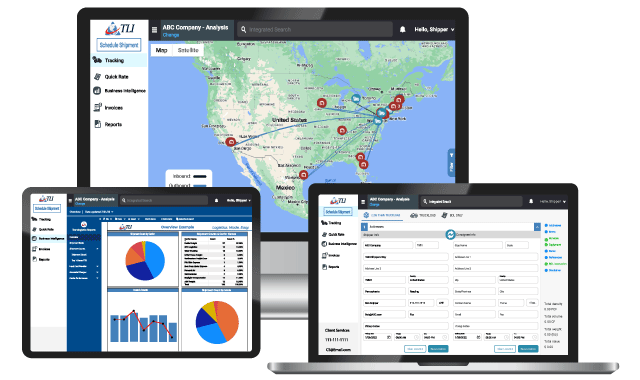
ViewPoint TMS
Developed with the shipper in mind. Our software allows you to host contracts, commodities, and documents. All at a click.

Expert Assistance
Rest assured you’ll have expert advice when routing freight. Our TLI experts are ready to listen and help guide shippers to success.
FAQ:
Intermodal shipping moves freight using two or more modes of transportation, typically truck and rail, while keeping the freight in the same container during the transfer between modes. A truck picks up the shipment and delivers it to a rail terminal, the train carries it over the long-haul portion of the route, and a truck completes delivery at the destination.
For shippers, intermodal combines the flexibility of truck pickup and delivery with the potential cost and fuel-efficiency advantages of rail. TLI coordinates intermodal transportation to help businesses evaluate routing options based on freight cost, transit time, and service requirements.
Intermodal shipping is worth evaluating when a company regularly moves full truckloads over longer distances and has enough flexibility in its delivery schedule to accommodate rail transit times and schedules.
Truckload shipping is often the better choice when freight is time-sensitive, delivery windows are tight, or direct service is essential. The right decision depends on the origin, destination, shipment characteristics, available capacity, total transportation cost, and required delivery date. TLI helps shippers compare intermodal and over-the-road truckload options to identify where changing transportation modes may improve freight economics without compromising operational requirements.
Intermodal shipping can reduce transportation costs compared with over-the-road truckload on suitable lanes, particularly for longer-distance shipments. However, savings vary by route, fuel prices, rail availability, drayage costs, equipment availability, and market conditions. Intermodal is not automatically less expensive for every shipment.
To evaluate potential savings, compare the total door-to-door cost of each option, including pickup, rail transportation, destination drayage, fuel surcharges, accessorial charges, and any additional inventory or service costs associated with transit time. TLI can evaluate a shipper’s freight lanes and compare available transportation options to identify opportunities for cost reduction.
Intermodal shipping often has longer transit times than direct over-the-road truckload because it involves rail schedules, terminal handling, and drayage at the origin and destination. Actual transit times depend on the lane, service availability, terminal operations, and potential disruptions.
Intermodal can be a good fit when a shipment has a flexible delivery window and transportation cost is an important consideration. When freight must arrive by a specific date or requires expedited service, truckload or another direct transportation option may be more appropriate. Shippers should compare estimated door-to-door transit times, not just the time spent moving by rail, before selecting a mode.
Intermodal is commonly used for standard, dry freight that can move in a compatible intermodal container and does not require the speed of direct truckload service. It can be particularly useful for recurring full-truckload shipments on longer-distance lanes.
Suitability depends on freight dimensions, weight, packaging, loading requirements, equipment availability, route, and any special handling or temperature-control needs. Not every commodity or shipment is eligible for every intermodal service. TLI helps shippers evaluate their freight characteristics and lane requirements before determining whether intermodal is a practical alternative to truckload.
Door-to-door intermodal transportation typically combines truck transportation at the origin, rail transportation for the long-haul segment, and truck transportation for final delivery. The trucking portions are commonly called drayage.
Drayage coordination is important because pickup appointments, terminal schedules, equipment availability, and delivery windows all affect the shipment’s overall execution. TLI coordinates the intermodal transportation process, including drayage at both ends, helping shippers manage the movement without independently arranging each transportation segment. This supply chain strategy makes shipping intermodal easy when shippers partner with TLI.
Intermodal shipping typically moves freight in the same container across multiple transportation modes, such as truck and rail, without transferring the freight itself between containers at each mode change.
Multimodal shipping is a broader term for using multiple modes of transportation within a shipment or transportation program. Depending on the arrangement, it may involve different equipment, providers, or handling processes.
TLI offers intermodal as part of a broader multimodal freight program, allowing shippers to evaluate rail, truckload, LTL, parcel, and other transportation options through one managed transportation relationship.
Intermodal shipping can reduce transportation-related greenhouse gas emissions per ton-mile compared with all-road truck transportation, particularly on suitable long-distance routes, because rail can move large volumes of freight efficiently. The actual environmental impact depends on the route, train and truck utilization, fuel sources, drayage distances, and other operating factors. Intermodal is not guaranteed to produce the same emissions reduction on every shipment, however it generally is more environmentally friendly than standard OTR truckload.
TLI can help you review your shipping history, compare available transportation options, and identify lanes where intermodal may offer a practical alternative to over-the-road truckload. The best way to determine whether a lane qualifies for intermodal is to evaluate the origin and destination, shipment frequency, freight weight and dimensions, equipment requirements, expected transit time, and available rail and drayage services.
Recurring full-truckload lanes with flexible delivery schedules are often good candidates for an initial review. However, lane length alone does not determine whether intermodal will be cost-effective or operationally suitable.
To obtain an accurate intermodal freight quote, provide the shipment’s origin and destination ZIP codes, pickup and delivery requirements, commodity, total weight, dimensions, and equipment requirements. Shipment frequency and estimated monthly or annual volume are also helpful when evaluating recurring lanes.
For ongoing freight programs, historical shipment data can help identify suitable lanes, compare intermodal with truckload pricing, and evaluate potential savings across a larger transportation network.
TLI uses shipment requirements and lane-level information to help shippers evaluate available transportation options and determine whether intermodal fits their freight program.