
We Help You Choose the Right Freight Class, Every Shipment
Calculate your freight’s density in pounds per cubic foot (PCF) with this easy-to-use density calculator. Your PCF helps determine the appropriate freight class for density-based LTL shipments, helping you class shipments accurately and avoid unnecessary reclassification charges. Enter your shipment details and our system instantly calculates density to find the right freight class, helping you avoid reclasses and unexpected charges. Accurate freight density calculations can help shippers avoid unexpected LTL reclassification fees and additional charges.
TLI helps shippers review shipment dimensions, weight, packaging, and freight class before tendering freight to help ensure shipments are classified correctly. Our team can also identify potential classification issues and work with carriers to reduce avoidable reclassifications and billing adjustments.
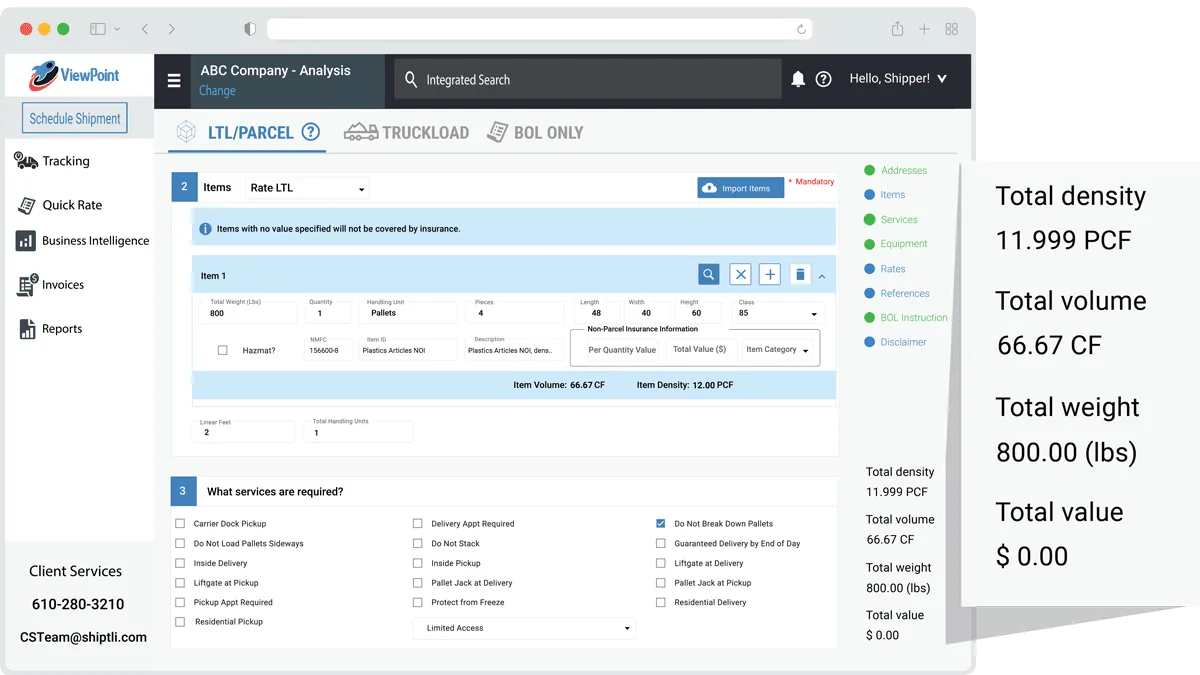
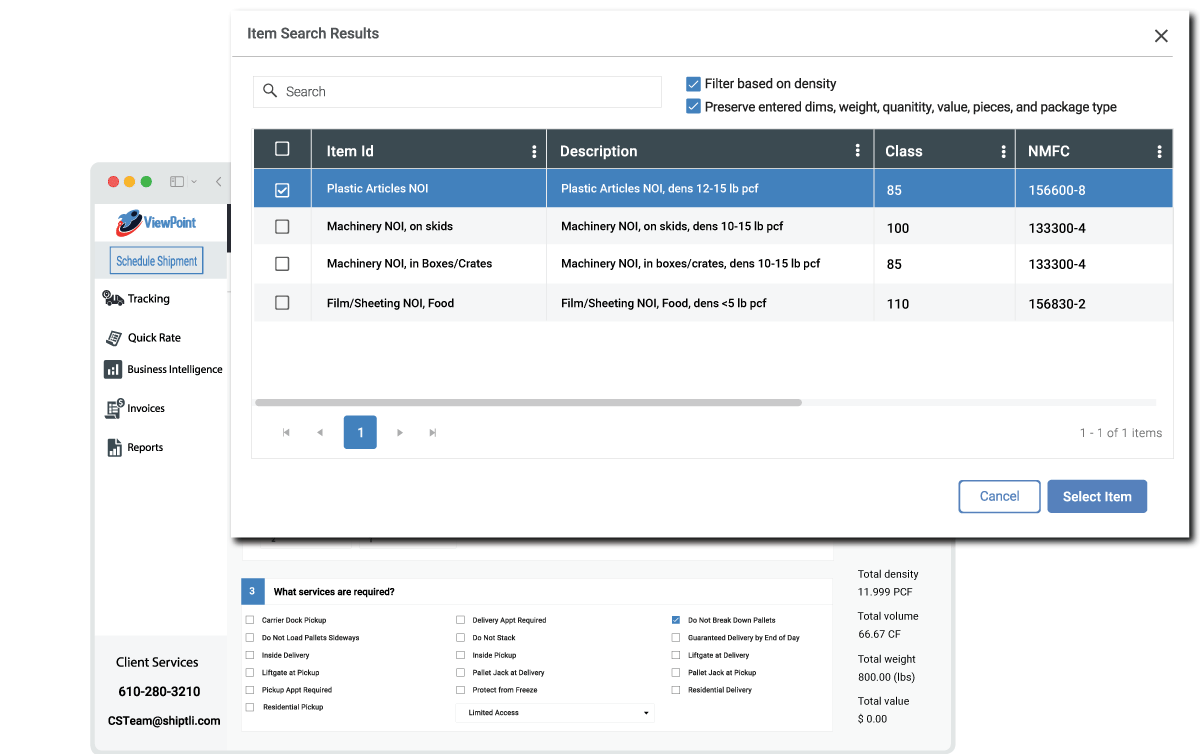
Your Items Readily Available
ViewPoint TMS automatically filters for valid density ranges, making your NMFC® (NMFC is a registered trademark of the National Motor Freight Traffic Association) choice fast, accurate, and stress-free. Select your shipping commodity with confidence! ViewPoint helps shippers make more confident freight-class decisions before a shipment moves, reducing the risk of incorrect classifications, carrier reclassifications, and unexpected freight charges. By guiding users toward valid density and NMFC® classifications at the time of quoting, ViewPoint helps improve rating accuracy, reduce billing surprises, and make the shipping process more efficient.
Density Freight Calculator
Routing LTL freight can be confusing. TLI’s built-in density calculator quickly determines the correct freight class. It automatically pulls in all your product information, so you save time and avoid mistakes. By helping ensure freight is classified correctly before it ships, ViewPoint can help shippers avoid costly reclassification fees, billing adjustments, and unexpected carrier charges while improving rating accuracy and shipment consistency. Keeping accurate shipment information on the front end helps your accounting team avoid billing corrections caused by inaccurate freight estimates, while giving TLI the calculation needed to hold carriers accountable when billing discrepancies result from carrier errors.
Inbound Freight Management
TLI’s vendor portal helps stop overpaying on inbound shipments. It auto-populates each shipment with the correct freight class using the density calculator. This process reduces errors, prevents costly overcharges, and keeps billing accurate. It also minimizes disputes with carriers for smoother operations. With the vendor portal, you control inbound shipments. Managing both inbound and outbound logistics in one place streamlines your supply chain, cuts freight costs, and boosts profitability.
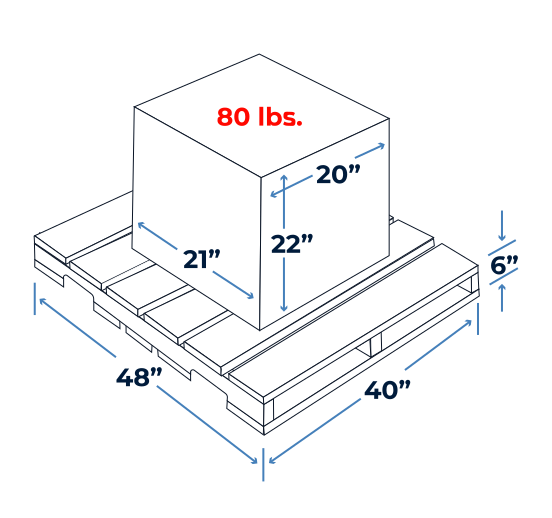
Density is calculated by utilizing the dimensions and weight of a shipment. First, multiply length × width × height in inches and divide by 1,728 to get cubic feet. Then divide the total weight by the total cubic feet.
These factors are the key to shipping in the Less-than-Truckload environment. Since you’re sharing space with other shippers, the carriers charge their rates based on freight class. The freight class helps tell the carrier how difficult or easy it is to transport your shipment based on density, handling, stowability, and liability.
An NMFC® code classifies commodities for LTL shipping and ensures the correct freight class. Governed by the NMFTA®, the codes also guide proper packaging, handling, and other shipment requirements. Carriers use these codes directly to price freight accurately, making them essential for smooth, cost-effective shipping.
Yes. Several times a year, the NMFTA® updates guidance based on feedback from carriers, shippers, and 3PLs/brokers. These updates include new rules and revised classification information. The changes are posted publicly in a disposition bulletin. In 2025, the NMFTA® implemented its largest update to NMFC® codes in decades, with the first changes taking effect July 19, 2025. For details, see 2025 NMFC® Code Changes.
Acknowledgment of NMFTA’s Trademark
Whenever our educational content refers to the National Motor Freight Classification, we want readers to understand that the term NMFC is a registered trademark of the National Motor Freight Traffic Association (NMFTA). Our goal is to provide helpful industry education while also respecting the intellectual property rights of the NMFTA. Whenever we discuss topics related to freight classification, density, or commodity groupings, we recognize that NMFC identifies the official classification standard maintained and licensed by the NMFTA.
NMFTA is the owner of the National Motor Freight Classification®, more commonly known as the NMFC® (“NMFC”).