
Furniture freight management for manufacturers and distributors
TLI runs the transportation program behind furniture companies that ship LTL and truckload from multiple plants and warehouses. That includes inbound supplier freight, plant-to-plant transfers, and deliveries to retail DCs, dealers, job sites, medical and dental offices, and homes.
We contract and manage the carriers, book and track every shipment in our own ViewPoint TMS, audit every invoice and work every claim. Your team stops re-rating reclasses and disputing liftgate charges and gets back to running the business.
30-minute review of your lanes, modes and invoices. A TLI freight specialist replies within one business day. No commitment.
Featured on Bloomberg TV’s “The World’s Greatest“
See how TLI runs freight programs for manufacturers and shippers, and hear it straight from the customers we serve. Aired nationally August 29 and September 5, 2026.

What furniture freight management means at TLI
Furniture freight management
Furniture freight management is the ongoing management of a furniture company’s inbound, interfacility and outbound transportation: putting each shipment on the right mode, contracting and scoring carriers, classing freight accurately by density, controlling accessorial charges, auditing invoices and recovering damage claims. Translogistics, Inc. (TLI) provides it as a managed transportation program, with a dedicated account team and its own ViewPoint TMS, instead of quoting one load at a time.
Why furniture freight costs more than it should
Furniture is light for its size, easy to damage, and often delivered to places trucks don’t like to go. Those three facts drive most of the cost and most of the workload in a furniture freight program. These are the six places we see money leak most often, and what we do about each.
Low density and reclass charges
Most furniture is now rated by density under the NMFC®, and the density scale was expanded again in July 2025. An assembled chair or upholstered piece can class high, and when a carrier’s dimensioner disagrees with your bill of lading, you pay the reclass plus an inspection fee.
How TLI manages it: your products are loaded into ViewPoint with dimensions, weights and NMFC® codes, so class is calculated from density at booking. Reclass charges are checked in audit before you pay them.
Cube, linear-foot & do-not-stack rules
Do-not-stack pallets are commonly rated as if they fill the trailer to the roof. Large, light shipments (often over 750 cubic feet at under 6 pounds per cubic foot) can trigger a carrier’s cubic capacity rule, which replaces your contract rate.
How TLI manages it: ViewPoint flags shipments likely to break standard LTL rules and pulls volume LTL and partial truckload rates, so the shipment moves on pricing built for its size.
Residential, liftgate and limited-access charges
Homes, strip-center dental offices, schools, churches, hotels and medical campuses all carry accessorials. When they aren’t booked up front, carriers add them after delivery at tariff rates.
How TLI manages it: ViewPoint checks each destination at booking to identify residential and limited-access addresses and likely liftgate needs. Audit flags accessorials that weren’t authorized.
Damage and low carrier liability
Every terminal transfer is another forklift handling. And some LTL tariffs limit carrier liability on furniture to as little as $0.50 to $1.00 per pound, far below what a finished piece is worth.
How TLI manages it: dedicated claims specialists file and track claims in ViewPoint. For high-value shipments, TLI Advantage+ offers full-value coverage without having to prove carrier negligence.
Inbound freight nobody manages
Suppliers pick their own carriers and you pay freight you never priced, with no visibility into what’s coming or when.
How TLI manages it: a vendor routing portal lets suppliers book inbound shipments under your routing rules, on your contracted carriers.
Every facility books its own way
Different carriers, different rates and different BOL habits at each plant mean no one can see total spend or find consolidation.
How TLI manages it: all locations on one TMS, with reporting by facility, lane and carrier.
How furniture freight moves, and where TLI manages it
A furniture program is several freight networks at once. We manage each leg with the proper mode of transportation and carriers that fit it.
| LEG | TYPICAL FREIGHT | MODE OF TRANSPORTATION | WHAT GOES WRONG |
|---|---|---|---|
| Suppliers → plants | Lumber, panels, foam, fabric, springs, hardware, cartons, imported components | LTL, truckload, flatbed, intermodal; international LCL/FCL through forwarder partners | Collect freight on supplier-chosen carriers; no inbound visibility |
| Plant ⇄ plant / DC | Frames, cut parts, work in process, finished goods | Contract truckload, partial truckload, expedited | Detention, empty miles, last-minute hot shots |
| Plant / DC → retail DCs | Finished casegoods and upholstery | Full truckload, multi-stop truckload, volume LTL | Appointment misses, partial loads shipped as LTL |
| Plant / DC → dealers & job sites | Office and contract furniture | LTL, volume LTL, partial, truckload | Missed install windows, redelivery and storage |
| → Medical & dental offices | Exam chair, reception and casework furniture | Sprinter/Straight Truck, White Glove | No receiving dock, tight receiving hours, surprise accessorials, debris removal |
| → Residences | Residential furniture sold direct or through retailers | LTL residential with liftgate; white-glove partner carriers | Failed first attempts, residential fees after the fact |
What shippers say about TLI
“I’d like to say that switching 3PL companies was very scary for our company however it was the best move we could have made. The transition to TLI was very smooth and without a glitch for our operations team. We didn’t miss a shipment and had no down time. We look forward to a long and prosperous relationship.
LL
Lucien L.
“You made what I thought was going to be a very tough process seem easy. I know that doesn’t happen by accident and it is a demonstration of your knowledge & hard work. Well done. WELL, DONE. Thank you.”
DB
Dave B
“We want to thank [TLI] for the hard work, dedication, and professionalism [TLI] brings every day. [TLI’s] efforts behind the scenes keep our products moving, our customers satisfied, and our business running smoothly. Quite simply, [TLI] make us look good, and we truly appreciate everything you do.”
MP
Matthew P.
4.9★
442+ Google Reviews
30K+
Vetted Carriers
85M+
Miles Managed, 2025
1994
Managing Freight +3 Decades
Every mode furniture needs, chosen shipment by shipment
| MODE OF TRANSPORTATION | TYPICAL FURNITURE SHIPMENT (EXAMPLE) | WHY SHIPPERS USE IT |
|---|---|---|
| LTL | 1–6 pallets, boxed or knocked-down product, commercial docks | Lowest cost for smaller, denser shipments; regional and national carriers |
| Volume LTL & partial truckload | 6+ pallets or 12+ linear feet; light, bulky or do-not-stack loads | Priced on space used instead of class; partial and load-to-ride moves typically see fewer handlings |
| Full truckload (dry van) | Plant-to-DC transfers, retail DC replenishment, large contract projects | Direct, no terminal transfers, best cost per unit at volume |
| Multi-stop truckload | Several dealers or stores along one route | One truck, several deliveries, fewer handlings than LTL |
| Flatbed & specialized equipment | Inbound lumber and raw materials; oversized items | Equipment matched to the freight |
| Expedited | A missing component holding up a production line; a job site that can’t wait; urgent freight stuck at an LTL terminal | Sprinter vans, straight trucks, team drivers, air |
| Intermodal | Long-haul inventory/parts replenishment that can take a few extra days | Lower cost and lower emissions on long lanes, savings increases significantly when diesel pricing is elevated |
| White glove & inside delivery | Residential or commercial deliveries needing placement, unpacking or debris removal | Arranged through TLI’s white-glove partner carriers |
| Small parcel | Hardware kits, replacement parts, swatches | Rate parcel and LTL side by side in ViewPoint TMS |
Built around your customers and destinations
Residential furniture manufacturers
Casegoods and upholstery ship by truckload to retailer distribution centers, by LTL to independent stores, and increasingly direct to consumers. The hard parts are low-density upholstery, residential and liftgate charges on drop-ship orders, and damage that shows up after a clean delivery receipt. TLI puts retailer DC freight on truckload and volume pricing, identifies residential addresses at booking, and arranges white-glove partners where the customer needs more than a curbside delivery.
Office and contract furniture manufacturers
Workstations, seating, casegoods and tables ship to dealer warehouses and directly to job sites, often from more than one plant for a single project. A late shipment from one plant can leave an install incomplete. Job sites need firm delivery dates and the right equipment, and a missed window means redelivery or storage charges. TLI books each shipment with its delivery requirements up front, moves larger project freight on volume LTL, partial or truckload, and uses expedited service when a project can’t wait.
Healthcare and dental furniture
Exam room, reception and casework furniture often goes to medical and dental offices in strip centers and office parks with no loading dock and limited receiving hours. Those deliveries usually need a liftgate, an appointment and sometimes limited-access or inside service. ViewPoint identifies limited-access destinations and likely liftgate needs when the shipment is booked, so the right service is ordered, and quoted, before the truck arrives.
Furniture distributors and wholesalers
Distributors ship high volumes of LTL to dealers, retailers and commercial buyers, often from several warehouses, while managing inbound freight from domestic and overseas manufacturers. TLI gives distributors one TMS across locations, contracted LTL and truckload pricing, automated tracking with shareable links for customers, and audit on every invoice. Two furniture-distributor logistics directors describe the results below.
Take control of inbound supplier freight
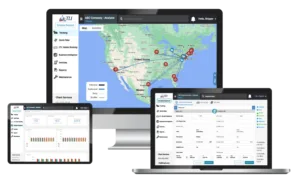
Many furniture plants actively manage outbound freight but leave inbound to their suppliers. Lumber, panels, foam, fabric and hardware arrive on whatever carrier the vendor chose, billed at rates no one negotiated. TLI’s vendor routing portal puts inbound under your rules:
- Your supplier enters the shipment in the ViewPoint vendor portal, or emails the details to our operations team.
- ViewPoint rates it across your contracted carriers and calculates total delivered cost.
- The least-cost carrier under your routing rules is selected, and the shipment is booked with a PRO number and scheduled pickup.
- Your team sees it in the ViewPoint Portal within inbound tracking filters before it reaches your dock.
ViewPoint can also prompt same-day consolidation when several suppliers ship to the same plant.
A freight program, not a load-by-load broker
| TOUCH POINT | TRANSACTIONAL FREIGHT BROKER | MANAGED LOGISTICS PROGRAM |
|---|---|---|
| Relationship | Quotes individual loads as one-offs | Runs your freight program as an extension of your team |
| Carriers | Whoever covers the load today | Your existing carriers first, plus a vetted network of 30,000+ where lanes need it |
| Carrier outreach | May contact your carriers directly | Works collaboratively with the carriers you approve |
| Technology | Manual communication | ViewPoint TMS with no license fee, connected to your ERP |
| Invoices | You check them individually, if anyone does at all | Every invoice audited before payment |
| Claims | You file them, you dispute them | Dedicated claims specialists file and track them |
| Reporting | Load confirmations | Spend, cost per pound and per mile, on-time and carrier scorecards by lane and facility |
| Accountability | Ends at delivery | Periodic business reviews with a dedicated business manager |
TLI’s managed transportation program includes carrier sourcing and network design, rate benchmarking and negotiation, load tendering and execution, inbound vendor routing, freight pay and audit, claims management, business intelligence and ViewPoint access. See how managed transportation works.
SHIP IT TLI
Make Shipping Easy.
Trust the experts to make shipment routing easier. TLI has the experience and the people to make your shipping easier.
GET STARTED
30K+
Carriers
85M+
2025 Miles
50+
Industries
What furniture shippers say:
“…switching 3PL companies was very scary for our company however it was the best move we could have made. The transition to TLI was very smooth and without a glitch for our operations team. We didn’t miss a shipment and had no down time.” – Lucien L., Director of Logistics, National Furniture Manufacturer
Results from other manufacturers and suppliers
- Benjamin Obdyke: ERP-to-ViewPoint integration; about 48% of LTL auto-booked within a year; 156–208 staff hours saved per year.
- Tioga Pipe: 3.5% audit recovery; all facilities on one system.
- Misco Products: 7,000+ shipments managed; freight billing six weeks faster.
What switching looks like
- Discovery. We review your freight data, lanes, carriers, invoices and pain points.
- Carrier procurement. Rates from your existing carriers and TLI’s network (about 3–4 weeks for RFP responses).
- ViewPoint setup. Locations, products, carrier contracts and users configured (about 1 week).
- Daily freight management. Your dedicated account team runs booking, tracking, audit and claims.
- Continuous improvement. Regular business reviews with your business manager.
Typical timeline: 5–6 weeks. You keep your current carrier relationships.
Common Furniture Shipping Questions:
Furniture freight management is the ongoing management of a furniture company’s inbound, interfacility and outbound transportation. It covers choosing the right mode for each shipment, contracting and scoring carriers, classing freight correctly by density, controlling accessorial charges, auditing invoices and recovering damage claims. A managed transportation provider such as TLI runs this as a continuing program with its own TMS and a dedicated account team, rather than quoting one load at a time.
It depends on the shipment. Dense, boxed or knocked-down product on standard pallets usually moves well by LTL. Large, light or do-not-stack shipments, often more than six pallets or 12 linear feet, usually price better as volume LTL or partial truckload and are handled less. Full truckload fits plant-to-DC moves, retail DC replenishment and large projects. Well-run programs set rules so each order goes to the right mode automatically.
Use LTL for smaller shipments, typically one to six pallets, that are dense enough to price well and can go through terminals safely. Move to volume LTL or partial truckload when a shipment is large or light enough to trigger cube or linear-foot rules, or when fewer handlings matter for damage. Use full truckload when you can fill most of a 53-foot trailer or need a direct move between plants, warehouses and retail DCs.
Most furniture is now rated by density rather than one fixed class. NMFC changes in 2023 moved many furniture listings to density-based item 79300, and the July 2025 docket expanded the standard scale to 13 density breaks. Because much finished furniture is light for its size, upholstered and assembled pieces often fall in higher classes, while knocked-down or boxed product can class lower. Accurate dimensions and weights on every bill of lading prevent reclass charges. Try TLI’s density calculator.
The largest savings usually come from control, not rate cuts alone: putting each shipment on the right mode, classing by accurate density so reclasses stop, capturing residential, liftgate and limited-access needs at booking, auditing every invoice, routing inbound supplier freight onto contracted carriers, and running a carrier RFP with real lane data. TLI’s RFP clients typically see base-rate savings of 8 to 15 percent, and audit and claims recovery add to that.
Reduce handlings and match packaging to the proper mode of transportation. Upholstered and finished pieces often travel better on volume LTL, partial or truckload moves that skip terminal handling. Note visible damage on the delivery receipt, report concealed damage within about five days, and track damage by carrier and lane so routing favors carriers that deliver clean. Because carrier liability on furniture can be capped well below its value, high-value shipments may warrant full-value coverage. Also, for valuable furniture use white-glove service to reduce damage risks.
Claims are filed in writing with the carrier and include the bill of lading, delivery receipt, photos, the commercial invoice and repair or replacement costs. Visible damage should be noted at delivery and concealed damage reported within about five days. Federal law generally allows carriers to require claims within nine months of delivery. TLI’s claims specialists file and track claims in ViewPoint, and recovered more than $1.2 million across 914 claims in 2025.
By setting the rules instead of leaving carrier choice to suppliers. A routing guide tells vendors how to ship, and a vendor routing portal enforces it: the supplier enters the shipment, the system rates your contracted carriers and books the least-cost option under your rules, and your team sees the shipment before it arrives. For plants buying lumber, panels, foam, fabric and hardware from many suppliers, this often brings unmanaged spend under control.
Office and healthcare furniture usually ships LTL, volume LTL or truckload to a dealer’s receiving warehouse or directly to the site. We contact the destination typically and request a delivery appointment and find out if they have a dock, or if they need accessorials to receive the freight. The shipment detail requirements decide the cost: whether there’s a dock, whether a liftgate, appointment or inside delivery is needed, whether it counts as limited access, and what the receiving hours are, which are tight at many medical and dental offices. Booking those shipment requirements up front avoids redeliveries, storage charges and missed install dates.
TLI handles B2C shipments regularly. Residential deliveries usually move by LTL with residential and liftgate service for curbside or threshold delivery, or through white-glove carriers when the customer needs inside delivery, room-of-choice placement, unpacking or debris removal. The cost difference is large, so the service level should be set at order entry. ViewPoint identifies residential and limited-access addresses at booking, and TLI arranges white-glove service through partner carriers.
Managing multiple facilities shipments is easy when your utilizing the proper TMS shipping technology. Put every plant, warehouse and DC on one TMS with shared carrier contracts, product data and booking rules. That gives one view of spend and service by location, lane and carrier, and it shows where freight between facilities can be consolidated. TLI clients manage all locations in ViewPoint, with Power BI reporting on cost per shipment, per pound and per mile, on-time performance and carrier scorecards.
Use a TMS that receives carrier tracking updates automatically instead of relying on phone calls and carrier websites. ViewPoint pulls real-time updates through carrier API and EDI connections and project44, sends tracking notifications, and creates shareable tracking links so dealers and customers can check status themselves. TLI’s team monitors exceptions, and scheduled reports show what is in transit, late or delivered.
It depends on the 3PL. Some store and fulfill furniture in their own warehouses. Transportation 3PLs like TLI manage the freight itself: sourcing and contracting carriers, booking and tracking LTL and truckload shipments, managing inbound vendor freight, auditing invoices, handling claims and reporting on cost and service. TLI focuses on transportation management for furniture companies that operate their own plants and distribution centers.
TLI’s managed transportation program is best suited to companies shipping $1 million or more a year in LTL and truckload freight, especially furniture manufacturers and distributors with several facilities and a mix of commercial and residential destinations. You keep your existing carriers. A typical implementation takes five to six weeks, and ViewPoint has no license fee. Occasional shippers can use TLI’s online quote tool instead.