
Dry Van Freight Routing
Dry van freight shipping is one of the most widely used solutions for transporting palletized, boxed, and general freight throughout the United States. Translogistics, Inc. (TLI) provides reliable dry van truckload shipping for shippers seeking both spot FTL capacity for immediate shipping needs and contract FTL pricing for consistent, recurring freight volumes.
Whether you need capacity on a single over-the-road (OTR) truckload lane, ongoing capacity across multiple lanes, or a strategic transportation partner to manage your truckload network, TLI connects your freight with vetted motor carriers while helping you balance cost, capacity, and on-time service. From one-time shipments to long-term truckload programs, our team helps manufacturers, distributors, and other businesses move freight with greater confidence, visibility, and control.
DRY VAN SHIPPING SERVICES
What is a Dry Van?
Dry van freight shipping is one of the most widely used methods of transporting goods across the United States. It uses enclosed 48-foot and 53-foot trailers to transport palletized, boxed, crated, or loose, non-perishable freight. The enclosed design protects shipments from rain, snow, road debris, and direct exposure to the elements, making dry van trucking a practical solution for manufacturers, distributors, retailers, and other businesses moving general freight.
How much weight can a dry van trailer carry? Under federal weight limits applicable to most commercial tractor-trailers operating on interstate highways, the maximum gross vehicle weight is generally 80,000 pounds, including the tractor, trailer, and cargo. A typical tractor and empty 53-foot dry van trailer weigh approximately 35,000 to 38,000 pounds, leaving an estimated payload capacity of 42,000 to 45,000 pounds, depending on equipment specifications. For general freight planning, approximately 44,000 pounds is a useful reference point. Actual capacity depends on the tractor and trailer configuration, axle-weight distribution, and applicable federal and state regulations.
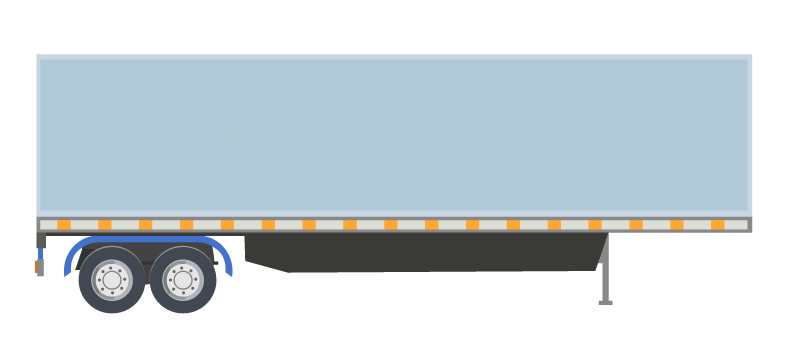
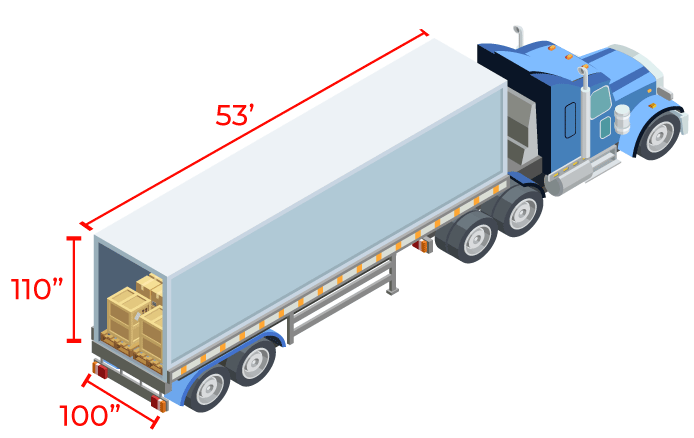
Dry Van Trailer Dimensions
A dry van trailer is a fully enclosed freight trailer attached to a semi-truck and designed to transport large quantities of cargo safely and efficiently. These trailers are commonly used to ship palletized goods, boxed products, and other general freight that does not require temperature control.
Industry standard dimensions are:
- 53′ Long
- 100″ Wide
- 110″ High
- Max Weight of 44,000 lbs
Trailer dimensions are dependent on the specific trailer that a carrier owns and will operate for a shipment. For example, a roll-up door will affect the height versus a swing door.
Find a Complete Guide on Truckload Equipment Types >
How to Arrange a Dry Van Freight Shipment with TLI
Booking OTR Loads with TLI
- Sign up as a TLI client
Advise TLI on a few operational details such as your location, points of contact, and get a line of credit approved via our onboarding link: https://shiptli.com/setup/
- Identify your freight and equipment requirements
Via phone, email or the TMS portal itself, please advise what needs to be shipped. Confirm the commodity, total shipment weight, pallet count, dimensions, loading method, and any handling requirements. Determine whether a standard dry van can accommodate the shipment. TLI can offer alternative equipment type, and if your not sure reach out and we can offer guidance on equipment type and mode optimization services.
- Provide pickup and delivery details
Supply the pickup and delivery ZIP codes or addresses, requested dates, facility hours, and any appointment, dock, driver-assistance, or access restrictions.
- Choose a pricing approach
Request a spot quote for an individual or irregular shipment. If you ship the same lanes regularly, ask about contract pricing based on expected volume and service requirements.
- Compare the truckload quote and service requirements
Evaluate the quoted rate, expected transit time, pickup and delivery requirements, equipment suitability, and applicable accessorial charges. Confirm the agreed terms before tendering the shipment.
- Book and coordinate the shipment
Once the rate and terms are approved, coordinate pickup times that are ideal for you. TLI can provide you the required shipping documents (BOL and pallet labels), and offer tracking support of your shipment.
What types of freight can dry van trailers transport?
Dry van shipping accommodates a broad range of non-temperature-controlled freight, including consumer goods, electronics, packaged food products, retail inventory, industrial supplies, and certain types of machinery. Its versatility makes it suitable for full truckload (FTL) shipments, while multi-stop routing can help businesses consolidate deliveries and improve transportation efficiency when shipment volumes, schedules, and delivery locations align.
When Do Shippers Use Dry Van Trailers?
Dry van trailers are widely available throughout the U.S. freight market, giving shippers access to a broad carrier network across many lanes. This availability can simplify carrier sourcing, improve capacity options, and support competitive transportation pricing. Through Translogistics, Inc. (TLI), shippers can access dry van carrier sourcing, shipment booking, and multi-stop transportation solutions tailored to their freight requirements. TLI helps businesses identify qualified carriers, coordinate pickup and delivery schedules, and evaluate opportunities to consolidate shipments to reduce transportation costs. Shippers rely on dry van trailers for a wide range of freight transportation needs, from local deliveries and regional shipments to long-haul over-the-road freight. Because dry vans are fully enclosed and widely available, they are one of the most versatile shipping solutions for moving palletized, boxed, or loose non-perishable goods. Businesses across industries use dry van trucking to move retail inventory, packaged foods, consumer products, and industrial materials while keeping freight protected from weather, road debris, and theft during transit.
Common industries that use dry van freight shipping include retail, manufacturing, construction, and e-commerce. These trailers can safely transport products such as non-perishable food and beverages, clothing and textiles, electronics, plastics, building materials, and packaged consumer goods. Dry vans are also used to move household goods, furniture, and small machinery, making them a popular option for relocation shipments and construction logistics. Their ability to handle many freight types while maintaining cargo protection makes dry vans one of the most dependable shipping options in modern logistics.
Common Uses for Dry Van Shipping
Shippers typically use dry van trailers to transport:
- Non-perishable food and beverages such as packaged goods and dry foods
- Retail products including clothing, textiles, and consumer electronics
- Industrial materials like plastics, building supplies, and packaged manufacturing components
- Household goods and furniture during residential or commercial relocations
- Small machinery and construction equipment transported between warehouses and job sites
Because dry vans provide a secure and enclosed environment, they are ideal for freight that does not require refrigeration or oversized loading access. Although dry van trailers are highly versatile, there are a few limitations shippers should consider. Many dry van trailers use hardwood flooring, which can be susceptible to moisture buildup or condensation if freight is damp or if doors remain open for extended periods. Proper packaging and loading practices help prevent potential damage.
Why use a Dry Van?
Shippers use these trailers for all kinds of general freight including non-perishable food, plastics, machinery, furniture, etc. The equipment allows for an enclosed protection of the freight from general weather. Carriers will use a mix of 26′-29′ Straight Trucks and full 48′-53’ Dry Vans in their transportation operations.
Dry Vans in LTL Shipping:
LTL Carriers use Dry Vans as the base trailer for pickups, deliveries and linehauls. Dry van trailers are commonly constructed using galvanized steel, aluminum, hardwood flooring, or reinforced iron components, providing durability and long service life in freight transportation.
Benefits of Dry Van Equipment for Shippers
Flexibility
Dry van equipment offers shippers flexibility because it is widely available, making it easier to secure capacity across a broad range of lanes and market conditions. Fully enclosed, lockable trailers protect freight from weather, road debris, and theft while in transit. Depending on shipment size and delivery requirements, freight can move in a standard dry van trailer or a smaller straight truck, helping shippers match equipment to their needs while managing transportation costs.
Security
Through TLI’s partnership with Highway, shippers benefit from enhanced carrier vetting and fraud prevention, helping ensure their freight is entrusted to legitimate, qualified carriers. Combined with the broad availability of dry van equipment, this provides greater confidence in capacity, shipment security, and reliable delivery. Because dry vans are widely available, shippers benefit from competitive rates and ample capacity in both the spot and contract markets.
Cost-Effective
TLI’s carrier sourcing capabilities help shippers secure reliable dry van capacity and optimize multi-stop shipments by identifying qualified carriers that can accommodate their specific routes, delivery requirements, and scheduling needs. By consolidating multiple stops onto a single truck when practical, shippers can reduce transportation costs, minimize empty miles, and simplify coordination through one trusted logistics partner.
Ship tli
Routing Freight with TLI
Benefits to Routing with TLI
Carrier Network
TLI has an extensive network of carriers. With the ability to pull rates from less-than-truckload, spot markets, and contract markets, TLI ensures that your freight is covered.
Vetting-Process
TLI uses industry-leading carrier vetting and monitoring technology called Highway to ensure every shipment is handled by trusted, qualified carriers. Our system continuously evaluates compliance standards so that only the most reliable carriers are trusted with your freight.
Experienced Experts
With more than three decades of experience in freight routing and logistics management, TLI provides shippers with reliable and efficient transportation solutions. Our team includes industry professionals from both asset-based trucking operations and freight brokerage backgrounds, giving us deep expertise across every stage of the supply chain. This combined knowledge allows us to optimize freight routes, reduce shipping costs, and ensure dependable service for businesses moving freight across local, regional, and national lanes.
Different Solutions
Find what works for your company. TLI offers great services as a standard, with the option to expand if required. Contact TLI today! 610-280-3210
Receive a quote!
You might also be interested in:
Dedicated Truckload Shipping: Frequently Asked Questions
Dry van freight shipping uses an enclosed trailer hauled by a semi-truck to transport general freight that does not require temperature control. Common commodities include palletized goods, packaged products, retail inventory, electronics, furniture, and manufacturing materials. Businesses use dry van trucking for regional, long-haul, and over-the-road (OTR) shipments throughout the United States. Translogistics, Inc. (TLI) helps shippers arrange dry van transportation through spot full truckload (FTL) services and negotiated contract freight programs.
Standard dry van trailers are commonly 48 or 53 feet long, with 53-foot trailers widely used for domestic truckload shipping. A typical 53-foot trailer has an exterior width of approximately 102 inches, while usable interior width and height vary by equipment. Cargo capacity depends on the trailer and tractor configuration, axle limits, freight dimensions, and applicable weight regulations. Shippers should confirm actual payload, pallet capacity, and loading requirements before booking a dry van truckload.
A 53-foot dry van trailer can typically accommodate approximately 26 standard 48-by-40-inch pallets in a single floor-loaded layer, depending on pallet orientation and loading configuration. Actual capacity varies with pallet dimensions, freight overhang, shipment weight, cargo height, and securement requirements. Shippers should provide pallet counts, dimensions, and total weight when requesting a dry van freight quote so the appropriate equipment can be selected.
Dry van freight shipping costs depend on the pickup and delivery locations, mileage, shipment weight, lane demand, available truck capacity, pickup timing, and any special handling or accessorial requirements. Fuel costs and broader trucking market conditions can also influence rates. TLI helps businesses evaluate spot truckload pricing for individual shipments and contract FTL pricing for recurring lanes. Providing accurate shipment details and pickup dates helps produce a more relevant quote.
Spot FTL shipping uses a shipment-specific rate based on current market conditions and available capacity. It is often suitable for one-time loads, irregular shipments, and short-notice transportation needs. Contract FTL shipping uses negotiated rates and terms for defined lanes or recurring freight volumes. It can help businesses plan transportation budgets and establish consistent pricing arrangements. TLI supports both approaches, helping shippers determine which option best fits their shipping frequency, lane requirements, and capacity needs.
TLI arranges dry van truckload transportation for businesses shipping freight across the United States. Depending on the shipment and available carrier capacity, services can support regional movements, long-haul routes, and over-the-road transportation. Shippers can submit individual loads for spot pricing or discuss recurring lanes and contract freight requirements with TLI. Actual capacity, service availability, and transit times depend on the specific origin, destination, pickup date, and shipment requirements.
Dry van trailers commonly transport palletized and packaged products such as consumer goods, paper products, plastics, furniture, electronics, retail inventory, and non-perishable manufacturing materials. Freight must fit within the trailer’s usable dimensions and weight limits and be suitable for enclosed transportation. Products requiring temperature control, oversized freight, or specialized loading access may need refrigerated trailers, flatbeds, or other equipment. TLI can help evaluate the equipment requirements for a shipment.
TLI uses Highway carrier vetting and monitoring technology as part of its carrier qualification process. Proper carrier qualification helps shippers manage transportation risk and make informed routing decisions. TLI coordinates carrier sourcing and shipment arrangements based on the load requirements and applicable equipment type and qualification standards, as requested by customers.
Quotes can be sent via email, phone and through the ViewPoint TMS portal. When you request a dry van freight quote from TLI, please provide the pickup and delivery locations, requested pickup date, commodity, total weight, pallet count, freight dimensions, and any special loading or delivery requirements. For recurring shipments, include expected frequency and estimated lane volume to help evaluate contract pricing. TLI can use this information to assess the appropriate equipment, sourcing options, and applicable spot or contract rates.
Dry van transit times depend on shipment distance, pickup and delivery appointments, traffic, weather, route conditions, driver hours-of-service limits, and carrier availability. As a general planning guideline, a truck can typically travel approximately 500 to 550 miles per driving day under favorable conditions. Shorter shipments may qualify for next-day delivery, but mileage alone does not guarantee a specific transit time, especially if it is a multi-stop delivery. For example, a shipment traveling 488 miles is most likely eligible for next-business-day delivery, depending on pickup timing, appointment requirements, and available capacity. When requesting a dry van freight quote from TLI, provide your required delivery date, pickup availability, and any delivery appointment restrictions so our team can evaluate available routing options and establish realistic transit expectations before booking.
TLI can offer capacity on reoccurring lanes. TLI works with businesses that need individual truckload shipments as well as companies seeking support for recurring lanes and broader transportation programs. Depending on the customer’s needs, TLI can help coordinate carrier sourcing, pricing, shipment visibility, and transportation management. Businesses with multiple shipping locations or consistent freight volumes can discuss their lane data and service requirements with TLI to evaluate an appropriate managed transportation or contract truckload solution.
Dry van trucking uses an enclosed trailer for general freight that does not require temperature control. Reefer trucking uses a refrigerated trailer to maintain a specified temperature range for temperature-sensitive goods. Flatbed trucking uses an open platform trailer for freight that may be oversized or require loading from the side or above. The appropriate equipment depends on cargo dimensions, weight, environmental requirements, loading method, and delivery conditions. TLI helps shippers evaluate equipment options based on their freight requirements.
OTR (Over-the-Road) trucking is long-distance freight transportation that moves shipments across multiple cities, states, and regions, often covering hundreds or thousands of miles. It commonly uses dry van, refrigerated (reefer), and flatbed trailers to transport commercial freight between manufacturers, distribution centers, warehouses, and customers. TLI helps shippers secure OTR truckload capacity for both spot shipments and contract freight, coordinating transportation based on delivery schedules, shipment requirements, and available carrier capacity.