
LTL Freight Shipping Solutions Built Around Your Business
Less-than-truckload (LTL) shipping allows businesses to transport palletized freight without paying for an entire truck. By consolidating shipments from multiple businesses into a shared trailer, LTL carriers provide a cost-effective transportation option for shipments that are too large for parcel services but do not require a dedicated truck.
However, finding the lowest LTL shipping rate involves more than comparing carrier discounts. Freight classification, shipment dimensions, lane pricing, fuel surcharges, accessorial charges, carrier service levels, and contractual terms all influence your actual transportation costs.
Start Shipping with TLISimplify LTL Shipping. Reduce Freight Costs.
What is LTL Freight?
Less-than-Truckload (LTL) freight is a transportation solution for shipments that do not require the exclusive use of an entire trailer. Instead of paying for a full truck, shippers share available trailer space with freight from other businesses, paying for the portion of capacity their shipment occupies.
LTL is commonly used for palletized shipments ranging from a single pallet to multiple pallets, particularly when the shipment is too large for parcel delivery but does not justify the expense of a full truckload. Because multiple shipments move together, LTL carriers consolidate freight through terminal networks, where shipments may be transferred between trailers before reaching their destinations.
TLI (Translogistics, Inc.) helps businesses simplify LTL freight transportation through competitive carrier sourcing, centralized shipment management, freight auditing, and transportation technology.
LTL pricing is generally influenced by several factors, including shipment weight, freight class, dimensions, density, origin, destination, and any additional services required. Proper freight classification, accurate shipment dimensions, and carrier selection are important to avoiding reclassification charges, unexpected accessorial fees, and unnecessary transportation costs.
At TLI, we help shippers navigate LTL transportation by evaluating carrier options, negotiating competitive rates, coordinating pickups and deliveries, and providing shipment visibility. Our goal is to make LTL shipping more predictable, cost-effective, and easier to manage.
Less-than-Truckload Shipping
Businesses spending $125,000 or more annually on LTL freight may benefit from a more comprehensive transportation procurement strategy. TLI offers a complimentary transportation assessment, using historical shipment data to evaluate carrier pricing, model alternative transportation scenarios, and identify opportunities to improve your overall freight program.
How much time do you spend comparing LTL freight quotes from multiple carriers? With TLI, you can instantly compare competitive less-than-truckload (LTL) shipping rates from trusted carriers all in one place, helping you save both time and shipping costs.
LTL shipping is great for smaller loads, usually between 1 and 6 skids, weighing 80 to 15,000 pounds. Less-than-truckload shipping is easy on our online platform, which provides real-time LTL rate comparisons, instant booking and shipment tracking. When you’re quoting an LTL shipment, to avoid extra charges, ensure your freight is packed correctly, especially for irregular or long items. Standard pallets are 48 x 40 inches and can be up to 96 inches tall. Be aware of cubic capacity rules, as some carriers may reject quotes for shipments over 12 linear feet. If your shipment exceeds these limits, you might need a volume rate.
With LTL, you only pay for the trailer space your shipment takes up, which makes it a cheaper alternative to full truckload shipping. Our network includes regional and national carriers, offering the right service options and transit times to fit your needs.
Get Competitive LTL Freight Rates
Our network includes more than 20 LTL carriers, providing access to regional and national transportation options. Through our managed transportation services and proprietary ViewPoint TMS, we help shippers compare rates, select appropriate carriers, monitor shipments, identify billing discrepancies, and continuously improve their transportation operations.
When to use Less-than-Truckload Carriers
LTL shipping is ideal when your load is too big for parcel services but too small for a dedicated truck. Here’s why:
- Cost Effective: Only pay for the trailer space you use, reducing shipping costs.
- Small Business Friendly: LTL carriers offer flexible services, like liftgates, to help businesses without loading docks.
- Specialized Equipment: LTL carriers have equipment to handle different types of shipments, including those needing special care.
Choose the Right Carrier
While you may have a favorite carrier, it’s smart to explore other options. TLI partners with many regional and national carriers, giving you access to the best service levels, transit times, and rates when your preferred choice doesn’t fit your current needs.
Start Making Shipping Easy.
Get in touch with an expert to discuss your challenges and start managing freight effectively.
What if My Shipment is Too Big for LTL?
Choosing the right transportation mode can have a significant impact on freight costs, transit times, handling requirements, and delivery reliability. Not every shipment fits neatly into standard Less-than-Truckload (LTL) pricing. Shipments that occupy a substantial portion of a trailer, exceed a carrier’s standard LTL handling limits, or require additional capacity may qualify for volume LTL or partial truckload pricing. These transportation options bridge the gap between traditional LTL and full truckload (FTL), offering alternatives for freight that is too large for conventional LTL but does not require an entire trailer.
Volume LTL and partial truckload rates are generally evaluated based on shipment dimensions, total weight, linear feet occupied, available trailer capacity, pickup and delivery requirements, and carrier pricing. Depending on the shipment, one option may offer better value, fewer handling requirements, or a more suitable transportation arrangement than another.
Not every shipment should move through standard LTL. As shipment size increases, other transportation options may offer better pricing, fewer handling points, or greater control over delivery. TLI evaluates these alternatives to help shippers determine the most appropriate and cost-effective transportation method rather than automatically defaulting to standard LTL pricing. The following comparison can help determine which transportation mode is worth evaluating for your shipment.
| MODE OF TRANSPORTATION | BEST SUITED FOR | HOW PRICING WORKS | HANDLING CONSIDERATION |
|---|---|---|---|
| Small Parcel | Individual packages and smaller shipments | Per package, based on weight, dimensions, service, and destination | Multiple sorting and handling points |
| Standard LTL | Smaller palletized shipments that do not require an entire trailer | Freight class, weight, lane, negotiated rates, fuel, and accessorials | Multiple shipments consolidated through a carrier network |
| Volume LTL | Larger or denser shipments that exceed standard LTL pricing or capacity thresholds | Shipment-specific volume pricing, subject to carrier requirements | May involve fewer consolidations depending on the service |
| Partial Truckload | Shipments occupying a substantial portion of a trailer without requiring the entire truck | Negotiated shipment or space-based pricing | Often fewer terminal transfers than standard LTL, which reduces risk of lost or damaged shipments |
| Full Truckload FTL | Shipments requiring a dedicated trailer or substantial trailer capacity | Primarily based on lane, equipment, availability, and market conditions | Typically fewer freight transfers because the trailer is dedicated |
When should you choose each option?
- Choose parcel when shipments are small enough to move economically through package networks.
- Choose standard LTL when you have palletized freight that does not justify a dedicated truck.
- Consider volume LTL when shipment dimensions, weight, or trailer space requirements make standard LTL less economical.
- Consider partial truckload when your shipment occupies a meaningful portion of a trailer and reducing handling is important.
- Choose full truckload when shipment volume, delivery requirements, or freight characteristics justify dedicating an entire trailer.
An Important Consideration: There is no universal pallet-count, weight, or linear-foot threshold that automatically determines when a shipment must transition from standard LTL to volume LTL, partial truckload, or full truckload service. These parameters vary by carrier and may be influenced by individual pricing agreements, contractual provisions, published tariffs, shipment characteristics, and available capacity. Carrier-specific rules and negotiated exceptions can also affect the applicable service limits and pricing. As a result, the most appropriate transportation mode should be evaluated against the actual shipment requirements and the carrier agreements in place, rather than relying on a single industry-wide threshold.
LTL Freight Solutions Built Around Your Shipping Needs
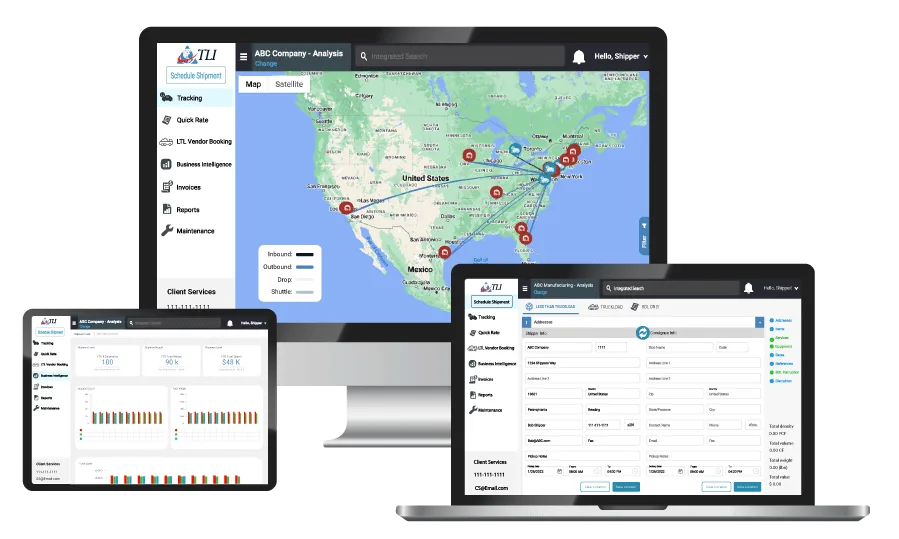
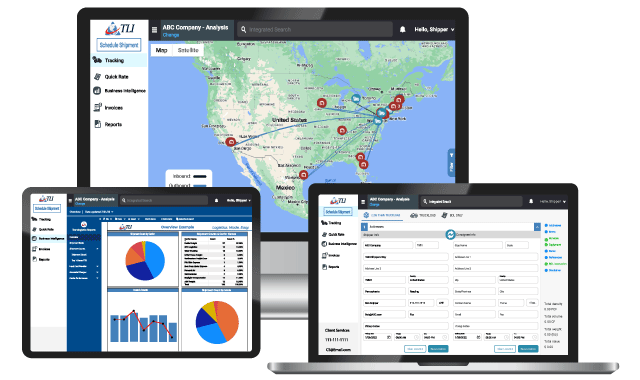
Many freight brokers advertise technology, tracking, and carrier comparisons. TLI’s proprietary, non-white-labeled ViewPoint TMS is a stronger differentiator. I would link this section to a dedicated ViewPoint page and emphasize that there are no software licensing, setup, monthly, or per-user fees for the platform.
Whether your business ships a handful of pallets each week or manages thousands of LTL shipments annually, TLI provides the carrier network, transportation technology, and industry expertise to help you operate more efficiently. We evaluate your shipping patterns, freight characteristics, geographic coverage, and service requirements to identify competitive carrier options and develop pricing aligned with your actual shipping profile.
Through our established carrier relationships and proprietary ViewPoint transportation management system, TLI helps coordinate shipments, improve visibility, streamline freight management, and identify opportunities to reduce transportation costs. From individual shipments to comprehensive LTL programs, we bring the resources and attention needed to make your freight operations easier to manage.
50+
Industries
20+
LTL Carriers
85,535,896
2025 total Miles
535,896,334 lbs
2025 total Pounds
What Determines LTL Freight Shipping Rates?
LTL freight rates are influenced by several factors, and the lowest advertised carrier discount does not necessarily produce the lowest transportation cost.
Most LTL pricing structures incorporate a combination of the carrier’s base tariff, negotiated discounts, shipment weight, freight classification, fuel surcharges, and applicable accessorial charges.
Understanding these variables helps businesses make more informed transportation decisions and avoid unexpected freight expenses.
| PRICING FACTOR | WHAT THIS MEANS | WHY IT MATTERS TO SHIPPERS |
|---|---|---|
| Freight Class | The classification assigned to a commodity under the National Motor Freight Classification (NMFC)™ system, where applicable | Incorrect classification can result in reclassification charges and higher transportation costs. |
| Shipment Weight | The actual weight of the shipment, including applicable handling units and packaging | Weight influences the carrier’s rate and can determine applicable pricing breaks. |
| Shipment Dimensions | The length, width, and height of each handling unit | Dimensions determine shipment volume, density, and potential capacity restrictions. |
| Freight Density | The shipment’s weight divided by its cubic volume, expressed in pounds per cubic foot | Density can influence freight classification and pricing, depending on the commodity and applicable classification rules. |
| Base Tariff | The carrier’s underlying transportation pricing schedule | Different carriers and tariffs can produce significantly different starting rates. |
| Negotiated Discount | The reduction applied to the carrier’s applicable base tariff | A larger discount does not automatically mean a lower final freight bill. |
| Fuel Surcharge | An additional charge generally calculated as a percentage of applicable transportation charges | Fuel surcharge programs and adjustment schedules vary by carrier and contract. |
| Accessorial Charges | Additional fees for services or circumstances outside standard transportation | Liftgate service, residential delivery, appointments, limited access, and other requirements can materially affect total costs. |
| Minimum Charges | Contractual minimum amounts that may apply to a shipment | Minimums can override an otherwise attractive calculated rate. |
| Lane Pricing | The origin and destination combination for the shipment | Carrier competitiveness varies by geographic market, terminal coverage, and freight network balance. |
Why the Lowest LTL Discount Isn’t Always the Best Deal
Negotiating an effective LTL contract involves considerably more than securing the lowest base rate. There are numerous pricing provisions, carrier rules, accessorial charges, and operational considerations that can have a significant impact on a shipper’s actual transportation costs. For example, some carriers charge for returning damaged freight to the shipper, meaning the return movement is not treated as a complimentary astray service. Others may impose additional accessorial charges, reweighs, reclassifications, or other fees that are not immediately apparent when evaluating an initial quote.
One of the most common mistakes in LTL procurement is comparing carriers based exclusively on their negotiated discount percentages.
For example, a carrier offering an 85% discount may still be more expensive than a carrier offering a 70% discount if the underlying tariff, minimum charges, fuel surcharge, or accessorial provisions are less favorable.
Businesses should evaluate the final net transportation cost, not simply the discount percentage.
One of the most significant risks we see with transportation procurement is the disconnect between what the shipping department believes it purchased and what the accounting department ultimately receives. A shipment may appear to have been awarded at the lowest rate, only for the invoice to arrive with unexpected charges because the freight was quoted at the incorrect class, dimensions were inaccurate, applicable accessorials were omitted, or the shipment exceeded a carrier’s cubic-capacity or linear-foot restrictions. The result can be inflated freight costs, time-consuming invoice disputes, delayed payment processing, and unnecessary administrative work. In other words, a low quote does not necessarily translate into a low-cost shipment.
TLI evaluates carrier pricing across applicable tariff structures, negotiated agreements, shipment characteristics, and lane combinations to identify competitive transportation options. This is where TLI takes LTL contract negotiations to another level. We examine historical shipment data to identify the carrier relationships, pricing structures, and contractual provisions that provide the greatest overall value. That includes negotiating customized linear-foot provisions to protect shippers from unnecessarily restrictive capacity thresholds, establishing Freight All Kinds (FAK) agreements where appropriate to secure more favorable freight-class pricing across qualifying class ranges, and evaluating cost-per-hundredweight (CWT) pricing to identify the most advantageous carrier and service combinations across your shipping lanes.
We also negotiate custom accessorial discounts based on the services your operation actually uses, rather than focusing exclusively on discounts that look attractive on paper but provide little practical benefit.
Cubic capacity is another important consideration. Carriers may apply cubic-capacity rules when a shipment occupies a disproportionately large amount of trailer space relative to its weight, limiting their ability to consolidate other freight. Depending on the carrier’s tariff or negotiated agreement, shipments exceeding specified density or cubic-capacity thresholds may be subject to different pricing or service requirements. We evaluate these provisions alongside pallet dimensions, shipment density, stackability, linear footage, and actual loading characteristics to help prevent unexpected charges.
Ultimately, effective freight management means understanding what happens beyond the initial quote. What happens when a carrier reclassifies a shipment? What happens when an invoice includes an unexpected accessorial? Who handles the dispute? What happens when freight is damaged, and who is responsible for coordinating the resolution and managing the associated transportation costs?
At TLI, we look beyond the rate to manage the entire transportation relationship. Our managed transportation approach combines customized carrier contracts, historical data analysis, shipment execution, invoice oversight, and freight-claim coordination to help shippers control costs throughout the shipping lifecycle. We are not simply looking to secure a competitive quote. We are working to build a transportation program that performs financially and operationally, from the initial pickup through final delivery, invoicing, and beyond.
For businesses managing hundreds or thousands of shipments, these differences can create meaningful opportunities for transportation savings.
Learn more: How to Get an Accurate LTL Freight Quote
TLI Services to optimize LTL Freight.

Common LTL Accessorial Charges and How to Avoid Them
LTL accessorial charges are additional fees assessed by carriers when a shipment requires services, equipment, handling, or delivery conditions beyond standard dock-to-dock transportation. These charges can include liftgate service, residential delivery, limited-access locations, inside delivery, appointment scheduling, detention, and other specialized requirements.
Accessorials can materially increase the final cost of an LTL shipment, particularly when delivery requirements are overlooked during the initial quoting process or when a carrier applies charges under its tariff or negotiated contract after pickup. Even a competitively priced shipment can become considerably more expensive when applicable accessorials are omitted, incorrectly identified, or misunderstood.
Controlling these expenses requires more than simply knowing which services incur additional fees. Shippers should identify pickup and delivery requirements before tendering freight, provide accurate shipment and location details, and understand the accessorial provisions in each carrier’s pricing agreement. Equally important is negotiating favorable accessorial rates and contractual terms for the services a business uses most frequently.
At TLI, we evaluate accessorial exposure as part of the broader carrier procurement and contract negotiation process.
Our goal is to secure competitive pricing on frequently used services, identify potential billing exposures, and help ensure shipments are quoted with the appropriate requirements from the outset. The following table outlines common LTL accessorial charges, what typically triggers them, and practical ways shippers can minimize unexpected expenses.
| ACCESSORIAL CHARGE | WHAT TRIGGERS THE CHARGE | HOW SHIPPERS CAN PREVENT OR REDUCE IT |
|---|---|---|
| Liftgate Service | Pickup or delivery requires a hydraulic liftgate because a loading dock or suitable forklift is unavailable. | Confirm dock and forklift availability at both locations before booking. |
| Residential Delivery | Freight is delivered to a residential address rather than a qualifying commercial location. | Verify the actual delivery location and disclose residential requirements when requesting rates. |
| Limited Access | Delivery occurs at a location with restricted access, specialized operating requirements, or limited commercial receiving capabilities. | Identify locations such as schools, military facilities, construction sites, and certain warehouses before booking. |
| Inside Delivery | The driver is required to move freight beyond the standard delivery point. | Confirm whether the consignee requires delivery inside the building or to a specific location. |
| Delivery Appointment | The consignee requires a scheduled delivery window. | Communicate appointment requirements when the shipment is quoted and tendered. |
| Notify Before Delivery | The receiver requires advance notification before the carrier attempts delivery. | Identify notification requirements and ensure accurate consignee contact information is provided. |
| Reclassification | The carrier determines that the actual commodity or shipment characteristics differ from the declared freight classification. | Verify the correct NMFC item or density-based classification and accurately describe the commodity. |
| Reweigh | The carrier determines that the actual shipment weight differs from the declared weight. | Weigh the complete handling unit, including packaging, pallets, and other materials. |
| Reconsignment | The delivery destination changes after the shipment has been tendered. | Verify the delivery address before releasing the shipment. |
| Overlength | Freight exceeds the carrier’s applicable length thresholds or creates additional handling or trailer-space requirements. | Provide the actual dimensions of every handling unit and review carrier-specific overlength rules. |
| Detention | The driver experiences excessive loading or unloading delays beyond the applicable free-time allowance. | Schedule loading and unloading appointments, prepare freight in advance, and communicate facility requirements. |
| Sort and Segregate | Freight requires additional separation or handling at the shipper’s or consignee’s request. | Clarify whether pallets must be separated, sorted, or delivered individually. |
Why Accessorial Management Matters
A competitive initial freight quote does not always reflect the final cost of transportation. When pickup or delivery requirements are overlooked, an otherwise attractive LTL rate can become considerably more expensive once additional carrier charges appear on the invoice.
For example, a shipment initially quoted as standard dock-to-dock LTL may incur additional fees if the delivery location requires a liftgate, scheduled appointment, inside delivery, or access to a limited-access facility. If these requirements are not communicated when the shipment is quoted, the applicable charges may be assessed after pickup or delivery, depending on the carrier’s rules and contractual provisions.
Not all accessorial charges can be eliminated, nor should they necessarily be avoided. The objective is to identify applicable services before tendering freight, compare carriers using accurate all-in transportation costs, and negotiate favorable pricing provisions wherever possible. This helps prevent avoidable billing surprises and allows transportation departments to make more informed procurement decisions.
At TLI, we take a proactive approach to identifying accessorial exposure, evaluating carrier-specific pricing rules, and reviewing freight invoices for discrepancies between quoted and billed charges. Through ongoing freight auditing and transportation management, we help shippers maintain greater cost control and accountability throughout the shipping lifecycle.
Learn more: TLI Freight Audit Services
LTL Linear Feet, Cubic Capacity, and Volume Restrictions Explained
One of the most overlooked aspects of LTL shipping is how shipment dimensions affect a carrier’s ability to utilize trailer space.
LTL carriers consolidate freight from multiple shippers into a shared trailer. Consequently, the amount of trailer space a shipment occupies can be just as important as its actual weight.
Shipments that occupy substantial floor space, contain unusually long handling units, or exceed a carrier’s cubic-capacity thresholds may require special pricing or a different transportation arrangement.
What Are Linear Feet in LTL Shipping?
Linear feet measure the amount of trailer floor length occupied by a shipment, accounting for how freight is positioned across the trailer’s width and length. This is an important consideration in LTL transportation because the amount of trailer space a shipment consumes is not determined by pallet count or weight alone.
A standard 53-foot dry van trailer provides approximately 53 feet of interior floor length, although usable capacity can vary depending on trailer configuration, interior dimensions, loading requirements, and operational restrictions. Carriers evaluate the space a shipment occupies when determining whether it qualifies for standard LTL pricing or may be subject to volume pricing, additional charges, or other capacity restrictions.
For example, several oversized or unusually dimensioned pallets may consume considerably more trailer floor space than their total pallet count would suggest. Freight that cannot be positioned efficiently side by side, stacked, or loaded with other shipments can restrict a carrier’s ability to utilize the remaining trailer capacity.
Why this matters to shippers: Carrier-specific linear-foot restrictions can have a significant impact on LTL pricing. Shipments exceeding the linear-foot restriction can be hit with cubic capacity fees, which are extremely expensive. TLI wants to protect you from these excessive fees. Many carriers establish thresholds beyond which standard LTL rates no longer apply, while others offer negotiated exceptions through customized pricing agreements. TLI evaluates shipment dimensions, loading characteristics, and historical shipping patterns to negotiate favorable linear-foot provisions where available, helping protect shippers from unnecessary pricing changes and unexpected charges.
What Is Cubic Capacity in LTL Shipping?
Cubic capacity refers to the amount of three-dimensional trailer space occupied by freight. Unlike linear feet, which measure the length of trailer floor space consumed, cubic capacity accounts for a shipment’s total length, width, and height.
This distinction is important because a shipment can be relatively lightweight while consuming a disproportionate amount of available trailer space. For example, bulky, lightweight freight may limit a carrier’s ability to consolidate additional shipments, even when the shipment’s weight is well below typical LTL limits.
Carriers may establish cubic-capacity provisions in their published tariffs or negotiated pricing agreements. When a shipment exceeds the applicable threshold, it may become subject to different pricing, additional charges, or restrictions on standard LTL service.
What Are Typical LTL Cubic Capacity Rules?
There is no universal cubic-capacity threshold across the LTL industry. Each carrier establishes its own provisions through published rules tariffs and customer-specific pricing agreements. However, several major LTL carriers use cubic-capacity and density thresholds to determine when additional minimum charges or alternative rating methods apply.
For example, Estes Express Lines publishes a cubic-capacity rule that applies to shipments of 350 cubic feet or more. Under its published guidance, qualifying shipments are subject to a minimum charge calculated using six pounds per cubic foot at the customer’s Class 125 rate, subject to applicable discounts. This can be researched further in the Estes rules tariff in section 615.
Other carriers have different thresholds. FedEx Freight, for example, identifies cubic-capacity shipments under Item 613 of its 2026 Rules Tariff as shipments exceeding 750 cubic feet with an average density below four pounds per cubic foot. Its tariff establishes a calculated-weight pricing method for qualifying shipments.
Understanding cubic capacity can be difficult and this is precisely why reviewing cubic-capacity provisions during carrier contract negotiations is so important. TLI evaluates historical shipment dimensions, weights, density, pallet configurations, and loading characteristics to identify potential exposure to protect shippers. Where carrier participation allows, we negotiate customized contractual provisions to establish more favorable cubic-capacity thresholds, pricing methods, and exceptions. Our objective is to prevent shippers from securing an attractive initial LTL rate only to discover that the carrier’s cubic-capacity rules materially change the final invoice.
LTL Shipping Checklist: What You Need Before Requesting a Freight Quote
Accurate shipment information is essential to receiving competitive LTL freight rates and avoiding unexpected carrier adjustments. Providing incomplete or inaccurate shipment details can result in reclassification, reweighing, additional charges, missed pickups, and delivery complications. Before requesting an LTL freight quote, businesses should gather the following information. For example, quoting a shipment using only its product dimensions without including pallet height can understate its actual cubic volume and produce an inaccurate freight classification when density applies.
Similarly, failing to disclose that a consignee requires a liftgate or delivery appointment can result in additional charges after the shipment has already been picked up. TLI works with shippers to improve shipment data accuracy, establish consistent quoting procedures, and reduce preventable transportation expenses.
Useful resource: TLI Density Calculator
| LTL INFORMATION REQUIRED | WHAT TO PROVIDE | WHY IT MATTERS FOR SHIPPERS |
|---|---|---|
| Pickup ZIP Code | Complete origin ZIP code | Determines carrier availability and applicable lane pricing. |
| Delivery ZIP Code | Complete destination ZIP code | Determines destination coverage, transit considerations, and lane pricing. |
| Number of Handling Units | Total pallets, crates, or individual shipping units | Helps determine shipment configuration and capacity requirements. |
| Dimensions | Length × width × height for each handling unit | Used to calculate cubic volume, density, and potential capacity restrictions. |
| Total Weight | Actual combined shipment weight, including pallets and packaging | Required for accurate rating and freight classification. |
| Commodity Description | Specific description of the products being shipped | Helps identify the appropriate NMFC classification. |
| Freight Class / NMFC | Applicable freight class and NMFC item, where required | Determines the appropriate classification and applicable pricing. |
| Stackability | Whether freight can safely support additional freight | Affects trailer utilization and potentially applicable capacity rules. |
| Pickup Requirements | Dock, forklift, liftgate, appointment, or other requirements | Helps ensure the correct equipment and services are arranged. |
| Delivery Requirements | Dock, liftgate, residential, limited access, appointment, or inside delivery | Helps prevent unexpected accessorial charges. |
| Declared Value / Special Requirements | Commodity value and any special handling or insurance requirements | Helps determine whether additional protection or specialized arrangements are necessary. |
Stop Quoting Individual Shipments. Start Optimizing Your Entire LTL Program.
For businesses spending more than $125,000 annually on LTL freight, and particularly those managing $1 million to $15 million or more in annual LTL transportation spend, requesting individual spot quotes may not be the most effective way to control freight costs. A much smarter approach is to evaluate your historical shipping data and negotiate a transportation program built around how your business actually ships. TLI offers a complimentary transportation assessment in which we analyze your historical shipment activity, evaluate your lanes, freight classes, dimensions, weights, accessorial requirements, and carrier performance, and identify opportunities for cost savings and operational improvements. We then leverage this data through our transportation rating engine to model multiple carrier and pricing scenarios, solicit customized pricing through a transportation RFP, and negotiate carrier agreements tailored to your actual shipping profile. Rather than presenting you with a single proposed solution, we can evaluate alternative programs and demonstrate how each performs against your historical shipments, allowing you to compare the options and select the program that best aligns with your cost, service, and operational objectives. You shouldn’t have to guess whether you’re getting the best LTL pricing. Let your own shipping data show you what’s possible.
Managed LTL Freight Transportation: More Than Just Competitive Rates

Obtaining an LTL freight quote is relatively straightforward. Managing an entire LTL transportation program efficiently, consistently, and cost-effectively is considerably more complex.
Businesses managing multiple shipping locations, hundreds of origin-destination combinations, and relationships with numerous LTL carriers must account for far more than the initial freight rate. Carrier contracts can differ substantially in pricing structures, freight-class provisions, weight breaks, fuel surcharge schedules, accessorial charges, transit commitments, linear-foot restrictions, and service limitations. Without centralized oversight, these differences can create unnecessary transportation expenses, inconsistent service, administrative inefficiencies, and unexpected invoice discrepancies.
TLI provides managed LTL transportation services that bring these moving parts together under one coordinated program. We combine transportation procurement, customized carrier contracts, proprietary technology, shipment execution, freight auditing, and ongoing performance analysis to help businesses gain greater control over their transportation networks.
Whether you are looking to improve an existing carrier portfolio, consolidate transportation management across multiple facilities, or outsource the complexities of LTL procurement and execution, TLI provides the resources and expertise to manage the entire process.
Frequently Asked Questions About LTL Freight Shipping and Management
TLI (Translogistics, Inc.) helps businesses manage LTL freight through carrier sourcing, negotiated transportation pricing, shipment coordination, freight auditing, and proprietary transportation technology. Rather than requiring shippers to independently manage multiple carrier relationships, TLI provides a centralized approach to transportation management. Through its network of more than 20 LTL carriers and proprietary ViewPoint TMS, TLI helps businesses compare carrier options, coordinate shipments, access shipment documentation, monitor transportation activity, and identify opportunities to improve freight costs and service performance. Businesses can work with TLI for individual LTL shipments or engage TLI to manage a broader transportation program across multiple shipping locations.
Businesses do not necessarily need to replace their existing LTL carriers to work with TLI. TLI can evaluate existing carrier agreements, pricing structures, service requirements, and shipment history to determine whether current arrangements remain competitive. Depending on the shipper’s objectives, TLI can help administer existing carrier relationships, identify opportunities to renegotiate pricing, evaluate additional carriers, and develop a more coordinated routing strategy. TLI can offer additional support such as freight invoice auditing, cargo claim filing along with the annual RFP launch. The goal is to improve the overall transportation program rather than automatically replace relationships that are already delivering value.
After an LTL shipment is booked, the transportation process moves into carrier execution and shipment monitoring. This includes coordinating the shipment with the selected carrier, communicating applicable pickup and delivery requirements, monitoring available tracking updates, and maintaining access to relevant shipment documentation.
TLI uses its proprietary ViewPoint TMS to centralize transportation information and help shippers maintain visibility into their freight activity. Following delivery, shipment documentation and invoice information can also support freight auditing, billing review, and transportation reporting.
Businesses operating multiple warehouses, manufacturing facilities, or distribution centers can benefit from centralized LTL transportation management. Without a coordinated program, individual locations may use different carriers, negotiate inconsistent pricing, follow different shipping procedures, and have limited visibility into overall transportation spending.
TLI helps coordinate carrier relationships, negotiated pricing, shipment execution, and transportation oversight across multiple locations. Its ViewPoint TMS provides a centralized technology platform for managing shipment information, carrier contracts, commodities, and documentation across multiple locations and subsidiaries. Centralized management can also be integrated into your ERP and help businesses identify differences in carrier costs, service performance, and shipping patterns between facilities.
An LTL freight broker arranges transportation by connecting a shipper’s freight with authorized motor carriers. A managed transportation provider takes a broader role in overseeing the shipper’s transportation program, which may include carrier procurement, contract negotiations, routing, shipment coordination, freight auditing, reporting, and performance analysis.
TLI provides both freight brokerage and managed transportation services. This allows businesses to obtain competitive transportation for individual shipments while also having the option to outsource more extensive transportation management responsibilities.
For companies with multiple facilities, numerous carrier relationships, or substantial annual freight expenditures, managed transportation can provide a more structured approach to controlling costs and coordinating transportation operations.
TLI helps shippers evaluate freight invoices against applicable shipment information, negotiated carrier pricing, and contractual provisions. Potential discrepancies can include incorrect freight classifications, inaccurate shipment weights or dimensions, improperly applied accessorial charges, and differences between quoted and invoiced transportation costs.
Effective freight auditing also requires reviewing the carrier’s applicable pricing agreement and supporting documentation rather than assuming every invoice adjustment is incorrect. When discrepancies are identified, TLI can assist with the review and applicable dispute process.
For businesses processing substantial LTL shipment volumes, consistent invoice oversight can help reduce unnecessary transportation expenses and improve accountability between shipping, transportation, and accounting departments.
TLI uses historical shipment information to evaluate carrier pricing and develop transportation sourcing strategies based on a shipper’s actual freight activity.
Rather than negotiating only a higher discount off a carrier’s published tariff, TLI evaluates the broader pricing structure, including minimum charges, fuel surcharge provisions, freight-class arrangements, accessorial schedules, linear-foot restrictions, cubic-capacity rules, and applicable weight breaks.
Where carriers are willing to negotiate, TLI can pursue customized provisions such as Freight All Kinds (FAK) agreements, expanded linear-foot allowances, and more favorable accessorial pricing.
The objective is to negotiate agreements that produce competitive net transportation costs across the shipper’s actual shipping lanes and shipment characteristics.
TLI provides shipment visibility through its proprietary ViewPoint transportation management system, which helps centralize shipment information, tracking updates, and transportation documentation.
Shippers can use the platform to access relevant shipment activity and documentation, including proof of delivery and archived BOLs when available from the carrier. Centralizing this information can reduce the need to navigate multiple carrier websites and makes it easier for transportation and customer service teams to follow shipment progress.
Available tracking detail and update frequency depend on the carrier and the information transmitted through its tracking systems.
The value of managed LTL transportation depends on more than shipment count. Annual freight expenditure, number of shipping locations, carrier relationships, shipment complexity, administrative workload, and opportunities for pricing improvement all matter.
A business shipping a relatively small number of high-cost or dimensionally complex shipments may have meaningful opportunities to improve its transportation program. Conversely, a company with straightforward shipping requirements and limited carrier complexity may be adequately served through individual freight quotes.
TLI generally recommends evaluating a more comprehensive transportation strategy for businesses spending approximately $125,000 or more annually on LTL freight. TLI offers a complimentary transportation assessment to help determine whether additional carrier sourcing, contract optimization, or centralized management could provide meaningful value.
TLI provides its proprietary ViewPoint TMS as part of its transportation services without separate software licensing, implementation, monthly subscription, or per-user fees. This gives customers access to transportation technology without having to purchase and independently maintain a separate TMS platform.
ViewPoint helps centralize transportation workflows, including carrier information, contracts, commodities, shipment activity, and documentation. The platform also supports integrations with business systems through available API, EDI, and flat-file connections, depending on the implementation requirements.
Transportation cost reduction should account for both financial performance and service requirements. Selecting a carrier solely because it offers the lowest initial rate can create problems if its transit times, pickup performance, handling practices, or service coverage do not meet the shipper’s operational needs.
TLI evaluates carrier options using shipment characteristics, lane requirements, pricing, available service levels, and historical transportation data. This allows businesses to consider alternative carriers and transportation arrangements while accounting for the service requirements of each shipment.
The objective is to identify opportunities to reduce total transportation costs while maintaining service levels that support the shipper’s business and customer commitments. Actual savings and service results depend on the shipper’s existing program, freight characteristics, and available carrier options.
Businesses can get started by contacting TLI to discuss their current LTL shipping requirements, transportation challenges, and annual freight expenditures.
For companies interested in individual shipments, TLI can help evaluate available carrier options and arrange competitive LTL transportation. Businesses seeking broader transportation improvements can request a complimentary transportation assessment. Any shipper with a transportation spend exceeding $125,000/year is best served requesting the complimentary transportation assessment, as we can use your data to get better base rates from the carriers. TLI can then review historical shipping data, evaluate existing carrier agreements, model alternative pricing scenarios, and identify opportunities to improve transportation costs and operational efficiency.
Contact TLI at 610-280-3210 or Quotes@shiptli.com to discuss your LTL freight requirements.