
Logistics Services That Keep Your Freight Moving
Logistics management built around your freight, helping shippers optimize transportation, control costs, improve visibility, and reduce the complexity of managing freight.
Request a Free AssessmentLogistics Management Services for Shippers
Logistics is the planning, coordination, and execution of moving goods from origin to destination. It includes transportation management, carrier selection, shipment visibility, and cost control across the supply chain. At TLI, we focus on making freight predictable, efficient, and easy to manage, without locking shippers into rigid systems or one-size-fits-all contracts.
What Does Logistics Management Include?

Logistics management involves more than simply booking freight. It is the process of planning, sourcing, executing, tracking, and continuously improving the transportation of goods. For shippers, that can include selecting carriers, negotiating transportation contracts, managing LTL and truckload shipments, coordinating pickups and deliveries, tracking freight, reviewing invoices, managing claims, and analyzing transportation data.
A well-managed logistics program brings these functions together so transportation decisions are based on the shipper’s actual freight profile. Rather than treating every shipment independently, logistics management looks at the broader transportation network to identify opportunities to improve service, control costs, consolidate compatible shipments, and build a carrier strategy around the company’s needs.
Rigorous Carrier Vetting & Freight Security
Carrier safety and security are fundamental to effective logistics management. TLI takes carrier vetting seriously because selecting the right carrier is about more than finding available capacity or a competitive rate. Our operations team evaluates motor carriers before they are trusted with our customers’ cargo.
TLI reviews carrier authority, insurance, and other available compliance information as part of our carrier qualification process utilizing highway. We also monitor carriers throughout the relationship and maintain strict standards designed to help protect our customers’ freight from unnecessary transportation and security risks.
Cargo theft is an evolving threat for shippers and carriers alike, which is why we pay close attention to emerging theft trends and security warnings. For additional insight, see our coverage of CargoNet’s warning regarding the extreme cargo theft threat.
Why Do Shippers Outsource Logistics?
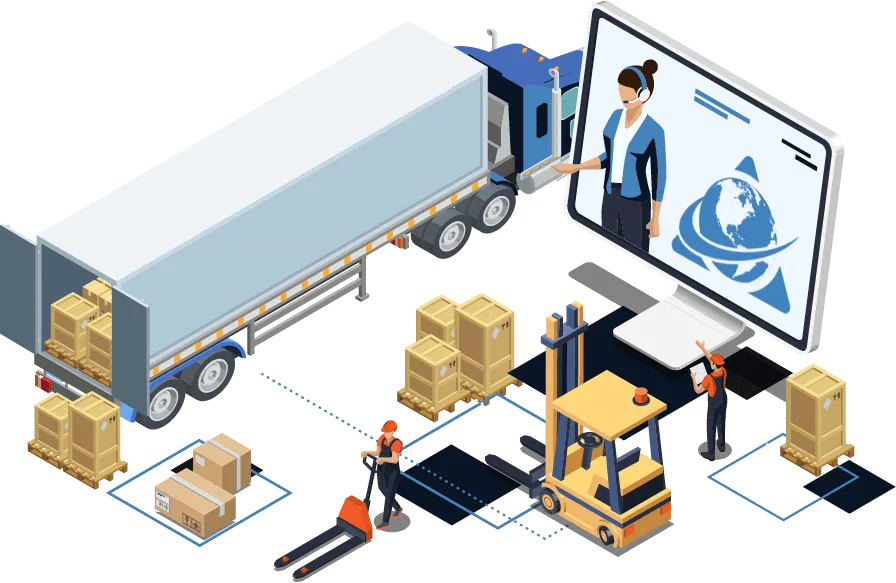
Managing transportation internally can require significant time and expertise. Shippers may need to maintain relationships with multiple carriers, negotiate contracts, monitor rates, track shipments, resolve service issues, audit freight invoices, manage claims, and continually evaluate whether their transportation program is performing as it should.
Outsourcing some or all of these responsibilities to a logistics provider gives shippers access to transportation expertise, carrier relationships, technology, and operational support without having to build every capability internally. Depending on the shipper’s needs, a logistics provider can manage individual freight transactions or take responsibility for the broader transportation program.
Our Transportation Capabilities
Truckload & LTL Transportation
We manage both full truckload and less-than-truckload shipments, aligning freight requirements with reliable carrier options and competitive market pricing.
Capacity & Carrier Coordination
Through an established network of transportation providers, we help shippers secure capacity and maintain service continuity during periods of tight supply.
Freight Planning and Shipment Execution
From scheduling and dispatch to real-time tracking and issue resolution, we manage the operational details that keep freight moving smoothly.
Expedited and Time-Sensitive Shipping
For urgent shipments, we support expedited transportation solutions designed to meet critical delivery timelines.
Specialized Transportation Solutions
We coordinate flatbed, oversized, temperature-controlled, and other specialized freight through experienced transportation partners.
Freight & Logistics Management
Get in touch with an expert to discuss your challenges and start managing freight effectively.
How TLI Manages Freight for Shippers
TLI provides logistics services designed around each shipper’s transportation requirements rather than a one-size-fits-all program. Our team can manage carrier sourcing, transportation RFPs, rate negotiations, freight booking, shipment tracking, freight audits, claims, reporting, and ongoing transportation management. Shippers can use individual services as needed or delegate broader logistics responsibilities to TLI through a fully managed logistics program.
TLI also combines its logistics expertise with ViewPoint, our proprietary transportation management system. ViewPoint gives shippers access to transportation information, documents, contracts, shipment activity, tracking, and other freight-management tools in one platform. This combination of people, technology, and transportation expertise allows TLI to support the day-to-day execution of freight while helping shippers manage their transportation program more strategically.
Partnering with an Expert: TLI
50+
Industries
30,000+
Carriers in our network
85M+
2025 total Mileage
535M+
2025 total Tonnage
Managed Logistics & Freight Services for Shippers
Services to Optimize Your Logistics
Delegating your logistics operations to TLI gives your team more time to focus on running and growing your business instead of managing freight. TLI handles the complexities of transportation, including carrier sourcing, rate negotiations, shipment management, tracking, freight audits, and claims. Through our fully managed logistics services, we help simplify day-to-day shipping, reduce administrative workloads, and provide greater control over your transportation spend. Rather than managing multiple carriers and systems yourself, you gain a dedicated logistics partner focused on your shipping requirements.
With TLI, you also gain the technology, carrier network, and freight expertise to continuously improve your logistics program. Our proprietary ViewPoint TMS brings quoting, booking, tracking, carrier management, and reporting together in one platform, giving your team real-time visibility without the burden of managing multiple systems. TLI also analyzes your historical shipping data, negotiates competitive carrier contracts, audits freight invoices, manages claims, and monitors carrier performance to identify opportunities for improvement. As your business grows, our dedicated logistics team helps your transportation program adapt without requiring you to add internal staff or take on additional operational complexity.

Carrier Management
TLI manages carrier sourcing, transportation RFPs, and day-to-day freight services to simplify your logistics program. Our team handles the work of sourcing qualified carriers, negotiating transportation rates, managing RFPs, and coordinating freight so your team can spend less time managing logistics and more time running your business.
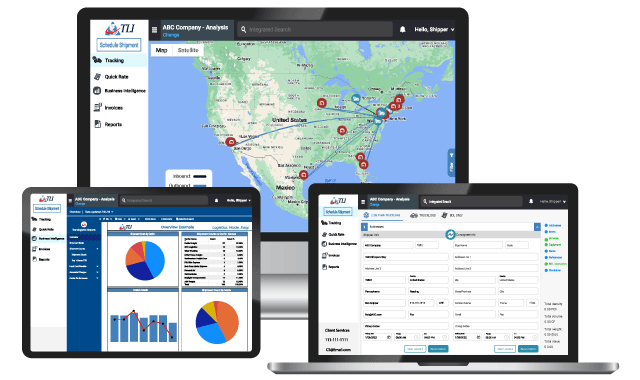
ViewPoint TMS
Built for shippers, ViewPoint TMS gives your team one place to manage carrier contracts, commodities, shipping documents, and shipment information. Centralizing your freight data makes it easier to access the information you need, streamline daily shipping tasks, and keep your transportation program organized.
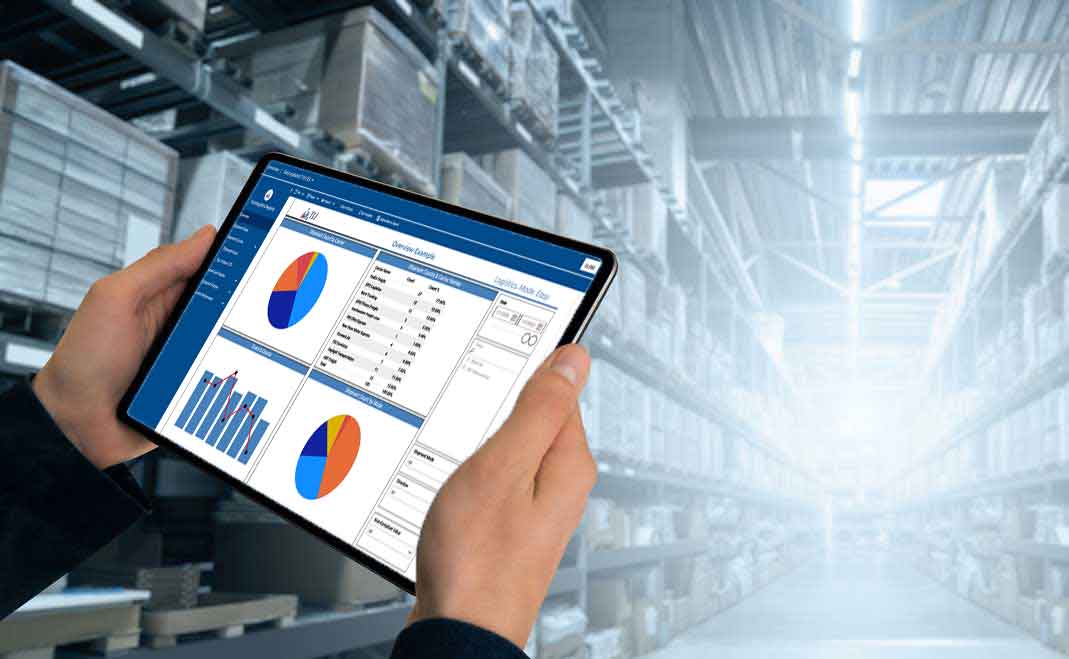
Gain Efficiencies
TLI provides fully managed logistics services designed to optimize your shipping program, reduce freight costs, and simplify operations. Through strategic load consolidation, multi-stop truckload planning, and custom carrier contract negotiations, we identify opportunities to improve efficiency, maximize transportation savings, and deliver a solution tailored to your shipping needs.
How Effective Logistics Management Can Improve Transportation
Effective logistics management looks beyond the price of an individual shipment. Transportation costs and service can be influenced by carrier selection, lane strategy, shipment characteristics, consolidation opportunities, contract terms, accessorial charges, routing decisions, and the way freight is tendered and managed.
For example, multiple shipments moving to similar destinations may present an opportunity for consolidation or multi-stop truckload planning. A transportation RFP can also allow a shipper to compare carrier proposals against its actual shipping profile and negotiate contracts based on its specific lanes and volumes. Reviewing historical shipment data helps identify these opportunities and provides a factual basis for transportation decisions.
Logistics is the planning, coordination, and management of how goods move from origin to destination. It includes transportation planning, carrier selection, shipment execution, tracking, freight cost management, and resolving issues that occur during transit. For businesses with recurring freight, effective logistics management helps control transportation costs while improving service and shipment visibility.
A logistics company manages the transportation and movement of freight on behalf of a shipper. Depending on the service, this can include carrier sourcing, rate negotiation, transportation RFPs, shipment booking, tracking, freight auditing, claims management, reporting, and ongoing carrier performance management. A managed logistics provider can also act as an extension of a shipper’s internal logistics team, handling day-to-day transportation while the company focuses on its core business.
Logistics services are the transportation, technology, and management services used to move freight efficiently from origin to destination. Services can include carrier sourcing, freight brokerage, transportation RFPs, rate negotiation, LTL and truckload management, shipment tracking, freight auditing, claims management, TMS technology, and logistics reporting. The right combination depends on a shipper’s freight volume, transportation network, service requirements, and internal resources.
Logistics focuses primarily on the movement, storage, and management of goods, while supply chain management encompasses the broader flow of products, information, suppliers, inventory, and resources. Logistics is therefore one component of supply chain management. For example, transportation management, carrier selection, freight execution, and shipment visibility fall within logistics, while procurement, production planning, inventory management, and supplier strategy extend beyond logistics.
Freight logistics is the planning and execution of transporting goods by LTL, truckload, parcel, intermodal, expedited, and other transportation modes. It includes selecting the appropriate transportation mode, sourcing and managing carriers, determining routing, booking shipments, tracking freight, managing transportation costs, and resolving service issues. Effective freight logistics connects transportation decisions to a shipper’s broader cost and service requirements.
Logistics management can reduce shipping costs by improving carrier selection, negotiating transportation contracts, optimizing transportation modes, consolidating compatible shipments, and identifying billing or accessorial errors. A structured logistics program also uses shipment data to benchmark rates, evaluate carrier performance, and identify recurring opportunities to reduce freight spend. For larger shippers, transportation RFPs can create custom carrier contracts based on actual lanes, volumes, and shipping requirements rather than relying on generic rates.
Third-party logistics, or 3PL, is the practice of outsourcing transportation and other logistics functions to an external logistics provider. A 3PL can manage carrier sourcing, freight booking, transportation contracts, shipment tracking, freight audits, claims, reporting, and other logistics functions on behalf of a shipper. Additional 3PL services can include warehousing and distribution aid. A managed 3PL relationship can function as an extension of the shipper’s internal logistics team while providing transportation expertise, technology, and carrier relationships.
Freight brokerage and logistics management overlap, but they are not necessarily the same service. A freight broker typically arranges individual shipments by connecting shippers with motor carriers. A broader logistics provider can manage the transportation program itself, including carrier sourcing, contract negotiation, RFP management, shipment execution, freight auditing, claims, reporting, and ongoing optimization. TLI provides both transactional freight services and fully managed logistics programs depending on the shipper’s needs.
Manufacturers, distributors, wholesalers, and other businesses with recurring freight volumes can benefit from professional logistics services. Logistics support becomes particularly valuable when a company manages a significant LTL or truckload spend that exceeds $1M, multiple facilities, numerous carriers, complex shipping requirements, or a growing transportation operation. Companies may also outsource logistics when their internal team is spending too much time on daily freight execution instead of strategic transportation management.
Logistics can include LTL, truckload, parcel, intermodal, expedited, flatbed, temperature-controlled, and other specialized transportation services. The appropriate mode depends on factors such as shipment size, weight, distance, delivery requirements, commodity, and cost. Effective transportation management evaluates these factors to determine the appropriate mode and carrier for each shipment.
TLI takes a shipper-first, non-asset-based approach to logistics management. Rather than forcing shippers into a fixed carrier network or one-size-fits-all transportation program, TLI builds logistics solutions around each shipper’s freight profile, existing carrier relationships, service requirements, and cost objectives. Our services can include carrier sourcing, transportation RFPs, freight execution, freight auditing, claims management, reporting, and ViewPoint TMS technology. This allows TLI to support both individual freight needs and fully managed transportation programs structured uniquely around an enterprises needs.
Your company may benefit from logistics support if freight costs are difficult to control, your team spends significant time managing carriers, shipments lack visibility, invoices require frequent manual review, or transportation decisions are being made reactively. Companies with growing freight volumes, multiple locations, recurring LTL or truckload shipments, or limited internal transportation resources may also benefit from outsourcing some or all of their logistics management.
Managed logistics is the outsourcing of some or all of a company’s transportation management to a third-party logistics provider. A managed logistics provider can handle carrier sourcing, transportation RFPs, rate negotiation, shipment execution, tracking, freight auditing, claims, reporting, and ongoing optimization. The goal is to give shippers the expertise, technology, and operational support needed to manage transportation without having to perform every logistics function internally.
A TMS is software used to manage transportation, while managed logistics combines transportation technology with a team that manages the freight program. A TMS can provide rate shopping, shipment booking, tracking, reporting, and automation. Managed logistics adds the people and expertise needed to source carriers, negotiate contracts, manage transportation RFPs, audit freight bills, resolve issues, and continuously optimize the program. TLI combines its managed logistics services with its proprietary ViewPoint TMS.