
Switching freight brokers is often simpler than shippers expect. Many put it off for months because they worry about missed shipments, billing problems, or a transition that consumes their team’s time. In practice, the process is well understood, and the transition can be managed without disrupting your day-to-day shipping.
The process also depends on the size and complexity of your supply chain operation. A small business moving to its first set of blanket discount rates will have a very different transition than a large multi-national enterprise managing a multi-month contract change that is multi-modal. This guide walks through what to expect at each stage, so you can make the switch with a clear plan and fewer surprises.
The Switch Looks Different by Company Size
Not every shipper needs the same onboarding path. General breakdown:
| Shipper Type | Contract Type | Historical Data Needed | Timeline |
|---|---|---|---|
| Small Business | Blanket / group discount pricing | Not required | Same Day |
| Mid-Market | Custom contract | 3 months of shipment data | 5 to 6 weeks |
| Large Enterprise | Custom contract | 6 months of shipment data | 6 to 8 weeks |
Switching as a Small Business
If you’re a small business, the switch is simple by design. There’s no lengthy data collection process because pricing is built on blanket and group discount structures rather than a custom-negotiated contract.
Here’s what it looks like in practice:
- We schedule a go-live date. This gives your team a clear cutover point instead of an open-ended transition.
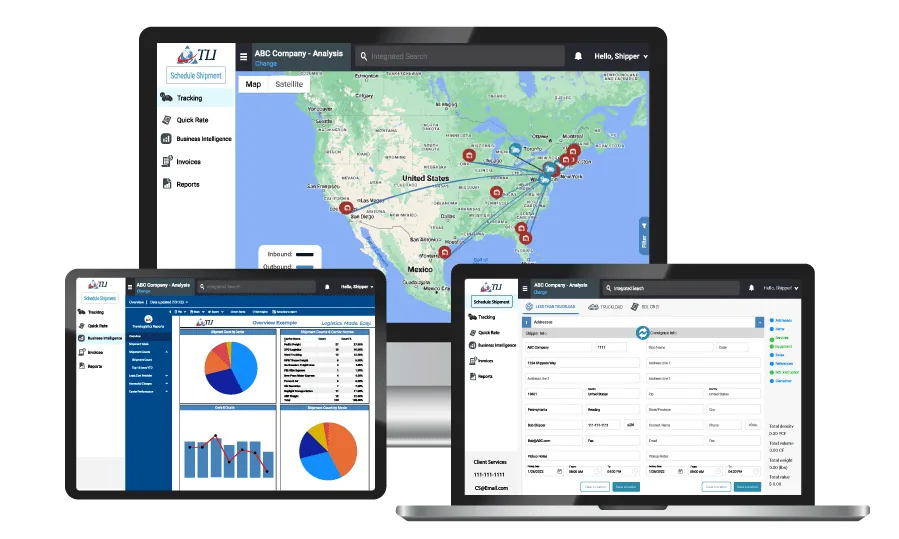
- You get VP (ViewPoint TMS) training. A short session walks your team through quoting, booking, and tracking before go-live.
- You start booking and quoting immediately using blanket or group discount rates, no waiting on a custom rate build.
Most small business shippers are fully operational within days, not weeks.
Switching as a Mid-Market or Enterprise Shipper
Larger shippers often need a custom contract, and a custom contract should be built around real shipping data. That makes the transition more structured, but it does not have to be complicated.
The key is to break the process into clear steps. You can analyze your current freight, establish the right service and pricing requirements, evaluate brokers, and manage the transition without disrupting day-to-day shipping.
1. Provide Historical Shipment Data
- Mid-market shippers: plan to provide about 3 months of shipment history.
- Large enterprises: plan to provide about 6 months of shipment history.
This data lets TLI help build accurate lane-level pricing for you instead of guessing at your freight profile, or resorting to using generic pricing. You don’t need to reformat anything yourself. We provide a data request template that you can send to your incumbent provider to pull the exact fields we need.
2. Notify Your Incumbent Provider
Once you’ve decided to switch, we’ll help you put together a short letter to your current broker or 3PL letting them know your effective transition date. This keeps the relationship professional and gives them a clear cutoff, which matters if you still have open shipments or invoices in progress with them.
3. Notify Your Carriers
This notification step gets skipped more often than it should. It is also one of the most common causes of billing problems during a broker transition.
Before your go-live date, carriers need clear instructions on who to bill and where to route your shipments. Without that notice, you can run into:
- Invoices routed to the wrong party
- Duplicate billing during the overlap period
- Wrong contracts applied
- Confusion at the dock about who to call
- Inbound shipments from key vendors getting tendered to the wrong provider
We help coordinate this outreach so nothing falls through the cracks.
4. Upload Your Address Book
Send over a spreadsheet of your key vendor and customer locations. Loading these addresses into ViewPoint ahead of time means your team can quote and book shipments in seconds instead of typing in a new address every time. This is a small step that saves real time once you’re live.
5. Tell Us If You Need Integration or API Access
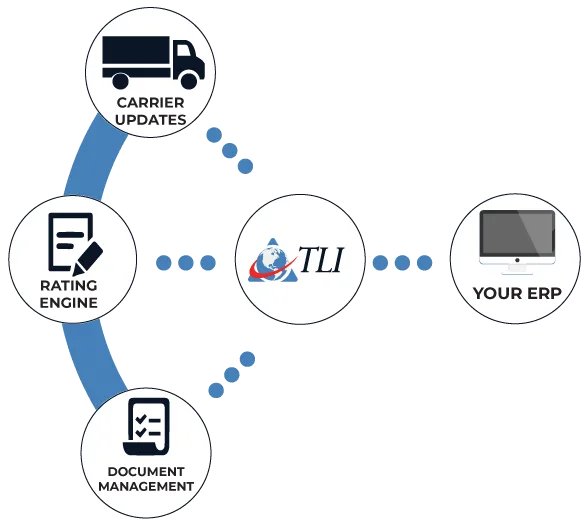
If you’re running an ERP or order management system and want your freight data flowing automatically, let us know early. Integration and API setup take longer to configure than a standard onboarding, so the earlier we know your systems and requirements, the faster we can get it running alongside your go-live date, not after it.
6. Get Your Commodities Set Up
Accurate commodity data matters for classification, pricing, and claims. There are two ways we handle this:
- If you have historical invoices, we can use them to build your commodity list during onboarding.
- If you don’t have that information readily available, send us your catalog or item list. We’ll build the commodity profile for you as part of the transition, so there’s no extra homework for your team.
What This Looks Like End to End
For mid-market and enterprise shippers, the full sequence typically runs:
- Kickoff call and data request sent
- Shipment history received and RFP launch begins
- Contract finalized and uploaded into the TMS
- Incumbent notification letter sent
- Carrier notifications go out
- Address book and commodity data loaded into ViewPoint
- Go-live date and training
Switching freight brokers doesn’t have to mean downtime, billing errors, or a chaotic few weeks. Small businesses can be quoting and booking within days. Mid-market and enterprise shippers need more structure, custom contracts, historical data, carrier coordination, but the process is predictable when it’s broken into clear steps.