
Stop wondering whether you’re getting the rates you negotiated. TLI uses your actual shipping history to negotiate carrier contracts built around your freight. Following that, we audit every invoice against those contracts to ensure you pay exactly what was agreed.
30+
Years routing freight
30K+
Carrier network
85M+
Annual miles managed
4.9★
430+ Google Reviews
What Is Contract Logistics?
Contract logistics is the practice of negotiating fixed, pre-set shipping rates and service terms with carriers ahead of time, instead of manually quoting each shipment individually on the spot market. A 3PL like TLI collects your historical shipment data, uses it to run a competitive Request for Proposal (RFP) with carriers, and locks the winning rates into a signed contract that’s loaded directly into your Transportation Management System (TMS). The result: predictable pricing, less rate volatility, and a paper trail that makes it possible to audit whether carriers are actually billing what they agreed to.
Contract logistics applies differently depending on the freight mode, which is exactly why TLI runs separate playbooks for Less-Than-Truckload (LTL) and Full Truckload (FTL) freight below.
Quick definition for the skimmers: Contract logistics = your shipping data → a carrier RFP → a locked, contracted rate → loaded into your TMS → audited on every invoice.

Why Shippers Move to Contract Logistics
If you’re currently quoting freight on the spot market or re-shopping rates every time a shipment comes up, you’re paying a volatility tax. And you have almost no way to catch it when a carrier bills you outside the terms you agreed to. Here’s what changes once your lanes are under contract:
- Predictability. You know your rate before the shipment moves, not after.
- Negotiating leverage. A carrier competing for your volume under an RFP will price more aggressively than one quoting a single load.
- Accountability. A signed contract loaded into your TMS is a benchmark, every invoice can be checked against it automatically.
- Recovered dollars. Billing errors happen constantly (wrong accessorials, reclassified freight, expired rates applied late). Without a contract and an audit process, most shippers simply never notice.
This is also where a lot of shippers hesitate, because getting here means handing over your shipment data. Fair. Here’s exactly what we do with it, and why it’s worth it.
Contract Logistics for LTL: From Raw Data to a Locked, Audited Rate
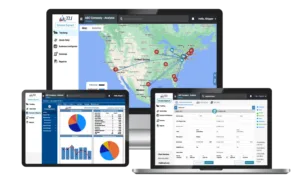
Less-Than-Truckload pricing is notoriously opaque, base rates, discounts off a tariff, accessorials, and fuel surcharges all move independently, which makes it one of the easiest places for costs to drift without anyone noticing. In addition, many shippers do not have their own rating engine built to run simulations with the historical data against the proposal, in the absence of data-driven decision making is excessive spending risks. Here’s how TLI turns that chaos into a contracted, defensible rate.
Step 1 — Send Us Your Historical Shipment Data
We start with what actually happened, not guesses. Send us your LTL shipment history (a CSV export from your TMS, ERP, or even a spreadsheet works): origin zips, destinations, weights, freight class, accessorials, and current rates. If dimensions are included this opens up the contract types we can also source for you. The more history, and details you can share, the sharper the RFP and the stronger your negotiating position. If your data management has been poor up to this point, we can run you on blankets temporarily as we build your data and shipper profile for you, this will arm you best for getting idealized pricing back from the sourcing event with the motor carriers. We often sign NDAs at this point with shippers. Everything you send is handled under confidentiality and used for exactly one purpose: building your rate program.
Step 2 — We Scrub the Data
Raw shipment data is messy: mis-classed freight, inconsistent accessorial coding, duplicate entries. Our team cleans and normalizes it so the RFP we build reflects your actual shipping profile, not a distorted one. This step alone often surfaces classification errors, and consolidation opportunities that have been quietly inflating your rates for years.
Step 3 — We Launch a Carrier RFP
With clean data in hand, we take your lanes to our network of 30,000+ vetted carriers and run a competitive Request for Proposal. Because we’re bringing carriers real volume and real lane density, not a single shipment, carriers price aggressively to win your business.
Step 4 — Our Rating Engine Compares Every Bid Against Your Baseline
This is where TLI’s technology does the heavy lifting. Our proprietary rating engine benchmarks every carrier proposal against your scrubbed historical data, lane by lane, so you can see exactly where each bid beats, matches, or loses to what you’re paying today, no manual spreadsheet gymnastics required.
Step 5 — We Lock In the Carriers
Once you’ve selected the winning carrier(s), we finalize the contracted rates and terms, the number you negotiated is the number that’s locked in.
Step 6 — Your Rates Go Live in the TMS
Your new contracted rates are uploaded directly into ViewPoint TMS, so quoting, booking, and rating shipments against the correct negotiated rate happens automatically from day one. No more manually checking a rate sheet.
Step 7 — Every Invoice Gets Audited
This is the step most shippers skip, and where a great deal of the leakage happens. Without this step there consistently appears to be 2-3% of excessive spending. When you partner with TLI, every carrier invoice is automatically checked against your locked contract terms through our freight audit process. If a carrier bills outside the agreed rate, misapplies an accessorial, or reclassifies freight incorrectly, it gets flagged.
Step 8 — We Dispute the Mistakes
We don’t just flag errors, we fight them. Our audit team disputes discrepancies directly with the carrier on your behalf and pursues the recovery. It’s part of why TLI shippers collectively recovered $634,608 in freight bill audit findings last year alone.
The takeaway: an LTL contract without an audit process is just a paper rate. TLI treats the contract as the beginning of the relationship, not the end of the project.
Contract Logistics for FTL: Built Around Your Recurring Lanes
Full Truckload contract logistics works differently than LTL, because FTL pricing lives and dies on lane-specific dynamics: density, seasonality, equipment type, and backhaul opportunities. TLI’s FTL process is built to be low-friction and genuinely no-obligation at every step. There are also intensive motor carrier vetting steps we take to ensure qualified carriers are arriving to pickup your cargo.
Step 1 — Identify Your Recurring Lanes
Contract logistics makes the most sense for lanes you run consistently: weekly, monthly, or seasonally recurring freight where a fixed rate actually pays off. We start this FTL contract sourcing process by identifying which of your lanes have the volume and repetition to justify a contract.
Step 2 — Send Your Data (If You Have It — It Helps)
If you can share historical volume, frequency, origin/destination pairs, and equipment requirements for those lanes, it sharpens everything downstream. No data on hand? We can still build a proposal off current market conditions and your stated lane needs, but the more shipment and lane history you give us, the more precisely we can bid & price it.
Step 3 — We Scrub and Analyze the Lane Data
Just like on the LTL side, we clean and organize what you send so the proposal reflects your real freight patterns: not averages or assumptions. With that said, I have seen shippers respond back following this stage forgetting to advise, “Oh, that was a multi-stop!”, “Oh, this lane requires a drop trailer!” Please be sure to communicate all unique requirements on the front end.
Step 4 — We Deliver a Proposal. No Cost. No Commitment.
You get a clear, side-by-side view of what a contracted rate on your recurring lanes could look like. That’s it. There’s no pressure and no sales script waiting on the other end. If you do not like the proposal then you do not need to move forward.
Step 5 — Your Call
If you like what you see, we launch a full RFP with our carrier network to lock in contracted capacity and rates on those lanes. If it’s not a fit, that’s completely fine, you keep the status quo, no hard feelings, and the door stays open whenever your freight profile changes. Once you give the green light, we take your lanes to market with carriers who have the equipment, lane familiarity, and capacity to commit, and lock in the negotiated rates and service terms.
Step 6 — Contracts Load Into Your TMS, and Every Invoice Gets Audited
Just like LTL, your contracted FTL rates go live in ViewPoint TMS, and every invoice is checked against the agreed terms — with disputes filed on your behalf when something doesn’t match.
The takeaway: you’re never locked into a proposal with a carrier you don’t like. The only thing you risk by sending us your lane data is finding out if you’re overpaying.
The Technology Behind Your Contract
As your company grows, transportation becomes too complex to manage through spreadsheets, emails, and institutional knowledge alone. Relying on what someone remembers a shipment “should have cost” or manually comparing invoices against booked rates inevitably leads to missed savings, billing errors, and costly inefficiencies. Modern transportation management requires a technology stack capable of analyzing historical shipping data, modeling proposed carrier contracts against your actual freight profile, automatically rating shipments, auditing invoices, and providing actionable reporting.
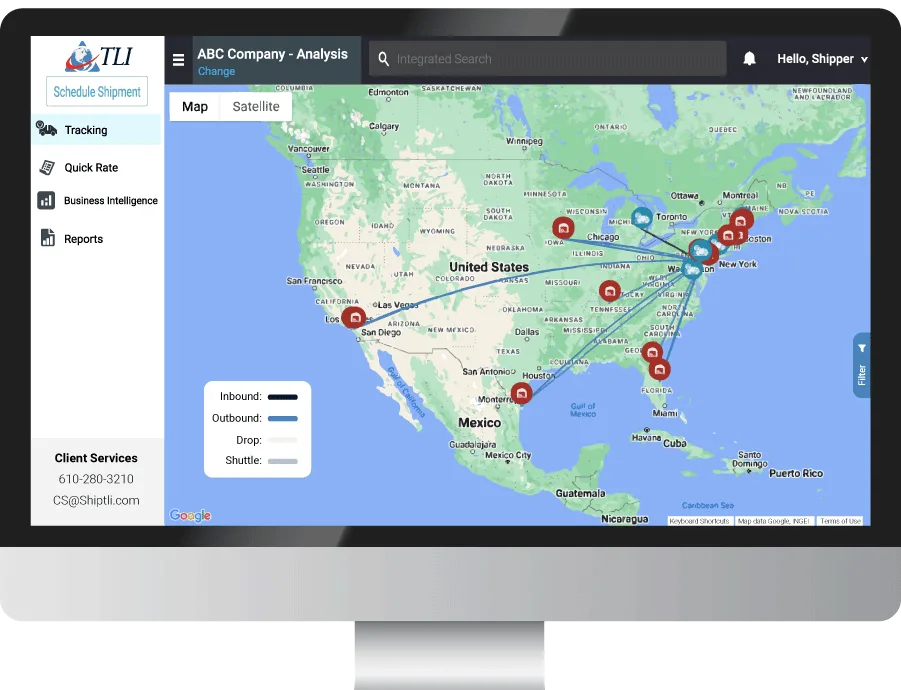
Without these essential capabilities, it’s nearly impossible to know whether you’re paying competitive rates or making the best routing decisions. That’s why partnering with a logistics provider equipped with the right technology and experienced transportation professionals is essential. ViewPoint TMS gives shippers the visibility, automation, and analytical tools needed to optimize freight spend, improve operational efficiency, and build a transportation program that scales alongside the business
TMS Technology Information:
- Rating Engine — Benchmarks every carrier RFP response against your historical baseline, lane by lane, so decisions are based on data, not gut feel.
- ViewPoint TMS — Your contracted rates, carrier assignments, and shipment documents (BOLs, PODs, invoices) live in one system, so your team always books against the correct negotiated rate.
- Freight Audit — Every invoice is automatically checked against your contract terms; discrepancies are flagged and disputed on your behalf.
- 30,000+ Carrier Network — Depth and density that gives your RFP real competitive pressure, whether it’s a single recurring FTL lane or a national LTL program. The carrier vetting is also critical as it is not simply a goal of getting the cheapest carrier, it is about getting a qualified carrier that will service your freight well at a fair market value. It is not worth saving $100, and having your freight held hostage by a bad actor, so this is why partnering with TLI is so critical.
What shippers say about TLI
“I can’t say enough about the dedication of Lorraine and Ashley. They are both incredibly knowledgeable, responsive, and always go the extra mile to ensure everything runs smoothly. Whether it’s problem-solving, coordinating shipments, or keeping communication clear, they handle it all with efficiency and a great attitude. It’s a pleasure working with such a reliable team!”
-Allison Kline
“I’ve been working with TLI for the past 3 years and they are wonderful to work with. I appreciate the team and how great they are to work with, especially Diane C – thank you for your awesome customer service and always keeping me informed !”
– Kathleen Mejia
“I couldn’t be more impressed with their professionalism and reliability, especially from Sarah and Sherry. From start to finish, they’ve always provided clear communication and exceptional customer service. I highly recommend Translogistics to anyone looking for a dependable and trustworthy trucking broker!”
-Nenad Ljubanovic
Frequently Asked Questions About Contracting Freight:
Contract logistics specifically refers to negotiating and locking in fixed carrier rates through an RFP process, then auditing invoices against those contracted terms. Managed logistics is broader, it’s TLI acting as your outsourced freight department across quoting, booking, tracking, and reporting. Many TLI shippers get both: contracted rates managed inside a full-service program.
Yes, for LTL, historical data is what makes the RFP and rating engine work, it’s the foundation of the entire process. For FTL, data helps sharpen the proposal but isn’t strictly required to get a proposal back; we can still build contracts off your stated lane needs and current market rates.
Yes. Data shared with TLI for an RFP or rate analysis is used exclusively to build and evaluate your program and is not shared outside that process.
If the numbers don’t work for you, you simply stay with your current setup. No cost, no penalty.
Once your contracted rate is loaded into the TMS, every carrier invoice is reconciled against those carrier contract terms. When a carrier bills a rate, accessorial, or freight class that doesn’t match the contract, TLI files a dispute with the carrier and pursues the billing correction on your behalf.
Timelines depend on how much historical data is available and how many lanes or carriers are involved, but most LTL RFPs move from data submission to a live, contracted rate within a five weeks. FTL proposals can often be turned around even faster since they’re typically scoped to a smaller set of core lanes.
TLI’s team includes multiple Certified Transportation Broker (CTB) holders, and we’re an FMCSA licensed and bonded property broker (MC# 266554, USDOT# 2216268) headquartered in Exton, PA, routing freight since 1994.