
For shippers navigating volatile freight markets, managed transportation offers a strategic approach to controlling costs while improving service reliability. By partnering with experienced providers, like TLI, who handle RFP management, carrier contracting, mode optimization, and performance monitoring, companies gain operational efficiency without expanding internal headcount.
This comprehensive approach transforms how organizations handle freight movements. Rather than managing dozens of carrier relationships and struggling with rate negotiations, shippers work with a single managed logistics partner who coordinates every aspect of their transportation network.
What Transportation Management Services Include
Transportation management providers offer more than basic freight brokerage. These partnerships deliver comprehensive oversight of shipping operations through advanced supply chain technology and expert transportation analysis.
Core services typically encompass carrier network management, freight audit and payment processing, shipment tracking across all modes, and detailed performance analytics. Providers maintain relationships with thousands of carriers, enabling them to secure competitive rates and ensure capacity during peak seasons.
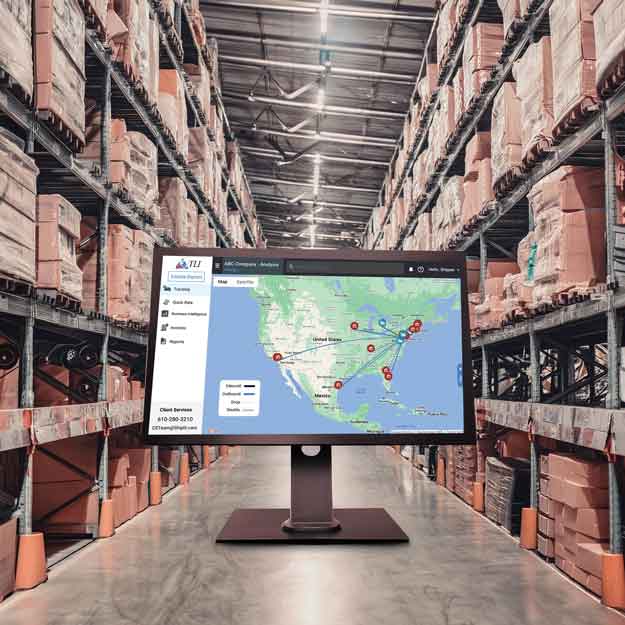
The ViewPoint TMS technology platform serves as the central nervous system. Real-time tracking through motor carrier API integrations provides complete visibility into shipment status, while analytics tools identify cost reduction opportunities and service improvements. ViewPoint TMS platform integrates directly with your enterprise resource planning software, creating automated data flow across the supply chain.
How Shipping Companies Reduce Logistics Expenses
Cost reduction stems from multiple sources. Volume aggregation across shipper networks enables providers to negotiate preferential rates that individual companies cannot achieve independently. According to research from NTT Data and Penn State, shippers utilizing third-party logistics services report consistent freight cost reductions annually.1
However, savings extend beyond rate negotiations. Optimization algorithms select the most economical carrier and service level for each shipment based on actual requirements. This prevents paying for expedited service when standard transit times suffice.
Freight audit capabilities catch billing errors before payment occurs. Industry studies indicate billing inaccuracies occur in roughly 8-12% of freight invoices. Automated auditing prevents overpayment while ensuring carriers receive correct compensation. TLI typically recoups 2-4% of the LTL annualized spend through the freight invoice audit service.
Technology Platforms Driving Supply Chain Visibility
Modern transportation management platforms provide unprecedented visibility into freight operations. Shippers access real-time shipment status across all modes and carriers through unified dashboards.
Predictive analytics capabilities forecast potential delivery delays based on weather conditions, traffic patterns, and historical carrier performance. This enables proactive communication with customers rather than reactive problem-solving after service failures occur. Data analytics reveal patterns invisible in day-to-day operations. Which lanes consistently experience capacity constraints? Where do delivery failures cluster geographically? What percentage of shipments arrive damaged by carrier? These insights drive strategic decisions about carrier partnerships, packaging specifications, and routing strategies.
The Federal Motor Carrier Safety Administration maintains comprehensive carrier safety records2. Leading platforms integrate this data directly into carrier selection algorithms, automatically excluding carriers with poor safety records from consideration. This protects shippers from potential liability while promoting industry safety standards. In addition to this resource, TLI is integrated with Highway which offers great carrier vetting protection for shippers.3
Benefits Beyond Direct Cost Reduction
While cost savings justify transportation management initiatives, additional benefits often prove equally valuable. Service consistency improves as providers implement standard operating procedures and actively manage carrier performance.
Internal teams redirect time from tactical load tendering execution toward strategic planning. Transportation managers focus on network optimization, load consolidation, and supplier collaboration rather than daily firefighting. This shift often reveals opportunities for warehouse consolidation, modal conversions, or customer delivery requirement modifications.
Risk mitigation becomes systematic rather than reactive as these solutions are baked into your actual processes. Providers maintain diverse carrier networks, preventing overdependence on single carriers. The data within ViewPoint TMS populates which carrier is least cost provider by 100cwt, by accessorial selection or by density among many other variables. That is why it is critical to embrace this dynamic routing guide solution. When disruptions occur, alternative capacity sources deploy immediately. Business continuity planning extends to transportation operations, not just manufacturing and technology systems.
Selecting the Right Service Provider
Choosing a transportation management partner requires careful evaluation. Technology capabilities deserve close scrutiny. Does the platform provide the specific visibility and analytics your organization needs? Can it integrate with existing systems without extensive custom development?
Industry expertise matters significantly. Providers with deep experience in your sector understand unique requirements and common challenges. A partner serving primarily retail clients may lack expertise in industrial equipment transportation, where dimensional weight and specialized equipment requirements differ substantially. Consider the carrier network breadth and depth. Providers should maintain relationships across multiple modes, including less-than-truckload, truckload, intermodal, and expedited options. Geographic coverage should match your shipping patterns, with strong carrier availability in your highest-volume lanes.
Implementation Considerations for Success
Successful implementations require realistic timelines and adequate resources. Data migration from existing systems demands attention to detail. Inaccurate addresses, inconsistent product descriptions, and incomplete customer information create operational headaches after go-live.
Establish clear performance metrics before implementation begins. What key performance indicators matter most? On-time delivery percentage, freight cost per unit shipped, claims frequency, and carrier scorecard metrics provide objective measures of program success.
Change management cannot be overlooked. Employees accustomed to existing processes need training and support during the transition. Communication should emphasize how the new approach benefits their daily work, not just corporate objectives. A good timeline for integrating TLI effectively into your supply chain would be 4-6 weeks time.
Long-Term Strategic Value
Transportation management partnerships evolve over time. Initial implementations focus on process standardization and quick wins. As relationships mature, providers contribute strategic insights about network design, modal optimization, and emerging industry trends.
Continuous improvement becomes embedded in operations. Regular business reviews examine performance against objectives, identify new opportunities, and adjust strategies based on changing business conditions. The partnership model encourages innovation rather than maintenance of the status quo.
Companies that view transportation as a strategic capability rather than a necessary expense position themselves for sustainable competitive advantage. Every shipment reflects brand promises to customers. Reliable, cost-effective transportation enables those promises to be kept consistently.
Footnotes
- NTT DATA Services, 2022 Third-Party Logistics Study: Results and Findings of the 26th Annual Study (2022), https://us.nttdata.com/en/-/media/assets/reports/3pl-2022-study.pdf. ↩︎
- Federal Motor Carrier Safety Administration, “Safer Company Snapshot and Safety Measurement System,” accessed February 4, 2026, https://www.fmcsa.dot.gov/ ↩︎
- Highway, “Translogistics, Inc (TLI) Partners With Highway to Elevate Carrier Vetting and Secure Sensitive Shipments,” press release, January 6, 2025, https://highway.com/press-releases/translogistics-inc-tli-partners-with-highway-to-elevate-carrier-vetting-and-secure-sensitive-shipments ↩︎