
Within this article we discuss everything from base rates and tariffs to freight class, CWT weight breaks, fuel surcharges, and how the biggest mistakes shippers make cost them thousands.
TL;DR LTL Quoting Guide
An LTL (Less-Than-Truckload) freight quote is a priced estimate for transporting one or more pallets that don’t fill an entire trailer. Rather than buying the whole truck, you purchase space (priced in linear feet) proportional to your shipment’s weight, dimensions, freight class, and lane distance. Carriers consolidate freight from multiple shippers in a single trailer, making LTL ideal for shipments between roughly 150 and 15,000 lbs. The final rate you pay is a function of: a base rate from a tariff, a carrier-negotiated discount, a fuel surcharge, and any accessorial charges for special handling. Quoting accurately, with correct weight, dimensions, and freight class, is critical to get an accurate quote. A wrong weight estimate or incorrect freight class entry can trigger reweigh charges, reclassification fees, and surprise invoices that blow your freight budget.
What Is LTL Freight? What Exactly Are You Buying?
Less-Than-Truckload (LTL) freight is a shipping method in which multiple shippers share space on the same trailer. Unlike Full Truckload (FTL) shipping, where one shipper pays for the entire trailer regardless of how much space is used, LTL shippers pay only for the cubic and weight capacity their freight occupies.1
When an LTL carrier accepts your shipment, it enters a hub-and-spoke network. Your freight may be loaded and unloaded at multiple terminals called break-bulk facilities before it reaches its destination. This multi-touch process is a fundamental difference from FTL and directly influences both transit times and claims risk.
150 lbs
Minimum practical LTL weight (lbs). Below this, couriers & parcel are more efficient.
15K
Upper LTL weight threshold (lbs). Above ~12–15K pounds, Volume LTL or partial FTL usually wins on cost.
4-6x
Average number of times LTL freight is handled vs. 1–2× for FTL, directly increasing claims exposure.
The LTL Pricing Ecosystem at a Glance
Understanding what drives your bill requires familiarity with several interacting variables. Every LTL rate is essentially derived from a single governing formula:
Gross Charge = (Base Rate × CWT) × (1 – Discount%) + Fuel Surcharge + Accessorials
Net Charge = Gross Charge × (1 – any additional contract minimums or maximums)
Shippers partner with logistics providers like TLI because evaluating freight costs across multiple carriers and contract structures requires sophisticated tools. TLI’s rating engine enables powerful scenario planning by modeling the full range of contract types, inputs, and variables that impact transportation pricing.
When shippers manage large datasets across many lanes, each with different base tariffs, accessorial charges, and carrier agreements, accurate comparison becomes extremely complex. Even small structural differences, such as CWT weight breaks, can significantly change the true cost of a shipment. Additional contract structures, including linear-foot pricing, point-to-point rates, and other specialized agreements, further complicate the analysis.
TLI’s all-in-one rating platform brings these variables together in a single environment, allowing shippers to evaluate options with precision and confidence. By modeling each contract structure and pricing factor simultaneously, TLI empowers customers to identify the most cost-effective carrier and shipping strategy for every lane. Each term in that formula has depth, and misunderstanding any one of them is where shippers lose money. The following sections unpack every variable in plain language.
LTL Pricing Fundamentals
Base Rates & Tariffs
Every LTL carrier publishes a base rate tariff, a pricing table that assigns a dollar cost per hundredweight (CWT) based on freight class and mileage band. Examples would include Estes, XPO, and Old Dominion’s (OD-D) tariffs. Major tariffs also are offered to ensure base consistency outside of carrier offerings include CZAR-B (used by many regional and national carriers), SMC3 CzarLite, proprietary tariffs, among many others. These public tariffs set a starting price; they are never what a shipper actually pays.2
What you truly pay is the tariff base rate less a negotiated percentage discount. A 70% discount sounds generous, but a 70% discount off an inflated tariff may be worse than a 55% discount off a more competitive tariff. This is why comparing all-in rates across carriers, not just discount percentages, is essential.
Discount % Is Not the Same as a Better Rate
A shipper boasting “I have an 80% discount” may be paying more than a shipper with 60% off a tighter tariff. Always compare net rates per CWT, not raw discount numbers.
CWT: Hundredweight Pricing
Definition · CWT (Hundredweight)
CWT stands for “cost per hundred pounds.” A shipment weighing 500 lbs would be priced at 5 CWT (500 ÷ 100 = 5). If the rate is $28.00/CWT, the base line-haul charge before discounts is $28.00 × 5 = $140.00. CWT is the fundamental unit of measure for LTL pricing, and it is what carriers, 3PLs, and TMS platforms use to compare rates apples-to-apples.
Weight Breaks: How Heavier Shipments Get Cheaper Per Unit
LTL tariffs are structured around weight breaks: pricing tiers that drop the per-CWT rate as weight increases. Common breaks occur at: 500 lbs, 1,000 lbs, 2,000 lbs, 5,000 lbs, and 10,000 lbs. At each break, the rate per CWT typically decreases because the carrier’s cost per pound goes down as the shipment approaches a full load contribution.
This creates an important phenomenon called “rating up”: if adding weight (even imaginary weight) to reach the next break produces a lower total charge, the carrier will bill you at the heavier weight. Sophisticated shippers and TMS platforms automatically check every break to find the minimum charge.
TABLE 1 — Illustrative Weight Break Rate Structure (Freight Class 70)
| Weight Range (lbs) | CWT Rate ($/CWT) | Example: 1,800 lb Shipment | Check Next Break? |
|---|---|---|---|
| < 500 | $52.40 | ||
| 500–999 | $38.20 | ||
| 1,000–1,999 | $29.50 | 18 CWT × $29.50 = $531.00 | Yes ↓ |
| 2,000–4,999 | $22.80 | 20 CWT × $22.80 = $456.00 ✓ Lower! | Rate-up to 2,000 lbs |
| 5,000+ | $17.60 |
In the example above, a 1,800 lb shipment is cheaper when rated at 2,000 lbs. A TMS or experienced 3PL will catch this automatically; a manual quote without a sophisticated rating engine may miss it entirely.
Freight Class, NMFC, Density & PCF
Freight class is the classification system that determines base rate pricing. It is governed by the National Motor Freight Classification® (NMFC)™, published by the National Motor Freight Traffic Association (NMFTA). Classes range from Class 50 (cheapest because the freight is dense and durable ) to Class 500 (most expensive, low-density, fragile, or hazardous freight).
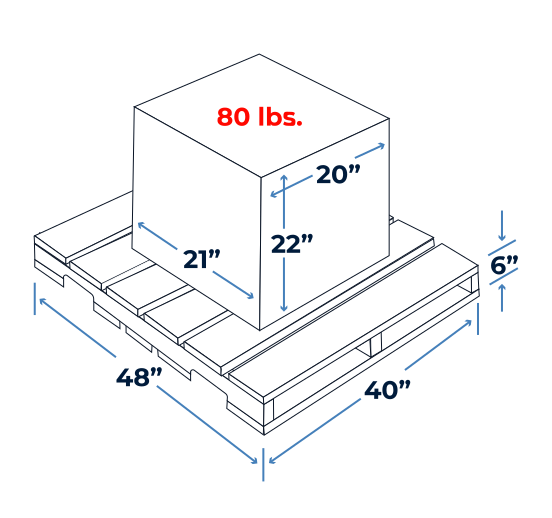
While some NMFC items have fixed classes, the vast majority especially manufactured goods, are density-based. Density is expressed as PCF (Pounds per Cubic Foot):
Pounds per Cubic Foot
PCF = Actual Weight (lbs) ÷ Cubic Volume (ft³)
Density = Total Weight / ((Length x Width x Height) / 1728) * Quantity)
Cubic Volume = (L × W × H in inches) ÷ 1,728
LTL PCF Calculation Example:
- If the pallet is 48 inches long, 48 inches wide and 24 inches high, add the height of the pallet (6 inches) to the height of the shipment (24 + 6) for a combined height of 30 inches.
- 48 X 48 X 30 = 69,120 cubic inches
- Next, convert the inches total to cubic feet by dividing 69,120 by 1,728 = 40 cubic feet.
- The density then equals the weight 525 (495 pounds for the shipment and approximately 30 pounds for the pallet) divided by the cubic dimension:
- 525 divided by 40 = 13.13 pounds per cubic foot.
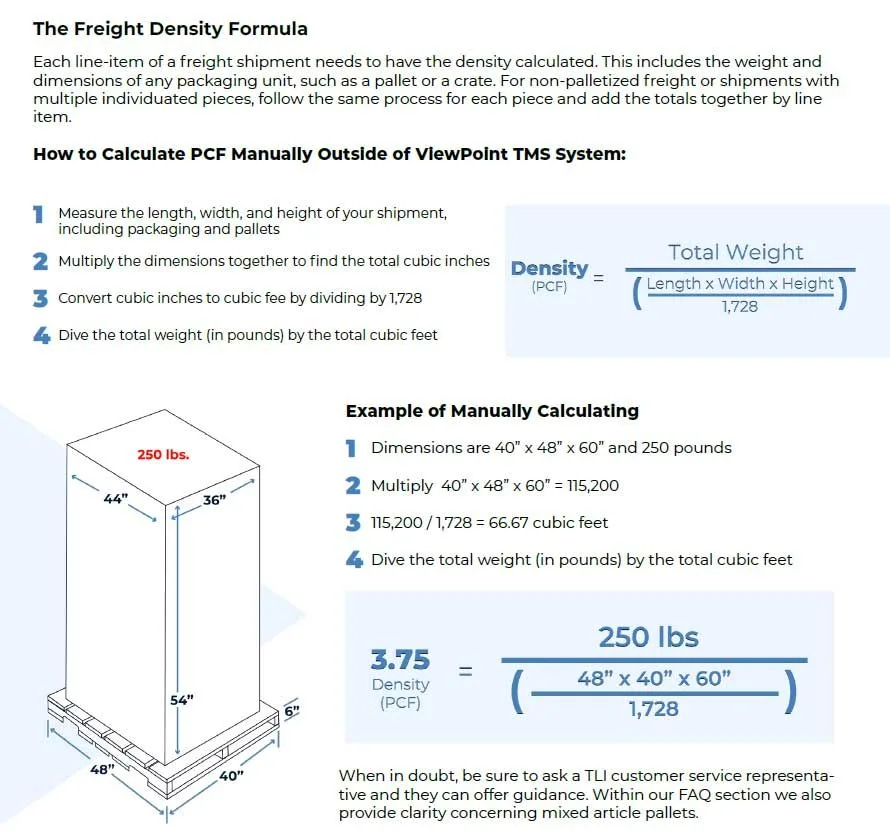
TABLE 2 — PCF-to-Freight Class Conversion (Density Scale Example)
| Density (PCF) | Freight Class | Example Commodity | Rate Impact |
|---|---|---|---|
| < 1 | Class 400–500 | Ping pong balls, empty barrels | Very High |
| 1–2 | Class 300 | Mattresses, surfboards | High |
| 2–4 | Class 250 | Bags of mulch, bookshelves | Above Avg |
| 4–6 | Class 175 | Auto parts, electronics in boxes | Moderate-High |
| 6–8 | Class 125–150 | Beverages, canned goods | Moderate |
| 8–10 | Class 100 | Wine, packaged food | Average |
| 10–12 | Class 92.5 | Machinery parts, hardware | Below Avg |
| 12–15 | Class 85 | Cast iron pipe, steel coils | Low |
| 35-15 | Class 55-70 | Car engines, bottled water | Low |
| > 50 | Class 50 | Steel billet, brick, stone | Lowest |
Not all freight commodities are density-based. The table above is provided as a general guideline and example of how standard density calculations work in freight classification. While the chart reflects common density-based freight class calculations, many commodities are assigned a different class depending on additional factors such as packaging, handling requirements, stowability, and liability.
Because of these variables, the same commodity can receive a different freight class under the National Motor Freight Classification system depending on how it is prepared for shipment. For this reason, shippers should not rely solely on density charts when determining the correct classification.
To ensure accuracy and compliance, companies should either obtain an official NMFC™ license from the National Motor Freight Traffic Association directly or partner with a licensed third-party logistics provider (3PL) that has authorized access to the classification database. For official freight classification details and the most current NMFC™ codes, visit the National Motor Freight Traffic Association website at NMFTA.org.
Wrong Dimensions = Wrong Class = Surprise Invoice
If your shipment measures 48″×40″×48″ (a full pallet) and weighs 400 lbs, PCF = 400 ÷ (48×40×48/1728) = 400 ÷ 53.3 = 7.5 PCF → Class 125. Guess the same pallet at 48″×40″×36″ (3 inches shorter) and density rises to 10 PCF → Class 92.5, a meaningful rate difference. Carriers inspect and measure using dimensionalizers. Discrepancies trigger inspection fees, reclassification charges, and back-billing.
Distance, Lane Balance & ZIP Pairs
LTL rates are explicitly distance-sensitive. Carriers assign rates by mileage bands derived from the origin and destination ZIP codes, a concept known as the ZIP pair or lane. A carrier might have superior pricing on a lane it services frequently (e.g., Memphis → Chicago) because it maintains high freight density between those terminals. On a lane where it ships freight “headhaul” (outbound) but returns empty, it will discount aggressively to fill the truck. On unbalanced “backhaul” lanes, a different carrier may be the cheapest.
This is precisely why the Least Cost Provider (LCP) on a 2-pallet shipment from Philadelphia to Los Angeles may be completely different from the LCP on a 2-pallet shipment from Philadelphia to Boston and why using a single carrier for all lanes is always a suboptimal strategy.3 When TLI launches our custom RFPs for shippers we always look for a healthy blend of regional and national LTL motor carriers optimized based off the zip pairing, and CWT pricing.
Fuel Surcharges: The Variable That Moves Every Week
The fuel surcharge (FSC) is a weekly floating percentage added to the base linehaul charge. Most carriers tie their FSC to the U.S. Department of Energy’s weekly diesel retail price index, adjusting weekly or bi-weekly. FSC can range from 5% to 35%+ depending on diesel prices, and because it is applied to the already-discounted base rate, it represents a significant portion of the total invoice.4
Why Fuel Surcharge Is a Budget Planning Challenge
Shippers who quoted freight in January at 18% FSC may see 28% FSC by summer if diesel prices spike. Unlike base rates, FSC is not locked in your contract it adjusts on the carrier’s published schedule every week. Planning freight budgets requires building in FSC volatility, or negotiating custom FSC program with your carrier or 3PL. TLI’s fuel surcharge is 40% lower than the industry average. TLI alleviates the risk entirely for shippers and carriers as it becomes a floating pass-through cost for carriers. Meaning, the motor carriers do not make fuel a profit center, while at the same time they do not need to raise their line haul to hedge for the unknown as it floats weekly based off the DOE’s national diesel average.
Accessorial Charges: The Hidden Cost Layer
LTL accessorials are fees charged by carriers for services beyond the standard dock-to-dock delivery. They are contractually defined in each carrier’s Rules Tariff and can often add 20–60% to a base shipment cost if not anticipated and negotiated. The following table is for example purposes only as our custom contracting capabilities empower individuation of accessorial costs based off shipper profiles.
Common accessorials include:
TABLE 3 — Common LTL Accessorial Charges & Typical Ranges (2026)
| Accessorial | Trigger | Typical Cost Range | Negotiable? |
|---|---|---|---|
| Liftgate Pickup | Shipper has no dock | $75-150 per occurrence | Yes |
| Liftgate Delivery | Consignee has no dock | $75-150 per occurrence | Yes |
| Residential Delivery | Non-commercial address | $75-$175 per shipment | Yes |
| Inside Delivery | Driver takes freight inside | $75-$200+ depending on distance from truck to final location | Yes |
| Appointment | Receiver requires scheduled window | $35-$75 per appointment | Yes |
| Notify Prior to Delivery | Carrier must call ahead | $0-$50 | Yes |
| Limited Access | Schools, military, construction | $50-$200 per shipment | Yes |
| Re-consignment / Address Correction | Wrong address on BOL | $75-$250+ depending on how far the new address is from the original | Rarely |
| Detention / Driver Delay | Loading takes >2 hrs | $50-$150 per hour after free time expires in 15m increments | Yes |
| Reweigh / Re-class | Weight or class discrepancy | $50-$100 plus the cost difference if the actual weight or freight class results in a higher rate | No |
| Hazardous Materials | DOT-regulated freight | $50-$300+ depending on hazard class | Yes |
| Overlength Freight | Pieces > 8–12 ft | $100-$1,000+ depending on length | Yes |
| Guaranteed Service | Priority transit commitment | $35-20% of the base rate | Yes |
How Much Does LTL Freight Cost? Real Life Examples
LTL pricing is highly variable. A “2-pallet shipment” is not a single price point, it can range from under $200 to over $2,000 depending on distance, freight class, and carrier lane balance. The table below illustrates this clearly.
TABLE 4 — LTL Cost Comparison: Same Pallets, Different Scenarios
| Scenario | Pallets | Weight | Class | Lane | Key Driver | Est. Net Freight Rate |
|---|---|---|---|---|---|---|
| Regional Short | 2 | 1,500 lbs | 85 | Philadelphia → NYC | Short haul, dense lane | $222.68 – 271.08 |
| Long Haul — Same Size | 2 | 1,000 lbs | 92.5 | Philadelphia → Los Angeles | Distance & lane imbalance | $317.15 – 669.89 |
| Long Haul — Higher Class | 2 | 500 lbs | 175 | Philadelphia → Los Angeles | Class 175 vs 92.5 | $342.84 – 1,154.34 |
| Long Haul — Lower Class | 2 | 2,000 lbs | 70 | Philadelphia → Los Angeles | Dense freight, lower class | $1,070.05 – 1,717.54 |
| More Pallets Regional | 5 | 3,500 lbs | 85 | Philadelphia → Chicago | Weight break advantage | $609.00 – 821.94 |
| Small Pallet + Liftgate | 1 | 350 lbs | 125 | Atlanta → Houston | Liftgate adds $60–$150 | $315.99 – 573.64 |
(Estimated 2026 Net Rates for a low volume shipper)
LCP Problem: Least Cost Provider Changes by Weight & Lane
One of the most misunderstood aspects of LTL pricing is that no single carrier is cheapest on every lane or every weight break. A carrier like FedEx Freight may be the least cost provider (LCP) for a 100 lb mini shipment (under 100 lbs) on a given lane, while Old Dominion or SAIA takes over as LCP at 1,200 lbs on the same lane, and a regional carrier beats both above +4 pallets.
This happens because each carrier’s tariff, discount, density of service, and terminal network creates a unique cost curve. Running every shipment against all available carriers in real time, not just your preferred carrier, is the only way to consistently win on price. This is the core function of a multi-carrier TMS or freight brokerage with live API connections.
Volume LTL vs. Standard LTL
Less-than-truckload (LTL) shipping refers to palletized freight that does not require a full trailer and is consolidated with other shipments within a carrier’s terminal network.5 As shipment size increases but still does not require a dedicated truck, carriers often classify the freight operationally as “volume LTL,” referring to larger shipments that still move through LTL pricing and consolidation structures.
Standard LTL applies to shipments typically under ~5,000–8,000 lbs that move through a carrier’s regular network using its published tariff and negotiated discounts. This is the product most shippers think of when they say “LTL.”

Volume LTL (sometimes called “Volume/Truckload” or “VTL”) is a distinct pricing product for heavier, larger shipments, generally 6 pallets or more, or 5,000–15,000 lbs, that don’t quite justify a full truckload but are too large or too costly to rate as standard LTL. Volume LTL is typically spot-priced for each shipment, negotiated directly with a carrier or broker, and priced as a flat dollar amount rather than per-CWT from a tariff.
TABLE 5 — Standard LTL vs. Volume LTL Side-by-Side
| Factor | Standard LTL | Volume LTL |
|---|---|---|
| Typical Weight | 150–10,000 lbs | 10,000–17,000 lbs |
| Typical Pallets | 1–5 pallets | 6–14 pallets |
| Pricing Method | Tariff CWT × discount | Flat spot rate per shipment |
| Transit Handling | Multiple terminal touches | Often direct or fewer touches |
| Lead Time for Quote | Real-time API / TMS | Real-time API / TMS |
| Freight Class | Critical: class-based | Less critical: space/weight-based |
| Best For | Regular, smaller shipments | Occasional large moves, project freight |
| Claims Risk | Higher (more handling) | Lower (fewer touches) |
TLI Has Live API Connections for Both
Translogistics has built API integrations that rate both standard LTL and Volume LTL in real time inside its TMS, so shippers get a single-screen comparison across all products and carriers — including mini pricing, standard LTL, volume LTL, and partial truckload — without calling multiple carriers manually.
Cubic Capacity Rule: When LTL Carriers Penalize You
Most shippers are unaware of the Cubic Capacity Rule (CCR), yet it is one of the most financially damaging surprises in LTL freight. Here is how it works:
LTL carriers price freight by a combination of weight and density. When a shipment is very bulky but relatively light, meaning it takes up a lot of trailer space without contributing much weight revenue, a carrier may invoke its cubic capacity provision. Typically triggered when a shipment occupies 750+ cubic feet AND the density is below 6 PCF, the carrier will rerate the freight at a higher weight (often called a deficit weight charge) to compensate for the space the shipment consumes.
Real Example: Cubic Capacity Penalty
You ship 4 pallets of lightweight foam packaging: 1,200 lbs, Class 400, measuring 96″×48″×72″ each at an item density of 1.56 PCF (total ~768 cubic feet). This data however is not entered properly on the front end, in this example the user entered pallet dimensions of 48x40x48. The carrier invoices a much higher rate because the cubic capacity rule kicks in at their threshold of <6 PCF. Your $242.58 quoted rate becomes a $1,210.89 invoice. The correct fix: compress, stack, and repackage to increase density, and enter the correct class in the quote from the start.
Carriers invoking the CCR are doing so legitimately under their published Rules Tariff. The only defenses are: (1) accurately quoting the actual dimensions, (2) improving packaging to increase density, or (3) negotiating a CCR waiver or cap in your carrier contract.
The Biggest Mistakes Shippers Make When Routing Less-than-truckload Shipments
Mistake 1: Guessing on Dimensions
Carriers have invested heavily in dimensioners: automated laser and camera systems at terminal docks that measure freight in seconds. If your quoted dimensions (48″×40″×40″) differ from the measured reality (48″×44″×52″), the carrier will reclassify the shipment based on actual cubic volume. The penalty: a reweigh/re-class fee ($25–$100) plus the rate difference on the adjusted class, potentially retroactive across all in-transit bills. Always measure to the farthest point, including pallet overhang, shrink wrap, and protruding handles.
Mistake 2: Guessing on Weight
Underestimating weight is the second most common error. Carriers use calibrated dock scales, and a weight discrepancy of even 150 lbs can push a shipment into the next higher CWT bracket, increasing cost, or trigger a formal reweigh inspection with associated fees. Always use a calibrated floor scale, include pallet weight (~35–50 lbs per wooden pallet), and add packaging materials to your tare weight.
Mistake 3: Wrong Freight Class
Shippers often guess at freight class, use an old NMFC item number, or apply a class that was correct for a previous product version but not the current one. The NMFTA updates its classification guide sometimes multiple times a year, and NMFC item numbers can change. Using the wrong class can mean: (a) overpaying for years on a class that’s higher than necessary, or (b) underpaying and receiving back-bills with interest after a carrier audit.
Measure. Don’t Estimate. Ever.
📐 Use a tape measure or shipping scale every time. For products you ship regularly, document the exact dimensions (including packaging) in your TMS item library. The 60 seconds it takes to verify saves hours of dispute resolution and hundreds of dollars in adjustment fees.
Packaging Matters More in LTL Than in Any Other Mode
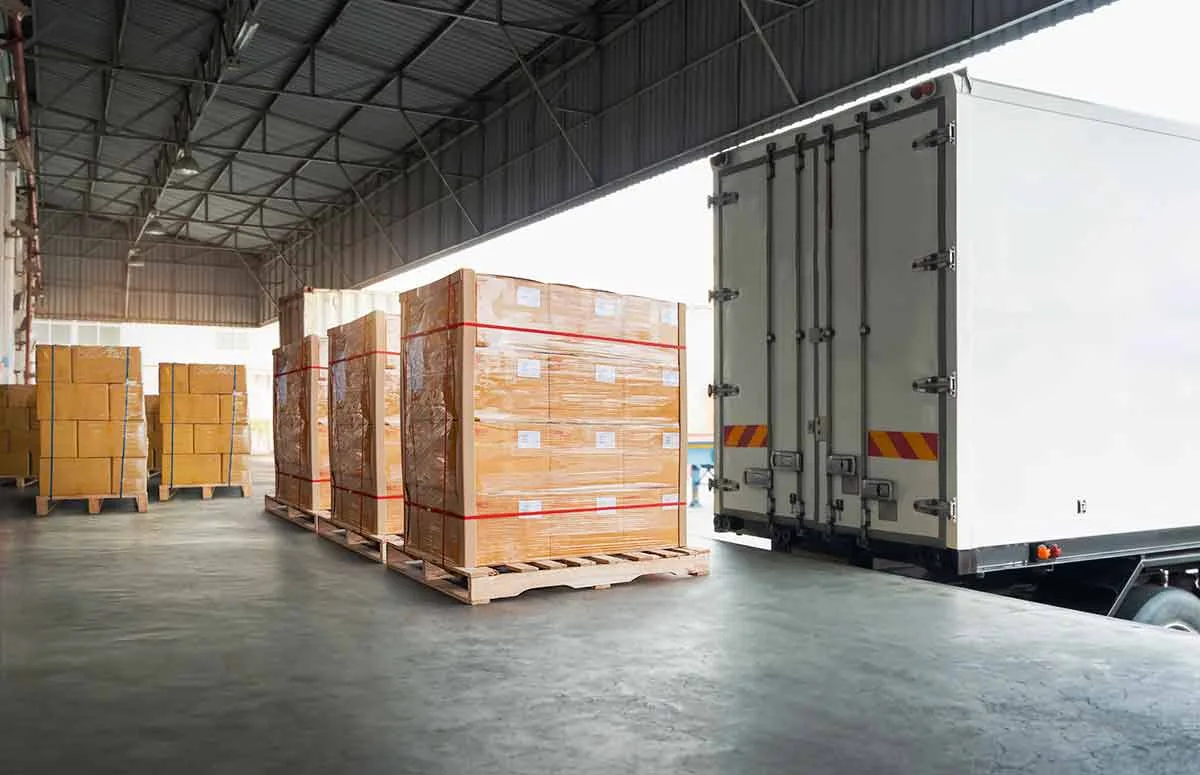
Because LTL freight is handled 4–6 times on average, loaded at origin, unloaded at origin terminal, sorted, reloaded, unloaded at destination terminal, and delivered, every handling event is an opportunity for damage. LTL claims rates are significantly higher than FTL, and the leading causes are inadequate packaging and improper pallet construction.
Proper LTL packaging principles include:
- Use 4-way entry pallets (48″×40″ GMA standard) that allow forklift access from all sides.
- Box overhang kills claims: No product should extend beyond the pallet footprint. Even 1″ of overhang invites damage — and carriers can deny claims on improperly palletized freight.
- Double-box fragile items and cushion with at least 2″ of void fill on all six sides.
- Stretch wrap to the pallet base — not just wrapped around the cargo. 6+ passes with 80-gauge film minimum.
- Corner boards add structural integrity on all four corners when stretch-wrapping tall or heavy pallets.
- Gross weight limits: Most LTL carriers cap a single pallet at 2,500 lbs. Exceeding this can create liability voids in your claim.
Carrier Inspection & Claim Denial
When a carrier’s dock inspector notes “freight in poor condition” or “improperly packaged” on the delivery receipt, that notation becomes their primary defense against a damage claim. Under the Carmack Amendment, carriers can reduce or deny claims if packaging was inadequate — regardless of who actually dropped the pallet. Good packaging is cargo insurance you control.

Why Smart Shippers Route LTL with Translogistics (TLI)
Translogistics, Inc. (TLI) is a technology-enabled 3PL and freight management company with decades of experience negotiating, optimizing, and managing LTL contracts for shippers across virtually every industry. Here is what makes TLI different, and why it translates directly to dollars saved on your freight spend.
3 Core Benefits for LTL Shippers
- Carrier-Agnostic Least Cost Routing, Every Shipment: TLI’s TMS is connected via live API to a national portfolio of LTL carriers, covering national, regional, and specialty carriers. Every shipment is rated against all of them simultaneously, with automatic weight-break optimization and LCP identification. You never leave savings on the table because a carrier’s rate changed or a regional player undercut your incumbent.
- Custom RFP Management & All-In Pricing Comparison: TLI can launch a custom LTL RFP (Request for Proposal) on your behalf: gathering base rates, discounts, fuel surcharge schedules, accessorial caps, and minimum charges from multiple carriers into a single normalized comparison model. This process, which would take a shipper weeks to run internally, is TLI’s core competency. The result: all-in cost visibility, carrier benchmarking, and leverage you simply cannot generate without scale.
- End-to-End TMS with Invoice Auditing & Dispute Resolution: Every shipment booked through TLI is tracked, invoiced, and audited automatically. Carrier billing errors, reweigh charges, accessorial additions, reclass concerns, are flagged and disputed on your behalf. Shippers using TLI’s TMS recover an average of 2–5% of freight spend annually through invoice auditing alone. Add in rate optimization, and total freight savings typically range from 8–22% vs. shipper-direct rates.
Frequently Asked Questions Concerning LTL Freight Quotes
An LTL freight quote is a priced estimate from a carrier or freight broker for transporting a specified shipment via the Less-Than-Truckload network. Quotes are typically valid for 24 hours because fuel surcharges are updated weekly and carrier capacity can change daily. For contractual/account pricing, your negotiated rates are locked for a defined period (usually 90 days to 1 year), but fuel surcharges still float weekly even under contract.
Freight class is determined by one of two methods: (1) a specific NMFC® item number assigned to your commodity, which may have a fixed class; or (2) a density-based calculation using PCF (Pounds per Cubic Foot). PCF = weight ÷ cubic volume in cubic feet. Most manufactured goods, consumer products, and industrial items are density-rated. Look up your NMFC item at nmfta.org or use TLI’s freight class calculator to input your L×W×H and weight and get the correct class instantly.
In LTL (Less-Than-Truckload), your freight shares a trailer with other shippers’ cargo. You pay only for the space and weight your shipment uses. This is cost-efficient for 1–8 pallets. In FTL (Full Truckload), you buy the entire truck, and your freight is the only cargo on board. FTL means no intermediate terminal stops, far less handling, lower claims risk, and faster point-to-point transit — but you pay for the full trailer regardless of how full it is. FTL typically becomes competitive at 10+ pallets or when freight value or fragility makes claims risk unacceptable for LTL.
A fuel surcharge (FSC) is a variable weekly fee applied as a percentage of the base linehaul charge. Carriers tie their FSC schedules to the U.S. Department of Energy’s weekly national average on-highway diesel price, which is published every Monday. As diesel prices rise, FSC increases; as diesel falls, FSC drops. Most carrier contracts specify the FSC table used (e.g., a specific carrier’s published matrix), and the applicable rate is the rate in effect on the day of pickup. FSC commonly ranges from 15% to 35%+ depending on diesel prices and the carrier’s formula.
CWT stands for “per hundred pounds” (from the Latin centum). LTL rates are quoted in dollars per CWT, meaning the base charge is the shipment’s weight in pounds divided by 100, multiplied by the CWT rate. A 750 lb shipment at $30/CWT = 7.5 CWT × $30 = $225 base linehaul charge before discounts, FSC, and accessorials. CWT pricing allows carriers to scale rates proportionally with weight while accounting for freight class and mileage through tariff tables.
A weight break is a pricing tier in an LTL tariff where the per-CWT rate decreases as weight increases. Key breaks are typically at 500, 1,000, 2,000, 5,000, and 10,000 lbs. The phenomenon of “rating up” occurs when the total charge at the next weight break (using a lower per-CWT rate) is less than the charge at your actual weight. Carriers and TMS platforms always check adjacent breaks and apply the lower charge. Missing weight breaks without a TMS means you may be systematically overpaying on every shipment in a certain weight range.
Volume LTL is a spot-priced product for large shipments — typically 6+ pallets or 5,000–15,000 lbs — that are too heavy for standard LTL pricing to be competitive but not large enough to justify a dedicated truck. Volume LTL is priced as a flat rate per shipment (not per CWT), often with fewer terminal touches and faster transit than standard LTL. It’s best for occasional large moves, high-class freight where standard LTL pricing would be very high, or when you have a deadline and want reduced handling. TLI rates standard LTL and Volume LTL simultaneously via API so you always see which product is most cost-effective.
The Cubic Capacity Rule (CCR) is a provision in LTL carriers’ Rules Tariffs that allows them to charge a minimum weight when a shipment’s density is below a threshold (usually <6 PCF) AND it occupies a significant portion of the trailer (often 750+ cubic feet). The carrier reclassifies the rated weight upward to ensure they receive adequate revenue for the space consumed. Avoidance strategies: (1) accurately declare correct dimensions upfront so you can price the CCR risk into your quote; (2) improve packaging to reduce void space and increase density; (3) negotiate a CCR waiver your custom carrier contract with help from TLI.
Accessorials are fees charged by LTL carriers for services outside the standard dock-to-dock delivery. Common examples include liftgate service (when a location has no loading dock), residential delivery, inside delivery, appointment scheduling, notify prior to delivery, limited access locations (schools, military bases), hazardous materials, and overlength freight. Accessorials should ideally be declared on the Bill of Lading and, when possible, so they are rated properly when getting your LTL freight quote based off the pre-negotiated rates in your carrier contract. Failing to declare them at booking (and having the driver add them at delivery) results in the highest possible published rate, especially when they are not negotiated effectively through a custom RFP sourcing event. This results in typically 2–3× what you’d pay under a negotiated LTL agreement.
An LTL Request for Proposal (RFP) is a structured bidding process in which a shipper partners with a 3PL that has LTL tariff rating tools and data harvesting technology, powered through a TMS, that analyzes the historical shipment data and runs scenarios against the motor carrier tariffs. The shipper sends their lane data to TLI, origin/destination ZIPs, weights, classes, accessorial patterns and then TLI runs the data through their tools and launches the RFP to multiple carriers and requests fully loaded pricing. The RFP process normalizes responses across tariffs, discount levels, FSC scales, and accessorial schedules into a single all-in rate model. This allows a true apples-to-apples comparison and creates competitive tension that drives better rates. TLI manages the entire RFP lifecycle including data prep, carrier solicitation, response normalization, modeling, and contract execution on behalf of shippers.
LTL freight changes hands 4–6 times on average during transit, versus 1–2 times for FTL. Each transfer is a damage risk event. Under the Carmack Amendment (49 U.S.C. § 14706), carriers are liable for freight damage, but they can reduce or deny claims if the packaging was inadequate for the nature of the shipment. If a carrier’s dock inspector notes “improperly packaged” on the delivery receipt, that notation forms the legal basis for a claim denial. Best practices: use 200-lb burst-strength corrugated boxes, properly cushioned and palletized with corner boards, full stretch-wrap to the pallet base, and documented weight within pallet limits (typically 2,500 lbs max).
Yes, and this is one of TLI’s most common engagements. Many shippers have long-standing direct carrier relationships but haven’t benchmarked their rates in years. TLI conducts a freight rate audit comparing your current contract rates against TLI’s portfolio, running your actual shipment history (lane by lane, weight break by weight break) to quantify what you’re leaving on the table. In most cases, TLI identifies 10–25% in recoverable savings without disrupting existing carrier relationships through sourcing a formal RFP. The analysis is free. Contact TLI to schedule a no-cost rate review.
Academic & Industry Citations
- National Motor Freight Traffic Association (NMFTA). National Motor Freight Classification® (NMFC)™ Alexandria, VA: NMFTA, The authoritative governing document for all freight class determinations, NMFC item numbers, density thresholds, and Cubic Capacity Rule provisions in the United States LTL industry. ↩︎
- Coyle, J.J., Langley, C.J., Novack, R.A., & Gibson, B.J. Supply Chain Management: A Logistics Perspective, 10th Edition. Cengage Learning, 2023. Comprehensive academic reference covering CWT pricing structures, weight breaks, tariff discount mechanics, and carrier pricing strategy in surface freight markets. https://rudyct.com/supchn/Supply%20Chain%20Management%20A%20Logistics%20Perspective-10e-2017.pdf ↩︎
- Sheffi, Y. The Resilient Enterprise: Overcoming Vulnerability for Competitive Advantage. MIT Press, 2nd ed., 2022. Scholarly analysis of carrier network design, lane balance dynamics, and the implications of freight density imbalance on carrier pricing strategy and shipper cost outcomes. https://sheffi.mit.edu/book/resilient-enterprise ↩︎
- U.S. Department of Energy, Energy Information Administration. Weekly Retail On-Highway Diesel Prices. Washington, DC: EIA, 2026. Published weekly at eia.gov; the definitive government index used by LTL carriers to set and adjust fuel surcharge schedules across the industry. https://www.eia.gov/dnav/pet/pet_pri_gnd_a_epd2d_pte_dpgal_w.htm ↩︎
- Chopra, S., & Meindl, P. (2019). Supply chain management: Strategy, planning, and operation (7th ed.). Pearson. https://www.scirp.org/reference/referencespapers?referenceid=4010427 ↩︎
