

The freight industry is getting renewed attention on a serious issue: Chameleon Carriers. After recent mainstream coverage, including a 60 Minutes segment, more shippers are realizing how bad motor carriers are able to disappear and reappear under new trucking identities while continuing the same unsafe or fraudulent operations. These carriers swap out their operating authority to avoid consequences, and can steal freight, get into accidents and even cause fatalities.
For shippers, this is not a theoretical supply chain problem. It shows up in real painful outcomes.
Shipments routed via chameleon carriers face consequences entailing missed deliveries, stolen freight, denied insurance claims, and safety incidents that could have been prevented with stronger shipper controls, and potentially better vetting. The good news is that risk can be reduced with the right supply chain processes, tools, and controls in place.
What Is a Chameleon Carrier?
A chameleon carrier is a trucking company that repeatedly changes its operating authority to avoid consequences. When a chameleon carrier accumulates out of service violations, safety issues, holds freight hostage, or fraud flags, it may shut down and reopen under a new USDOT or MC number, with the same owners, trucks, trailers, and drivers. In the FMCSA Safer system, it looks like a new company. In reality, it is often the same operation continuing under a different name.
This creates a major problem for shippers and brokers because:
- Carrier history becomes fragmented and lost across multiple identities
- Risk signals get “reset” instead of carried forward
- Traditional vetting tools may miss the connection between entities
- ELD data may be manipulated as the driver may appear to be operating under multiple MC numbers
The result is a system where accountability is obscured unless deeper vetting by a supply chain pro, equipped with the right transportation management tools, is performed.
Why Chameleon Carriers Are Getting National Attention
Chameleon carriers are not new, but they are now gaining wider attention because enforcement gaps are becoming more visible. Recent media coverage, including a 60 Minutes investigation, highlighted how some carriers can re-enter the market after shutdowns simply by registering under a new identity.
This matters because it exposes a disconnect between regulatory enforcement and operational reality. Even when authorities shut down a carrier, the underlying network can sometimes continue operating through related entities. These operators are notorious for cargo theft, and operating without being properly insured. The DOT advises that cargo theft cost the economy billions annually,1 and this is a trend that appears to be growing.
Train cargo thefts alone shot up about 40% in 2024, with more than 65,000 reported incidents, according to the Association of American Railroads. Industry experts and law enforcement officials say a more sophisticated and insidious form of cargo theft called strategic theft is also on the rise. The way the system is supposed to work is this: A shipper pays a broker, and the broker, after taking its fee, pays the carrier, the trucking company that moves the load. In strategic theft, criminals use deceptive tactics to trick shippers, brokers or carriers into handing cargo or legitimate payments, sometimes both, over to them instead of the legitimate companies. 2
As awareness of chameleon carriers grows, regulators and industry groups are pushing for better visibility into ownership patterns of motor carriers, not just individual DOT numbers. This is because there are loopholes these criminals are exploiting, such as purchasing a valid DOT authority and then using it to steal freight.
How Chameleon Carriers Operate
Chameleon carriers rely on one core strategy: identity cycling. They rotate through company names, MC numbers, and DOT registrations while continuing to operate the same physical assets.
In practice, they often:
- Shut down a flagged carrier and reopen under a new name
- Reuse the same trucks, trailers, and drivers across entities
- Spread violations across multiple USDOT numbers
- Rotate phone numbers, emails, and addresses to avoid detection
- Reapply for authority after revocation or suspension
- Purchase an existing operating authority from a valid motor carrier
Over time, this creates a web of related carriers that appear separate in isolation but are connected when you look across datasets. Chameleon carriers can also assign loads to hired drivers who are not even aware they are participating in an organized criminal enterprise. Many of them operate outside of the US making enforcement of laws harder to execute.
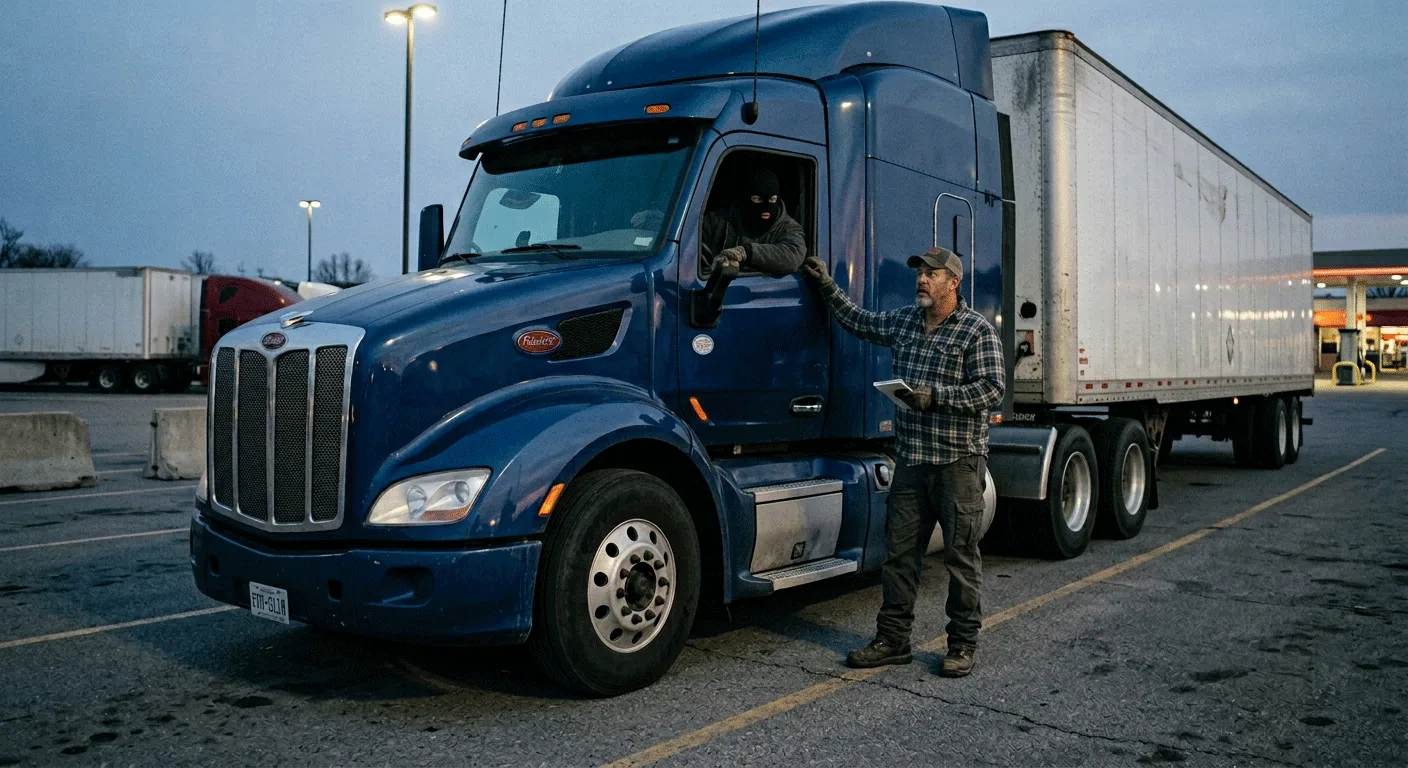
The Risks for Shippers
The biggest risk is simple, you may think you are onboarding a new, compliant carrier when in reality you are dealing with a criminal enterprise or unstable and dangerous operation. Recent data cited below makes it clear that cargo theft losses are rising at a meaningful pace.
JERSEY CITY, N.J., January 21, 2026:
Verisk CargoNet, a Verisk (Nasdaq: VRSK) business and leader in cargo theft prevention and recovery, reports that while the total number of supply chain crime incidents remained relatively stable in 2025, estimated losses surged to nearly $725 million, a 60 percent increase from 2024, as organized criminal groups increasingly focused on high‑value shipments. According to CargoNet’s annual analysis, the average value per theft rose to $273,990, up 36 percent from $202,364 in 2024.3
Cargo theft is no longer a rare event, it is a growing, organized threat that shippers need to take seriously. Theft activity has increased significantly in both frequency and value, with criminal groups becoming more strategic in what they target and how they execute. High-value and high-demand industries are disproportionately affected, including electronics, pharmaceuticals, defense-related freight, along with food and beverage shipments. These loads are attractive because they are easy to resell, difficult to trace, and often move quickly through the supply chain.
As a result, the financial impact of a single incident can be substantial, and the likelihood of recovery is often low. For shippers operating in these sectors especially, cargo security should be a core part of operational planning and risk management. That risk shows up in several ways:
- Cargo Theft and Non-Delivery: Freight may be diverted, delayed, or never delivered. Once the carrier disappears or changes identity, recovery of stolen freight becomes difficult.
- Safety Exposure: These carriers are more likely to operate poorly maintained equipment or use drivers with questionable compliance histories, increasing accident risk.
- Insurance Breakdown: Policies may be fake, inactive, insufficient, or difficult to verify, leading to denied and delayed claims. Even valid claims will suffer from deductibles and the risk of exception clauses.
- Hidden Network Risk: What looks like one carrier may actually be part of a larger group of related criminal entities cycling through multiple identities.
Red Flags Shippers Should Watch Out For
Key warning signs include:
- Frequent changes in company name, address, or authority
- Shared domiciled addresses, phone numbers, emails, and contacts across multiple carrier names
- PO boxes, virtual offices, and inconsistent physical locations
- Multiple carriers tied to the same ownership and dispatch contacts
- VINs or equipment showing up under different DOT numbers
- Repeated authority revocations followed by quick reactivation
- Inconsistent or missing insurance documentation
- Gaps in safety inspection history
A stable carrier should shows consistency over time. Frequent structural changes should trigger additional review. One of the easiest signs to look out for is operating under brand new authority. At TLI we make it a practice to not tender loads to carriers operating under brand new authority. We have a policy in place requiring a carrier to have been in business with active authority for at least 6 months, or greater.
The most effective protection comes from combining technology, process discipline, and strong carrier partners. No single check is enough on its own.
Many shippers reduce exposure by working with vetted 3PLs. For example, 3PLs like TLI use compliance platforms such as Highway4 to evaluate carriers across safety, insurance, and operational history before onboarding them.
On-the-Ground Practical Controls That Prevent Problems
While this is not an all-encompassing list, it is a good starting point. Even strong vetting can be undermined if pickup and delivery procedures are weak. That’s why physical verification at the point of freight handoff matters.
Shippers should consistently:
- Scan and record the driver’s CDL at pickup
- Confirm driver name matches dispatch paperwork
- Match truck and trailer identifiers to the rate confirmation
- Record trailer license plate numbers on the BOL
- Keep internal records of all equipment identifiers that would be notable for authorities
- Avoid tendering freight to very new authorities (commonly under 6 months to 1 year old)
- Verifying insurance directly with the carrier’s insurance provider
- Reviewing FMCSA Safer history5
- Using a 3PL that actively screens for ownership connections and risk patterns
At secure facilities, gate controls should be strict and non-negotiable:
- Require driver sign-in with identification
- Verify MC/DOT numbers on arrival
- Confirm truck identifiers are visible and consistent
- Deny entry if information is missing or inconsistent
- Escalate issues immediately to your broker or 3PL
If something doesn’t match, stop the shipment. Most preventable fraud starts with small inconsistencies that were ignored at pickup.
Insurance is also one of the most common failure points in carrier risk.
Shippers should either delegate their carrier vetting to a qualified 3PL or:
- Confirm coverage directly with the insurance agent
- Verify policy limits match shipment value
- Ensure coverage is active at time of pickup
- Validate insurer legitimacy, especially for high-value freight
- Recheck insurance periodically for repeat carriers
For higher-value loads, direct confirmation should be standard practice, not optional. My understanding is that the Highway software, mentioned earlier in the article, is especially helpful with insurance vetting.
Transportation Industry Response
Industry groups and regulators are increasingly focused on closing the loopholes that allow identity cycling. The American Trucking Associations and other stakeholders have pushed for stronger enforcement that connects safety records to ownership structures, not just individual DOT numbers.
ATA has worked on several pieces of legislation to address this threat. The Securing American Freight, Enforcement, and Reliability in Transport (SAFER Transport) Act, introduced by Senator Todd Young (R-IN) and Congressman Brad Knott (R-NC) would modernize and secure FMCSA’s registration system and strengthen fraud detection tools. The bill would also introduce new enforcement mechanisms and criminal penalties for fraud and providing false information to USDOT during the registration process, as well as close regulatory loopholes involving foreign dispatch services that can be involved in complex chameleon carrier schemes, which were mentioned during the story.
Additionally, the Safety and Accountability in Freight Enforcement (SAFE) Act, introduced by Congresswoman Harriet Hageman (R-WY), takes square aim at chameleon carriers by strengthening FMCSA’s ability to detect and stop suspicious registrations. Congress should move it forward, and regulators should keep modernizing the registration system so that safety history follows the operator, not the paperwork.6
The direction of the industry is clear, we need regulation that protects shippers, freight brokers and authentic motor carriers from bad actors. Carrier tracking needs to evolve from from “carrier name-based” tracking and DOT/MC # tracking to ownership and behavior-based tracking. Likewise, if there is a transfer of authority there should be a public notice and reporting in the software vetting systems that will warn users to practice extra due-diligence. That change is critical for long-term supply chain integrity. Shippers who rely on surface-level checks are most exposed. Shippers who delegate the vetting to a transportation expert, or those who build layered verification systems are significantly more protected.
Citations:
- U.S. Department of Transportation. (2025, September). Protecting America’s supply chain from cargo theft: Request for information (Docket No. DOT-OST-2025-1326). https://www.transportation.gov/sites/dot.gov/files/2025-09/DOT_Cargo_Theft_RFI–September_2025.pdf ↩︎
- CNBC. (2025, May 9). Cargo thieves are attacking the U.S. supply chain. https://www.cnbc.com/2025/05/09/cargo-thieves-attack-supply-chain.html ↩︎
- CargoNet. (2025). 2025 supply chain risk trends and cargo theft analysis. Verisk Analytics. https://www.cargonet.com/news-and-events/cargonet-in-the-media/2025-theft-trends/ ↩︎
- Highway. (2025, January 6). Translogistics, Inc (TLI) partners with Highway to elevate carrier vetting and secure sensitive shipments. https://highway.com/press-releases/translogistics-inc-tli-partners-with-highway-to-elevate-carrier-vetting-and-secure-sensitive-shipments ↩︎
- Federal Motor Carrier Safety Administration. (n.d.). SAFER Company Snapshot. U.S. Department of Transportation. https://safer.fmcsa.dot.gov/CompanySnapshot.aspx ↩︎
- American Trucking Associations. (2026, April 14). Stop the shell game on our highways: Shut down chameleon carriers. https://www.trucking.org/news-insights/stop-shell-game-our-highways-shut-down-chameleon-carriers ↩︎