
You’ve just received your freight bill, and something doesn’t add up. The quote you received said $350, but the invoice shows $847. As you scan the itemized charges, you see unfamiliar fees: “Limited Access – $125,” + “Liftgate Service – $95,” + “Reclassification – $277.” Yikes!
If this scenario sounds familiar, you’re not alone. LTL accessorial charges represent one of the most significant—and most frustrating—cost centers for shippers. These additional fees, applied for services beyond standard pickup and delivery, can transform an affordable shipment into a budget-busting expense.
The problem isn’t that accessorial charges exist. Most are legitimate fees that compensate carriers for extra work, specialized equipment, or additional time. The real issue is that many shippers don’t understand which charges apply to their shipments, how to avoid unnecessary fees, or how to verify that charges are accurate.

According to industry analysis, accessorial charges can add anywhere from 15% to over 50% to base freight rates, depending on the shipment characteristics and delivery location. Research from Georgia Institute of Technology highlights that LTL pricing structures routinely separate base transportation rates from additional components such as fuel surcharges and accessorial charges, indicating that these charges are an integral part of total LTL cost makeup and vary by shipment characteristics and negotiated contracts.1
For companies shipping dozens or hundreds of LTL shipments monthly, these fees compound into substantial annual costs, often tens of thousands of dollars that could have been avoided with proper planning. This comprehensive shippers guide will help you understand every common LTL accessorial charge, explain why carriers assess these fees, and most importantly, show you how to minimize or eliminate unnecessary charges. By the end, you’ll know exactly how to protect your freight budget from surprise costs and make informed shipping decisions.
What Are LTL Accessorial Charges?
LTL accessorial charges are additional fees that carriers apply for services extending beyond standard freight pickup and delivery. According to U.S. Code Title 49 Section 13708,2 motor carriers regulated under federal law must disclose the actual rates, charges, and allowances for transportation services on documents presented for payment (this includes freight bills and related paperwork). The law also prohibits motor carriers from presenting false or misleading charge information. Likewise, in the NMFTA’s NMFC® Classification Glossary, accessorial services are described as additional services performed at the request of the consignor or consignee and included in the charges for transportation service.3 As TLI explains in their guide to LTL freight basics, “These services require additional fees called accessorial fees. Having a partner such as TLI to audit accessorial fees ensure accurate charges and necessary services are used in shipping.”
Why LTL Has More Accessorial Charges Than Other Shipping Modes
Less-than-truckload shipping inherently involves more complexity than full truckload transportation. LTL accessorials are more common than in FTL because LTL shipments move through shared networks of terminals and touch multiple shippers’ freight, which often requires extra services like liftgate, inside delivery, reclassification, or appointment scheduling.
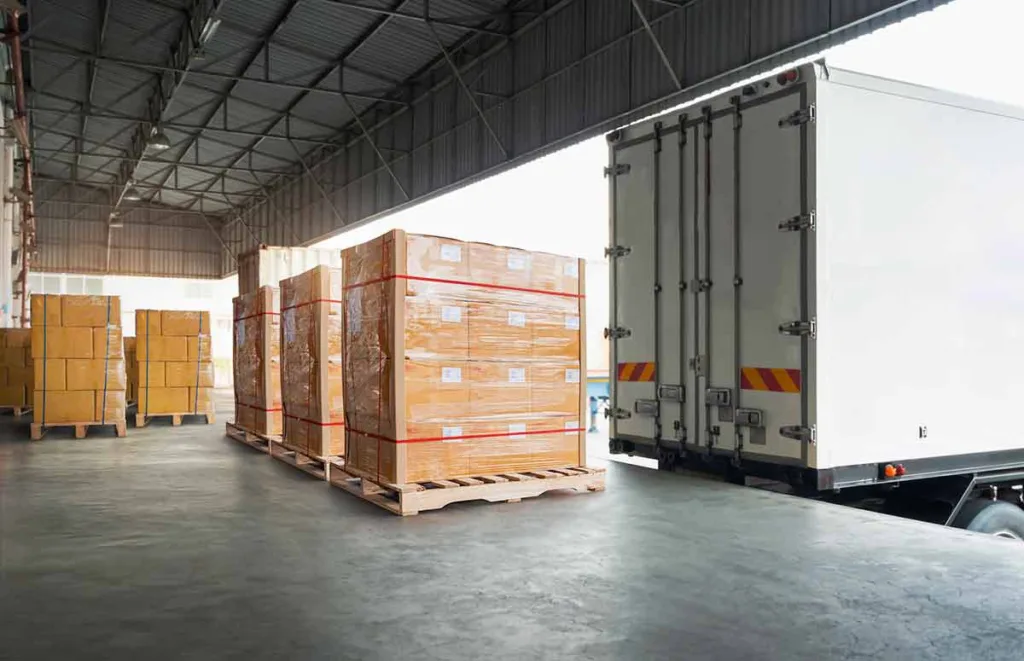
In contrast, FTL typically involves a single shipper using an entire trailer for point-to-point movement, reducing handling, complexity, and the need for additional accessorial services. As detailed in TLI’s educational content on how freight is priced, LTL shipments move through multi-terminal networks, get loaded and unloaded multiple times during transit, and share trailer space with freight from many other shippers.
This operational model means LTL carriers face more variables that can increase costs:
- Multiple handling points create more opportunities for special service needs
- Consolidated loads require careful weight and dimension verification
- Diverse delivery locations range from commercial docks to residential homes
- Varied freight characteristics demand different equipment and handling method
Carrier accessorial charges are extra fees for services beyond the base freight rate and are commonly grouped into categories such as equipment based charges, location based charges, and service based charges to help shippers understand and anticipate fees that apply in different shipping scenarios. See the Code of Federal Regulations which defines accessorial charges as fees added to the base tariff rate for services like inside delivery, redelivery, reconsignment, and demurrage, illustrating that these charges apply beyond basic transportation.4
The Three Categories of Accessorial Charges
Based on common motor carrier tariffs, accessorial charges generally fall into three categories:
1. Equipment-Based Accessorials
These fees cover specialized equipment needed for pickup or delivery, such as liftgates, pallet jacks, or temperature-controlled trailers.
2. Location-Based Accessorials
Applied when deliveries occur at non-standard locations like residences, limited access sites, or areas requiring special routing.
3. Service-Based Accessorials
Charges for additional services such as inside delivery, appointment scheduling, or shipment reclassification after carrier inspection.
Understanding these LTL accessorial service categories helps shippers anticipate which fees might apply to their specific shipping scenarios.
List of Common LTL Accessorial Charges
The following comprehensive list covers the most frequent accessorial charges shippers encounter. Each section explains the fee, typical costs, why carriers charge it, and most importantly, how to avoid or minimize the charge.
Before-the-Fact Accessorials
These charges apply to services you request or conditions known before the shipment moves.
Liftgate Service
What It Is: A hydraulic platform attached to the delivery truck that raises and lowers freight to ground level.
When It’s Needed: Required when either the pickup or delivery location lacks a loading dock or forklift.
Typical Cost Range: $75-$150 per occurrence
Why Carriers Charge It: Not all trucks have liftgates, so carriers must dispatch specific equipment. The liftgate also adds time to loading/unloading operations.
How to Avoid It:
- Arrange to meet the driver at a location with dock access
- Have a forklift available for loading/unloading
- If you regularly need liftgate service, negotiate this into your contract rate rather than paying per-occurrence fees
TLI Insight: According to TLI’s glossary of shipping terms, liftgate service is one of the most common accessorials. The key is declaring this need upfront when getting your rate quote so it’s included in the initial price, not added as a surprise later.
Limited Access Delivery
What It Is: Fees applied when delivering to locations that restrict access or require additional coordination.
Common Limited Access Locations:
- Military bases and government facilities
- Schools, universities, and educational institutions
- Prisons and correctional facilities
- Hospitals and medical facilities
- Churches and places of worship
- Construction sites
- Marinas and boat docks
- Golf courses and country clubs
- Storage facilities
- Camps and recreational facilities
- Airports (airside)
- Locations requiring security clearance
- Sites with limited hours of operation
Typical Cost Range: $50-$200 per shipment
Why Carriers Charge It: These locations typically require:
- Security check-in procedures
- Special driver credentials or identification
- Limited delivery windows
- Additional coordination and scheduling
- Longer wait times for clearance
How to Avoid It:
- When possible, have freight delivered to an alternate commercial address
- Provide the carrier with all necessary access information in advance
- Coordinate with the receiving location to speed up the delivery process
- If you frequently ship to these locations, negotiate reduced limited access fees in your carrier contract
TLI Insight: TLI’s cargo shipping glossary notes that “actual definitions of a limited access location varies by carrier. While residential locations may qualify for this definition, these locations are marked and charged at a different rate.”
Residential Delivery Fee
What It Is: Surcharge for delivering to a home address or any location classified as residential by the carrier.
Typical Cost Range: $75-$175 per shipment
Why Carriers Charge It:
- Residential areas require navigating narrow streets unsuitable for large trucks
- Homes typically lack loading docks or material handling equipment
- Deliveries may require liftgate service (often charged separately)
- Residential stops are outside the carrier’s optimized commercial route structure
- Longer delivery times due to difficulty finding the address and coordinating with homeowners
How to Minimize It:
- If operating a home-based business, ask if you can be classified as commercial
- Arrange delivery to a nearby commercial address when feasible
- Meet the driver at a commercial location to take delivery
- Consolidate multiple residential deliveries to negotiate better rates
Important Note: Residential fees are typically charged in addition to liftgate fees, since homes rarely have dock access.
Inside Delivery
What It Is: Service where the driver brings freight inside the building rather than leaving it at the loading dock or curbside.
Typical Cost Range: $75-$200+ depending on distance from truck to final location
Why Carriers Charge It:
- Requires additional labor time from the driver
- May require pallet jacks or hand carts (additional equipment)
- Increases delivery time and reduces the driver’s daily delivery capacity
- Involves liability for navigating stairs, elevators, or narrow hallways
How to Avoid It:
- Have staff available to move freight from dock/curb to the final location
- Ensure your receiving staff knows the delivery is dock-only unless inside delivery was requested
- For bulky items, evaluate whether the convenience justifies the cost
Variation: “White Glove” or “Room of Choice” delivery costs significantly more ($200-$500+) and includes placement in a specific location and often debris removal.
Delivery Appointment
What It Is: Scheduling delivery for a specific date or time window rather than accepting standard delivery windows.
Typical Cost Range: $35-$75 per appointment
Why Carriers Charge It:
- Disrupts the carrier’s optimized routing
- May require holding freight for the appointment date
- Reduces flexibility in the carrier’s schedule
How to Minimize It:
- Accept standard delivery windows when possible
- If appointments are necessary, provide as much advance notice as possible
- Some carriers offer free appointment scheduling within certain parameters—verify your contract terms
TLI Insight: As noted in TLI’s content on LTL rates, “These charges include additional services needed for shipments. These can include delivery appointments, limited access or residential locations, liftgate services, and much more.”
Notification/Call Ahead Service
What It Is: Carrier calls the consignee before delivery to schedule or confirm timing.
Typical Cost Range: $15-$50
Why Carriers Charge It: Requires additional administrative work and coordination.
How to Avoid It: Provide excellent communication upfront and have someone available during standard delivery windows.
After-the-Fact Accessorials
These charges get applied after the carrier inspects or delivers the shipment and discovers conditions requiring additional services.
Freight Reclassification Fees
What It Is: Charges applied when the carrier determines the freight class listed on the bill of lading is incorrect.
Typical Cost Impact: Can add hundreds or even thousands of dollars to the shipping cost
Why It Happens: The National Motor Freight Traffic Association maintains the NMFC® system that assigns freight classes based on density, stowability, handling, and liability characteristics. If a shipper incorrectly classifies freight, the carrier can reclassify it and charge the difference in rates plus an administrative fee.
Common Reclassification Triggers:
- Incorrect density calculations (weight vs. dimensions)
- Using the wrong NMFC® code for the product
- Failing to update classifications after NMFTA rule changes
- Inaccurate weight or dimension reporting
- Improper packaging that changes the freight class
The 2025 NMFC® Changes: As reported by industry sources, the NMFTA® implemented significant classification changes in July 2025 under Docket 2025-1. These changes introduced a new 13-sub density scale and shifted many commodities to density-based classifications, making accurate dimension and weight reporting more critical than ever.5
How to Prevent Reclassification:
TLI’s dedicated article on LTL reclassification provides detailed guidance:
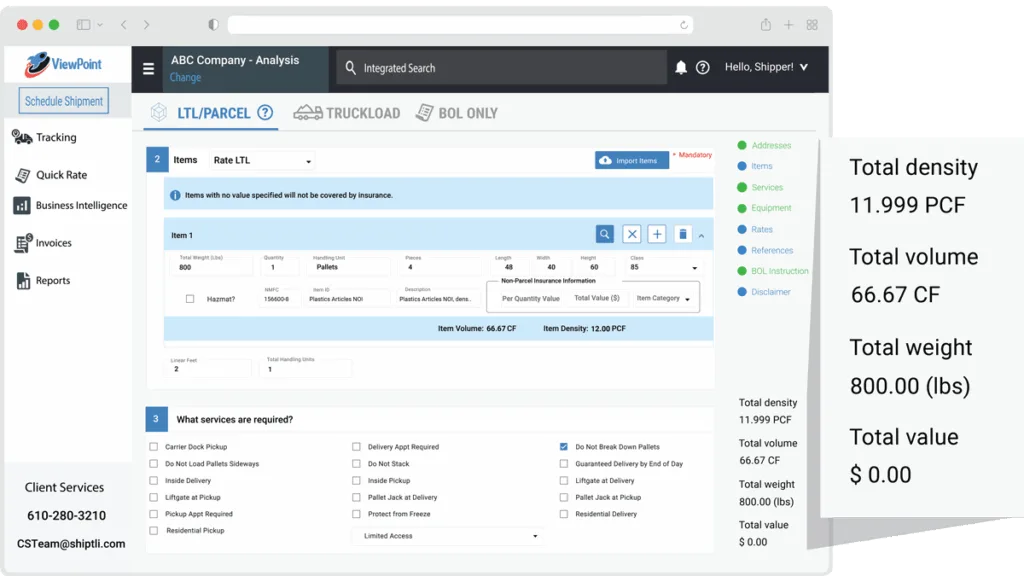
“ViewPoint TMS helps shippers avoid this issue by auto-determining PCF (pounds per cubic foot) when weight and dimensions are entered. It then retrieves the proper freight class automatically. This accuracy on the front end saves shippers money, and it prevents having to waste time mitigating billing discrepancies on the back end.”
Prevention Strategies:
- Use accurate scales and measuring tools for all freight
- Keep current with freight classification changes (check quarterly updates)
- Utilize technology like ViewPoint TMS that automatically calculates the shipment density and assigns the correct freight class
- When in doubt, work with a 3PL like TLI that has freight classification expertise
- Include NMFC® codes on all bills of lading
- Partner only with carriers who will verify classification before pickup rather than after delivery
The Cost of Getting It Wrong: According to TLI, “These fees vary but can be substantial, increasing shipping costs by hundreds or even thousands of dollars. In addition to the base charge, carriers may apply administrative fees for correcting the classification.”6
Reweigh Fees
What It Is: Charge assessed when the carrier reweighs freight and finds a significant discrepancy from the weight declared on the bill of lading.
Typical Cost Range: $50-$100 plus the cost difference if the actual weight results in a higher rate
Why Carriers Charge It: Inaccurate weights affect:
- Rate calculations
- Equipment allocation
- Load planning and trailer optimization
- Safety compliance
How to Avoid It:
- Always use calibrated scales to determine actual freight weight
- Include pallet weight in your calculations
- Account for packaging materials, shrink wrap, and strapping
- Don’t estimate—measure
Reconsignment/Address Correction
What It Is: Fees when the delivery address changes after the shipment is in transit.
Typical Cost Range: $75-$250+ depending on how far the new address is from the original
Why Carriers Charge It:
- Disrupts optimized routing
- May require additional linehaul miles
- Can cause delivery delays to other shipments on the same truck
How to Avoid It:
- Verify delivery addresses before tender
- Communicate with consignees to confirm they’ll be at the location
- Have backup plans if the primary location is unavailable
Detention Fees
What It Is: Charges when the driver waits beyond the “free time” for loading or unloading.
Typical Free Time: 15-30 minutes for LTL (varies by carrier)
Typical Detention Rates: $50-$150 per hour after free time expires
Why Carriers Charge It:
- Driver downtime reduces their daily delivery capacity
- Equipment sits idle instead of generating revenue
- Other deliveries get delayed
How to Minimize It:
- Have freight ready for pickup at scheduled time
- Ensure receiving staff is available and prepared for delivery
- Stage freight near the loading area for quick access
- Communicate any delays to the carrier immediately
Specialized and Less Common Less-than-Truckload Accessorial Charges
Hazardous Materials Handling
Shippers and carriers that move hazardous materials under the Federal Motor Carrier Safety Administration (FMCSA) must follow additional safety and compliance rules that do not apply to standard freight, and these requirements often affect how hazardous shipments are priced and handled. Under Title 49 of the Code of Federal Regulations, certain hazardous materials may only be transported by motor carriers that hold a Hazardous Materials Safety Permit and meet specific safety, registration, and operational standards.7 Because these shipments require extra regulatory compliance, training, and oversight, carriers commonly apply additional handling or administrative fees, often referred to as hazmat accessorial charges, beyond the base line haul transportation rate.
What It Is: Fees for shipping materials classified as hazardous under Federal Motor Carrier Safety Administration (FMCSA) regulations.
Typical Cost Range: $50-$300+ depending on hazard class
Why It’s Charged:
- Requires special driver training and certification
- Demands specific labeling and documentation
- Involves additional liability insurance
- Must comply with Department of Transportation regulations
Requirements: Proper classification, documentation, packaging, and labeling per FMCSA and DOT requirements.
Trade Show/Convention Center Delivery
What It Is: Premium charges for delivering to trade shows, conventions, or exhibition centers.
Typical Cost Range: $150-$500+ per shipment
Why It’s Charged:
- Limited dock access with strict appointment windows
- May require special credentials or advance registration
- Often involves long wait times in queues
- Specific delivery time requirements
- May require coordination with event managers or decorators
How to Minimize: Book well in advance, provide all required paperwork, and coordinate closely with the event’s freight handling company.
Overlength/Over-Dimensional Charges
What It Is: Fees when freight exceeds standard LTL dimension parameters.
Typical Threshold: Items over 8 feet long8 or exceeding standard trailer dimensions
Typical Cost Range: $100-$1,000+
Why It’s Charged:
- Requires special handling and securement
- May need permits for transport
- Affects how other freight can be loaded in the trailer
- Can require special equipment
How to Avoid It: Know your dimensions and consider whether volume LTL or FTL might be more cost-effective for oversized items.
Sort and Segregate
What It Is: Charges for organizing freight by SKU, purchase order, or other criteria before delivery.
Typical Cost Range: $50-$150+ depending on complexity
When It Applies: When consignee needs freight sorted in a specific way rather than delivered as loaded.
Why Accessorial Costs Are Rising
According to a Research Brief launched by Logistics Management®, “Accessorials, invoicing errors and other unexpected freight fees have been keeping more supply chain operators up at night lately, with 2/3 of respondents indicating that invoice discrepancies and surprises cause disruptions.”9 Industry analysis shows that LTL carriers have steadily increased accessorial fees over the past several years. Some fees have increased by 10-30% annually, largely outpacing inflation and base rate increases. This trend reflects:
- Growing e-commerce residential delivery volumes
- Increased complexity in last-mile delivery
- Driver shortage impacts on detention-sensitive operations
- Carriers recovering costs through accessorials rather than base rates
One of the key challenges in optimizing your LTL (less-than-truckload) freight strategy is managing accessorial costs and contract complexities that can drastically impact your total freight spend. Accessorial charges, such as liftgate, inside delivery, residential delivery, and other specialized service fees, are inherently unpredictable and vary widely across carriers and contracts. The use of these accessorials may also vary based off your locations, or product types being routed.
Studies show that analyzing LTL pricing and market rates consistently to isolate accessorials as distinct from base line-haul, aid the negotiable nature of these fees in freight contracts.10 By partnering with TLI, you benefit from our proven ability to negotiate custom accessorial pricing uniquely tailored to your program through our motor carrier RFP sourcing events. Instead of accepting standard tariff rates and generic accessorial fees, we leverage your freight profile and volume to secure contract terms that reflect your actual business needs. This transportation RFP results in reducing hidden costs, improving price certainty, and driving more competitive all-in rates across your LTL spend.
Moreover, the LTL environment includes many contract types and pricing structures that can be confusing if you’re not immersed in this space. If you’re not already familiar with how LTL contracts, accessorials, and rate components work, I recommend watching the following introductory video that provides a clear overview of LTL freight fundamentals:
LTL Accessorials: Frequently Asked Questions
What are LTL accessorial charges?
LTL accessorial charges are extra fees added to the base line-haul rate for services beyond standard dock-to-dock pickup and delivery, such as liftgate, inside, or residential delivery, and reclassification. Carriers and regulators treat these charges as separate from both line-haul rates and fuel surcharges, reflecting the additional handling or administrative work required.
Why are accessorial charges more common in LTL than FTL?
Accessorials are more common in LTL because shipments move through shared carrier networks, multiple terminals, and consolidated freight environments, increasing handling complexity and the likelihood of non-standard services. FTL shipments typically move point-to-point on a single trailer for one shipper, reducing handling and the need for additional services.
What are the most common LTL accessorials?
Common LTL accessorials include liftgate service, residential pickup or delivery, inside pickup or delivery, limited access locations, appointment scheduling, reclassification, reweighs, and detention. These accessorial charges are widely documented in carrier tariffs and freight classification rules.
What is LTL reclassification and why does it result in extra charges?
Reclassification happens when a carrier determines that a shipment’s actual freight class differs from the class originally declared by the shipper. This typically occurs due to errors in weight, density (pounds per cubic foot), dimensions, packaging, or commodity description, and it can result in additional freight charges.
Are LTL accessorial charges negotiable?
Yes, many LTL accessorial charges are negotiable, especially within contractual agreements established through custom client named RFPs that TLI launches. Shippers with volume leverage can often secure reduced or capped accessorial pricing instead of relying on the standard carrier tariff rates.
How can shippers reduce unexpected accessorial fees?
Shippers can reduce accessorial charges through launching a carrier sourcing event partnered with TLI. Shippers can reduce and better control accessorial charges by providing accurate shipment details during bill of lading (BOL) creation, including weight, dimensions, and freight class, properly packaging freight, and clearly understanding delivery location requirements. By proactively managing shipment data and negotiating customized accessorial pricing within carrier contracts, companies can avoid unnecessary fees and improve overall transportation cost control.
Citations
- E. Özkaya et al., Estimating and benchmarking Less-than-Truckload market rates, Transportation Research Part E (discussing exclusion of fuel surcharges and additional accessorial charges from base pricing structures in LTL freight). https://www.researchgate.net/publication/227427309_Estimating_and_benchmarking_Less-than-Truckload_market_rates ↩︎
- Under federal law, motor carriers must disclose the actual rates, charges, and any allowances on freight billing documents, helping ensure transparency in transportation billing practices (49 U.S.C. 13708). ↩︎
- National Motor Freight Traffic Association, NMFC Classification Glossary of Terms, “Prepaid Shipment / Collect Shipment,” describing accessorial services as additional services performed at the request of the consignor or consignee, included in transportation charges, https://help.nmfta.org/hc/en-us/articles/38292150039323-NMFC-Classification-Glossary-of-Terms ↩︎
- 41 C.F.R. § 102-117.25 (2011), https://www.govinfo.gov/content/pkg/CFR-2011-title41-vol3/pdf/CFR-2011-title41-vol3-part102-id1768.pdf ↩︎
- Freight Classification Development Council, Docket 2025-1 ↩︎
- LTL Reclassification: How to Avoid Costly Fees, (Feb. 12, 2025), https://shiptli.com/less-than-truckload/ltl-reclassification-how-to-avoid-costly-fees/ ↩︎
- 49 C.F.R. § 385.401–.423 (Hazardous Materials Safety Permits) (definitions and requirements for Hazmat permits under FMCSA safety fitness procedures). https://www.ecfr.gov/current/title-49/subtitle-B/chapter-III/subchapter-B/part-385/subpart-E ↩︎
- Please be advised that the excess length rules vary Carrier to Carrier. Dayton Freight has excess length starting at 7′ and A Duie Pyle is 6’6″. Excess Length continues to be the leader in high accessorial charges, and it is critical to route with a TMS to capture all the rules. ↩︎
- Driving Down Unexpected Less-than-Truckload Transportation Costs, SMC³ research brief (noting accessorials create unplanned cost variances in LTL billing). https://scg-lm.s3.amazonaws.com/pdfs/smc3_wp_driving_down_unexpected_ltl_costs_031423.pdf ↩︎
- Estimating and benchmarking Less-than-Truckload market rates, Keskinocak (noting that additional accessorial charges are treated separately from line-haul in research models). https://www.academia.edu/30423761/Estimating_and_benchmarking_Less_than_Truckload_market_rates ↩︎
