
Implementing an effective inbound freight management program can deliver significant cost savings, improve supplier performance, and enhance supply chain visibility, but it’s not without challenges. Manufacturers often encounter resistance from vendors, complex technology integrations, and difficulties maintaining compliance over time. Additionally, fluctuating transportation rates can complicate fair allowance calculations. Understanding these common obstacles and applying proven strategies to address them is critical to turning inbound freight into a controlled, optimized part of your logistics operation.
What is Inbound Freight Management?
Inbound freight management is the process of controlling how purchased goods move from suppliers to your receiving facilities. Rather than letting suppliers choose their own carriers and passing the freight cost back to you through purchase order markups, a managed inbound freight program puts carrier selection, routing, and cost visibility in your hands.
The Producer Price Index, a measure of how the cost of freight changes over time for producers, has trended upward consistently since 2004.1 Most companies only look at their outbound as a way to control this cost, but inbound is where the savings are often left on the table.
The Hidden Cost of Unmanaged Inbound Freight
When suppliers control inbound shipping, they typically use their own carrier relationships and recover freight cost through purchase order pricing. The buyer sees no itemized freight charge and has no leverage to negotiate rates or hold carriers accountable.
Common Implementation Challenges and Solutions
Management Challenge 1: Vendor Resistance to Routing Guides
The problem: Suppliers accustomed to managing their own freight arrangements resist programs requiring them to use shipper-designated carriers. Vendors cite increased administrative burden, unfamiliarity with new systems, and concerns about service quality.
The solution: Frame the program as a partnership delivering mutual benefits. Vendors save time previously spent calling carriers and negotiating rates. Shipper-negotiated contracts often provide better service than vendors could secure independently. Freight allowances compensate vendors for documented transportation costs, maintaining their landed cost economics. Comprehensive vendor enablement including training, support hotlines, and portal access reduces implementation friction.
Management Challenge 2: TMS and ERP Integration
The problem: Connecting TMS platforms to ERP systems, supplier portals, carrier networks, and warehouse management systems requires technical expertise many manufacturers lack internally. Poor integrations create data quality issues and manual workaround processes.
The solution: Partner with third-party logistics providers offering managed inbound freight services. Experienced 3PLs like TLI provide cloud-based TMS technology specifically designed for inbound programs, handle all integration complexity, and maintain the systems ongoing. This outsourced approach delivers enterprise-grade capability without internal IT burden.

Management Challenge 3: Sustaining Vendor Compliance
The problem: Vendor compliance often starts strong but deteriorates as suppliers revert to old habits. New vendor contacts unaware of routing requirements create non-compliance. Compliance monitoring requires ongoing effort many organizations struggle to sustain.
The solution: Automate compliance monitoring through TMS systems that flag violations immediately rather than discovering issues weeks later during manual audits. Systematic penalty enforcement through automated invoice deductions creates financial incentive for compliance. Regular vendor communication keeps routing requirements top-of-mind. Quarterly scorecards celebrate compliant vendors while pressuring poor performers.
Management Challenge 4: Managing Dynamic Freight Allowances
The problem: Establishing fair freight allowances that accurately reflect shipper-negotiated rates proves complex. Allowances too low make non-compliance financially attractive. Allowances too high overpay vendors. Transportation rates fluctuate with fuel prices and market conditions requiring allowance updates.
The solution: Implement dynamic rate allowances that calculate based on origin, destination, weight, and current fuel surcharge indices. Modern TMS platforms automatically calculate accurate allowances for each shipment rather than using static lookup tables. Quarterly allowance reviews ensure rates remain aligned with current carrier contracts and market conditions.
Overcoming the challenges of inbound freight management requires a combination of technology, process discipline, and strong vendor collaboration. By addressing vendor resistance, integrating TMS solutions, automating compliance monitoring, and implementing dynamic rate allowances, manufacturers can transform inbound logistics from a hidden cost into a strategic advantage. A well-executed program not only reduces transportation spend but also strengthens supplier relationships, improves operational efficiency, and provides reliable visibility across the entire supply chain.
Partnering with 3PLs for Inbound Freight Management
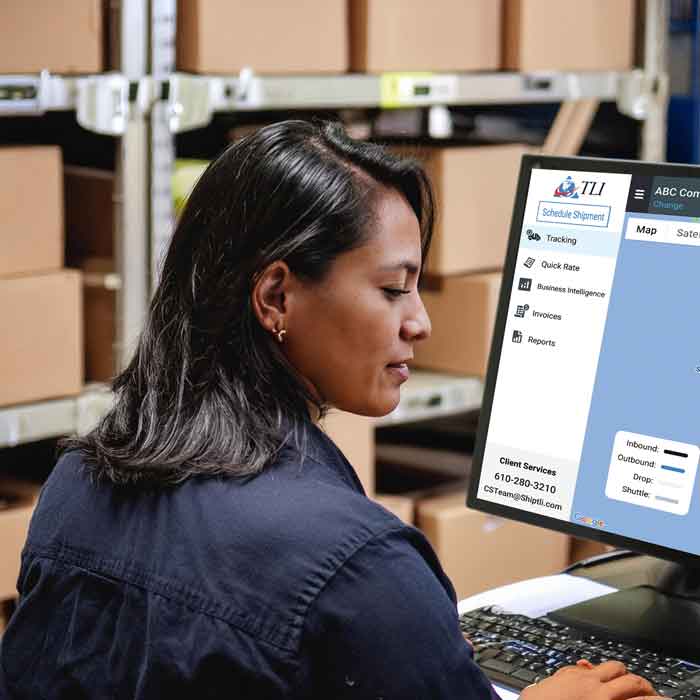
ViewPoint TMS is a cloud-native transportation management system designed to give shippers full visibility, control, and efficiency over inbound freight. It goes beyond simple shipment tracking. The platform unifies logistics teams and vendors in a single digital workspace. At its core, ViewPoint connects directly with carriers via API and EDI. This delivers real-time tracking and status updates in one dashboard. Teams always know where shipments are and what comes next in the supply chain.
One of the most powerful aspects of ViewPoint TMS is its inbound routing vendor self‑service portal. Instead of managing freight via email or static spreadsheets, suppliers can log in to view routing instructions, book shipments, print bills of lading, and transmit advance shipment notices. ViewPoint’s multi‑carrier connectivity means you can rate, book, and track parcel, LTL, and truckload shipments from a single place.
Its integrations let you instantly compare carrier rates, automatically tender pickups, and store proof of delivery documents for up to five years. This eliminates manual follow-up with carriers and reduces operational friction. Most vendors want to move shipments as quickly as possible, and with ViewPoint TMS, they can do so efficiently, leveraging mode optimization and selecting the lowest-cost provider.
Mobility is equally critical. The platform’s cloud architecture gives vendors, carriers, and internal teams access to key features from desktops or mobile devices, enabling shipping decisions on the go. At the same time, built-in advanced analytics and business intelligence, powered by tools like Microsoft Power BI, deliver actionable insights into inbound freight patterns, carrier performance, and cost drivers. These insights help teams identify savings opportunities, track compliance trends, and measure the ROI of every inbound shipment.
Contact TLI to discuss your inbound freight opportunities:
Email: leads@shiptli.com
Phone: 610-280-3210
Join manufacturers across 50+ industries who have reduced inbound freight costs through TLI’s proven approach to inbound freight management.
Frequently Asked Questions
Typical implementation timelines range 8-12 weeks from initial assessment through full vendor rollout. Pilot programs with 5-10 primary vendors can launch in 4-6 weeks. Timeline depends on vendor count, IT integration complexity, and internal change management capacity.
Well-designed programs with proper vendor communication, adequate support, and systematic enforcement typically achieve 75-85% compliance within six months. Compliance rates above 95% are possible with dedicated compliance teams and automated penalty enforcement.
No, inbound programs integrate with existing ERP platforms through API or file-based connections. Our ViewPoint TMS solutions support ERP systems and industry-specific platforms. Integration enables automated quoting, booking shipments and processing without ERP replacement.
Frame the program as benefiting both parties. Vendors save time previously spent arranging transportation. Many appreciate access to better carriers than they could secure independently. Freight allowances compensate vendors fairly. Executive procurement sponsorship signals importance. Comprehensive vendor enablement reduces friction. Gradual rollout lets early adopters demonstrate success, encouraging others.
Yes, even manufacturers with modest inbound volume benefit. Smaller companies often face higher vendor freight markups and have less leverage negotiating directly with carriers. Our 3PL-managed programs pool multiple client volumes for carrier rate advantages small manufacturers cannot achieve independently.
Implementation costs vary based on vendor count, IT integration requirements, and whether building internal capability or partnering with 3PLs. Internal builds require ViewPoint TMS utilization, IT resources, and ongoing staff. Our partnerships with shippers typically operate on transportation management fees (percentage of managed spend) with no upfront capital investment. Most programs deliver ROI within 3-6 months.
Footnotes
- Bureau of Transportation Statistics. Transportation Economic Trends. data.bts.gov/stories/s/Transportation-Economic-Trends-Transportation-Cost/2yqq-baqd ↩︎