
How partial truckload shipping is priced, what drives the rate, and how to decide if it’s the right mode for your shipment.
Partial truckload shipping is one of the most misunderstood options in freight, and one of the most underused. Shippers often default to LTL for medium-sized loads without realizing that PTL can offer better pricing, fewer handling events, and faster transit times on the right shipments.
Part of the confusion comes from the name. Partial truckload sounds like a smaller version of a full truckload, or maybe a large LTL shipment. It’s neither. PTL is its own mode with its own pricing structure, and understanding how that pricing works is the key to knowing when to use it.
This guide explains the four main freight modes in plain terms, breaks down how PTL rates are built, identifies what drives those rates up or down, and gives you a framework for deciding whether PTL is the right call for a given shipment.
Partial Truckload is not Less-than-Truckload
Truckload carriers sometimes use the term less-than-truckload (LTL) to describe a partial load on their equipment, meaning a truck that is not full. This is not the same as LTL as a freight mode. LTL is a distinct carrier model built around networks of terminals that consolidate, transfer, and deliver freight from multiple shippers. When a truckload carrier says LTL, they typically mean a partial load on a dedicated truck. When an LTL carrier says LTL, they mean freight moving through their terminal network. The distinction matters when quoting, because the pricing structures, transit times, and handling risks are completely different.
Understanding the Four Freight Modes
Before evaluating partial truckload, it helps to understand how each mode works and where it fits in the freight landscape. These definitions use plain language rather than industry shorthand.
| Mode | How It Works | Best Fit |
|---|---|---|
| Less-than-Truckload (LTL) | Multiple shippers share trailer space through a carrier’s terminal network. Freight is consolidated, transferred between terminals, and delivered. Pricing is based on weight, dimensions, pallet count, and freight class. | Small shipments, typically under 5,000 lbs or 6 pallets |
| Volume LTL (VTL) | Larger LTL shipments that exceed standard contract pricing. The LTL carrier quotes based on current capacity and linear footage rather than a fixed tariff rate. Freight still moves through the terminal network. | Mid-size shipments where LTL capacity is available, typically 5,000 to 15,000 lbs |
| Partial Truckload (PTL) | The shipper’s freight moves on a truckload carrier but does not fill the trailer. The carrier finds additional shipments to pair with yours. No terminal handling. Freight moves dedicated, point to point. | Medium shipments, typically 8 to 18 pallets, 5,000 to 30,000 lbs |
| Full Truckload (FTL) | One shipper purchases the entire trailer. The carrier picks up at one origin and delivers to one destination with no terminal stops and no other shippers. | Large shipments that fill a 53-foot trailer, time-sensitive shipments, or high-value shipments |
The key distinction that separates PTL from LTL and Volume LTL: PTL freight never goes through a terminal. It moves on a truck, point to point, with any additional freight loaded at pickup rather than transferred at a hub. That single difference drives most of the service and pricing advantages PTL offers over LTL at the right shipment size.
What Partial Truckload Shipping Is Not
Partial truckload is not a shipment moved through an LTL carrier’s terminal network. It moves on a van or flatbed with direct or near-direct routing. Pricing reflects the physical space the freight occupies, not a freight class.
LTL carriers do offer a service called Volume LTL that behaves similarly to PTL on the surface: the carrier quotes by linear foot rather than by class, and pricing is based on capacity rather than a fixed tariff. But Volume LTL freight still moves through the LTL carrier’s terminal infrastructure. Partial truckload does not. That difference matters for transit time, damage risk, and the predictability of delivery windows.
Less-than-Truckload

Volume LTL/Partial TL
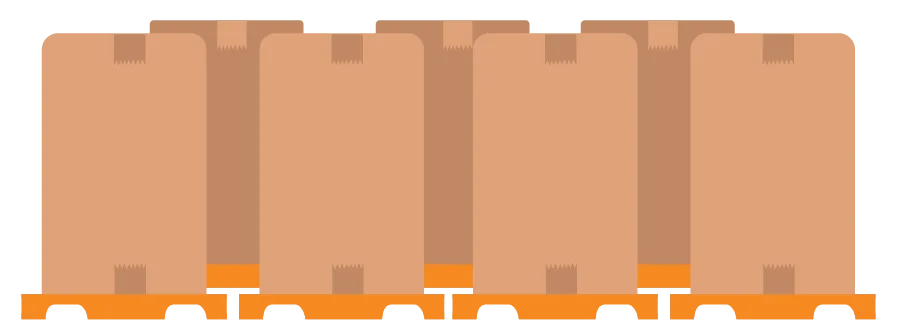
Full Truckload
How Partial Truckload is Built
PTL rates start with the dedicated truckload rate on the same lane. That’s the rate a carrier would charge to move a full 53-foot trailer from origin to destination for a single shipper. The PTL rate is then set as a percentage of that dedicated rate, based primarily on how much of the trailer your freight occupies.
The logic is straightforward: if your shipment takes up half the trailer, you shouldn’t pay for the whole truck. But you can’t pay exactly half either. The carrier now has to do additional work to generate the same revenue from that move. It needs to find a complementary load to fill the remaining space, potentially deadhead to a second pickup, and manage the complexity of multiple shippers on one truck. That additional work is priced into the rate as a premium above your proportional share of the trailer.
Additional factors to the rates include lane specific factors. While this is covered in more depth in the next section, the factors of a lane also adjusts the rate for the shipment.
What Drives Partial Truckload Rates Up or Down
Partial rates are not published in a tariff or a rate schedule. They reflect the same market and operational variables that drive full truckload pricing, adjusted for the complexity of building a partial load. The more a shipper understands these variables, the better they can anticipate when partial truckload will be competitive and when it won’t.
Lane Characteristics
The origin-destination pair is the single largest rate driver after linear footage. A lane with strong truckload volume in both directions gives the carrier better odds of finding a co-load, which reduces the risk built into the rate. A thin lane with low volume, limited backhaul opportunities, or a remote destination means fewer co-load options and a higher rate premium.
- High-volume, major-metro lanes tend to produce the most competitive PTL rates. Co-load opportunities are plentiful, and carriers can plan partial moves efficiently.
- Long-haul lanes give carriers more flexibility to source complementary freight at an intermediate point. Short hauls under 300 miles leave little room to build a profitable multi-stop partial.
- Consistent, recurring lanes allow carriers to plan ahead. A shipper moving PTL freight on the same lane every week gives a carrier the ability to pre-plan co-loads, which reduces their cost and improves the rate they can offer.
MIT FreightLab research on truckload carrier operations identifies that a carrier’s cost of serving any given lane is affected by the other lanes it is already serving, and that connection costs between loads are never certain due to short lead times and variable shipper demand.1 The same principle applies to PTL: a carrier who knows your lane and your freight moves can plan co-loads in advance rather than scrambling on the day of pickup. That planning advantage lowers cost and often translates to a better rate for the shipper.
Freight Characteristics
The commodity affects PTL pricing in ways that go beyond weight and linear footage:
- Density: Dense freight such as heavy machinery, steel, and bagged goods may hit weight limits before filling floor space. Carriers factor this into how much trailer remains available for a co-load.
- Height and stackability: Freight that occupies the full trailer height cannot be stacked alongside other cargo. Non-stackable loads narrow co-load options and push rates higher.
- Hazmat and special handling: Shipments requiring hazmat placarding, temperature control, or other special handling restrict which carriers can legally co-load the freight.
- Fragility and positioning requirements: High-value or fragile freight may need to be loaded in a specific position within the trailer, which limits the carrier’s flexibility in building the co-load.
Market Conditions
PTL rates move with the truckload market because they are anchored to the dedicated rate on the lane. When carrier capacity is tight due to high demand or limited truck supply, full truckload rates rise and PTL rates follow. When capacity is loose, carriers compete for partial loads and rates soften. Seasonal peaks, weather disruptions, and broader supply chain shifts affect PTL pricing the same way they affect truckload.
Partial Truckload vs Volume LTL
LTL, Volume LTL, and PTL all move freight that doesn’t fill a full trailer. But they are different products with different pricing structures, service levels, and risk profiles. Choosing the right one depends on the shipment, the lane, and the carrier’s current capacity.
How LTL Pricing Works
LTL carriers build rates from a tariff tied to freight class. Every commodity is assigned a freight class based on density, stowability, handling difficulty, and liability. The carrier applies a base rate per hundredweight for that class on the lane, then applies the shipper’s contract discount.
For small shipments, LTL is efficient. The network is dense, the pricing is predictable, and the shipper pays only for the weight of the freight. As shipment size grows, two problems emerge: the total dollar amount climbs even as the per-hundredweight rate falls, and carriers begin applying linear foot rules that charge for trailer space on top of the weight-based rate. At that point, LTL pricing often overshoots what PTL costs for the same freight.
Volume LTL: The Other Middle Option
Volume LTL is a pricing tier LTL carriers offer for shipments too large for standard class-based rates, typically above 5,000 lbs or six pallets. Instead of applying a fixed tariff, the carrier quotes based on current capacity, the lane, and the load size. When the carrier has open space, Volume LTL rates can be competitive with PTL. When capacity is tight, the carrier may decline the freight entirely.
The critical difference from PTL: Volume LTL freight still moves through the carrier’s terminal network. It passes through the same consolidation hubs, the same handling events, and the same damage exposure as any other LTL shipment. PTL offers fewer touches, a tighter delivery window, and a fixed rate, at the cost of less rate flexibility on any given day.
Mode Comparison at a Glance
| Pricing Element | LTL | Volume LTL | Partial Truckload | Truckload |
|---|---|---|---|---|
| Pricing Method | Freight Class, Weight, Dims | Linear Feet plus LTL Capacity | Percentage of FTL Rate | Per Mile |
| Handling Stops | Multiple Trailers / Terminal Transfers | Multiple Trailers / Terminal Transfers | Direct, MultiStops | Direct |
| Minimum Charge | Sometimes – Carrier Specific | Sometimes – Carrier Specific | Rare | Rare |
| Linear Foot Rule | By LTL Contract | By LTL Contract | Not Applicable | Not Applicable |
| Damage Exposure | High | High | Low | Low |
Is Partial Truckload Right for Your Shipment?
Partial Truckload Shipping isn’t the right answer for every mid-size load. The decision comes down to whether the rate, which is above your proportional share of the truck, still beats LTL’s all-in cost including additional accessorial, and whether Partial Truckload Shipping service profile matches what your freight and consignee actually need.
When Partial Truckload Shipping Wins
- Your LTL shipment is triggering a linear foot rule: When an LTL carrier applies a linear foot charge on top of the class-based rate, the effective total cost often exceeds a partial quote on the same lane. Get both numbers before defaulting to LTL.
- Your freight class is high: Class 150, 200, or 300 generates large LTL invoices. Partial TL pricing ignores class entirely and quotes on space. The savings on high-class commodities can be significant.
- Damage on this lane is a recurring problem: Every LTL terminal transfer is a handling event. Partial moves freight with one or two touches instead of four or five. For fragile or high-value goods, that reduction often justifies the rate premium on its own.
- The lane is consistent and recurring: Carriers build better partial loads and price them more aggressively when they can plan ahead. A shipper with a weekly partial lane has leverage that a spot shipper does not.
When Partial Truckload Shipping Doesn’t Win
- The shipment is under 8 pallets at moderate weight: Below this threshold, LTL pricing is typically more efficient. Partial’s minimum economics require enough freight to make partial routing worthwhile for the carrier.
- The freight approaches 28 to 30 linear feet: At this size, PTL rates converge with full truckload quotes. Get both. A dedicated truck with no co-load complexity is often within a few percentage points of PTL at this range.
- The lane is thin or remote: On low-volume or remote lanes, carriers have fewer co-load opportunities and price the partial premium accordingly. LTL may be more cost-effective when truckload capacity on the lane is scarce.
- Drop trailer is required: PTL carriers need the trailer back to build the next partial. Live unloading is standard. If the consignee needs a spotted trailer, a dedicated FTL move is the right call.
- The delivery is time-critical with no flexibility: Even though PTL is a dedicated move, the carrier still needs time to build the truck from multiple partial loads before departure. For same-day or next-morning requirements, FTL is more reliable.
Work With a Freight Partner That Compares Every Mode
TLI evaluates every shipment across LTL, Volume LTL, PTL, and full truckload so shippers see the all-in cost and service profile for each option before committing to a mode. TLI’s carrier network includes truckload carriers operating PTL lanes across major U.S. corridors, giving shippers access to capacity and rates that are not available through a standard load board. For operations teams managing a mix of modes, TLI’s TMS provides shipment visibility from booking through delivery in one place. For shippers with consistent lanes, TLI supports freight RFPs that include PTL as a distinct bid category, with carrier qualification, bid evaluation, and contract execution handled end to end.
Frequently Asked Questions
Partial truckload is any shipment that doesn’t fill an entire trailer, but moves in the full truckload market. This helps fill the gap between less-than-truckload (LTL) and full truckload cargo, while keeping the freight out of terminal base shipping that LTL carriers provides.
Partial truckloads move on truckload carriers that operate as a direct option for shippers. Less-than-Truckload carriers utilize a network of terminals and high handling of freight to move shipments. There is much less risk in moving freight dedicated to avoid all the handling. Another main difference is that LTL typically caters towards smaller shipments, while partial truckload is ideal for medium sized shipments.
The ideal weight for utilizing Partial Truckload is between 5,000 and 30,000 pounds. If the weight is under 5,000 lbs then you may not be taking up enough space. Anything over 30,000 lbs may not allow for any other shipper to load their freight.
You will need to provide exact dimensions, weights, freight description, origin and destination zipcodes, and other precise details for a carrier to quote accurately.
Footnotes
- Caplice, C. MIT FreightLab. Optimization Based Transportation Procurement. freightlab.mit.edu/optimization-based-transportation-procurement ↩︎
