
Your freight broker seemed like the right fit when you started working with them. They found capacity, rates were reasonable, and the relationship was easy. But somewhere between then and now, your freight got more complicated, and you’re not sure your broker grew with you.
Most companies don’t fire their freight broker because of one catastrophic failure. They stay too long because the problems are gradual: a little more manual work here, a few more billing surprises there, carrier performance that’s fine but never great. The cost of inaction adds up quietly. Here are the seven signs that it’s time to have a serious conversation about what your freight program is, and what it should be.
This guide is written for shippers who use a transactional freight broker or a small brokerage. If you already work with a managed transportation provider who owns your freight program end-to-end, many of these gaps may not apply.
The 6 Signs
Sign #1 Your team spends more time managing freight than running the business
Freight should be a function your team oversees, not one they’re buried in. But for many shippers, the daily reality looks like this: chasing carrier confirmations, manually updating tracking in a spreadsheet, fielding delivery exception calls, reconciling freight invoices line by line, and re-booking loads that fell through at the last minute.
If your operations team is spending multiple hours a day on freight coordination tasks, that’s not a freight operations problem, it’s a structural problem. A broker who simply finds capacity doesn’t solve it. You need a partner who takes ownership of process execution.
Ask yourself:
- How many hours per week does your team spend on freight-related tasks?
- Is freight management pulling your team away from customer service, planning, or growth work?
- Have you had to add headcount specifically to manage logistics volume?
What it’s costing you:
- Lost productivity on higher-value work
- Higher overhead cost than appears on the freight invoice
- Staff burnout in operations roles
- Lack of role clarity
Sign #2 You don’t have visibility of your shipment details and supply chain reporting
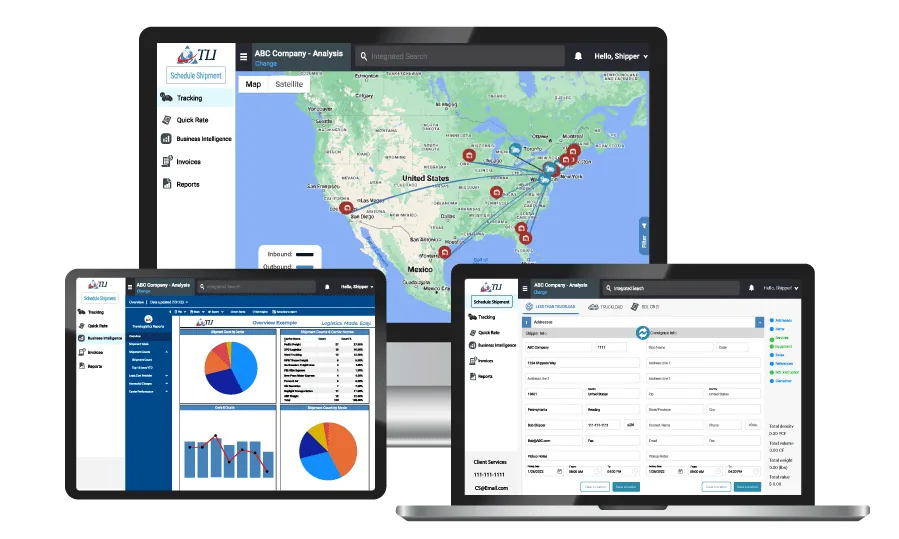
In 2026, “I’ll call the carrier and find out” is not a tracking strategy. Yet many shippers using transactional brokers still rely on phone calls, email, or carrier-specific portals to find out where a shipment is.
Real-time freight visibility, automated shipment status, proactive exception alerts, and shareable tracking links for your customers, is now baseline infrastructure for a professional freight program. All of these tools along with many others are readily available in TMS systems like ViewPoint. If your broker can’t deliver it, your customers and your operations team are paying the price.
Ask yourself:
- Can you see the status of all open shipments from a single dashboard right now?
- Do you receive automated alerts when a delivery is running late?
- Are you able to share a tracking link with a customer without calling the carrier?
What it’s costing you:
- Customer service calls about “where is my order” that your team has to investigate manually
- Late detection of delivery exceptions, by the time you know, it’s too late to intervene
- Do you know how to rescue a shipment from an LTL terminal? How to get the shipment expedited for timely delivery?
- Inability to hold carriers accountable without delivery data
Sign #3 Your freight invoices regularly contain errors or surprises
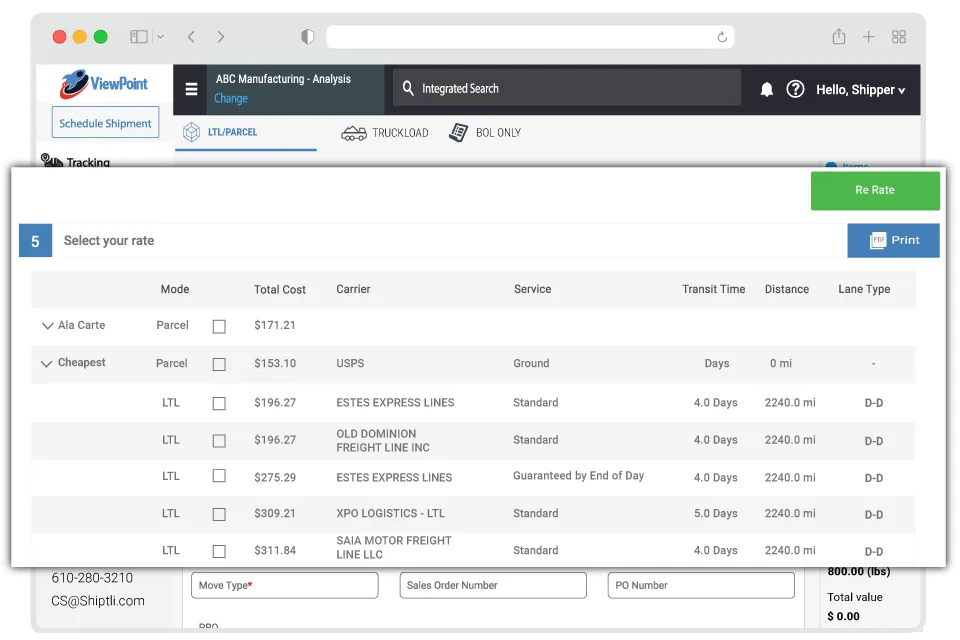
Freight billing is complex, base rates, fuel surcharges, accessorials, reclassifications, re-weigh charges. Even following the costs side, there is the GL coding and cost center input that needs to be completed. Following that, the reconciliation against the tariff and quoted amount is critical to ensure you are paying only what you are supposed to. It’s not uncommon for 3–7% of freight invoices to contain errors. Without systematic audit, most of those errors get paid.
A transactional broker typically doesn’t audit your carrier invoices, they simply pass through what the carrier charges. A managed transportation provider with a freight audit program catches overbilling before payment, generates dispute recovery, and gives you data to negotiate better rates at the next bid.
Ask yourself:
- Do you audit freight invoices before payment, or approve them on trust?
- Have you found billing errors on carrier invoices in the last 90 days?
- What is your process for disputing invoices with the motor carriers?
- What are the business rules related to your GL Coding?
- Do you know your average accessorial costs per shipment, and whether it is a market rate?
What it’s costing you:
- Overpayment on 3–7% of invoices, at $5M in annual freight spend, that’s $150K–$350K per year
- No data to dispute charges or negotiate corrections
- Finance team spending hours on manual invoice reconciliation
- Heaven help your team, if they are having to manually enter the GL codes on each shipment
Sign #4 You haven’t run a formal carrier RFP in the last two years
Carrier rates drift. General Rate Increases are constant. Without a structured bid process, your rates move with the spot market, your contract terms get stale, and you lose leverage with carriers who know you’re not actively shopping the market.
A data-driven transportation RFP, one that analyzes your lane history, identifies consolidation opportunities, and runs a competitive carrier bid, typically delivers 8–15% cost savings for shippers who haven’t run one recently. Your broker should be running this process for you. If they’re not, ask why.
Ask yourself:
- When did you last run a formal carrier RFP or competitive bid?
- Has your broker ever proactively recommended rebidding your lanes?
- Do you have lane-level rate benchmarks you can compare against market rates?

What it’s costing you:
- Paying above-market rates on contracted lanes
- No carrier performance data to use as negotiating leverage
- Spotty capacity and load coverage which impacts service
- Carrier relationships that exist out of inertia, not performance
Sign #5 You’re shipping across multiple modes and your broker only handles one
Many freight brokers specialize, primarily truckload, or primarily LTL. As your freight program grows, you likely ship across multiple modes: parcel for small shipments, LTL for mixed pallets, truckload for full loads, intermodal for longer lanes, and maybe expedited when things go wrong.
If your broker handles only one mode and you’re managing separate relationships for the others, you’re carrying complexity that doesn’t need to exist. Multi-modal consolidation under a single managed program means one technology platform, one set of reporting, one relationship accountable for your whole freight program.
Ask yourself:
- How many different carrier or broker relationships does your team manage?
- Do you have consistent reporting across all modes in one place?
- Is any mode currently unmanaged or handled through spot quotes only?
What it’s costing you:
- Redundant overhead managing multiple vendor relationships
- Missed mode optimization opportunities (e.g., LTL consolidation into truckload, truckload conversion to intermodal)
- Blind spots in freight spend data because reporting is fragmented
Sign #6 You’re growing and your broker’s capacity and capabilities aren’t keeping up
A broker who was the right fit at $1M in annual freight spend may not be the right fit at $5M or $15M. As freight volume grows, program complexity grows: more lanes, more carriers, more modes, more facilities, more reporting requirements. Not all brokers have the infrastructure, carrier network, or technology to scale with you.
If you’re growing and your broker is still operating the same way they did when you started, same manual processes, same limited technology, same single-mode focus, you’re not getting the program that your freight volume now warrants.
Ask yourself:
- Has your freight volume grown significantly in the last 2–3 years?
- Have you added facilities, lanes, vendors, or modes that your broker struggles to support?
- Does your broker proactively bring you market intelligence, regulations, benchmarks, and savings ideas or do they just execute what you send them?
What it’s costing you:
- Operational complexity outpacing your broker’s capabilities
- Increasing management overhead as your team compensates for broker gaps
- Missing cost-reduction opportunities that a more sophisticated program would capture
How to Score Your Results
Count the signs that apply to your freight program and use this table to determine your next step:
| Signs present | Priority level | Recommended action |
|---|---|---|
| 1 sign | Low urgency | Your broker relationship is probably working for now. Set a review cycle for 12 months. |
| 2–3 signs | Worth exploring | Request a freight program assessment. Understand what a transition could deliver. |
| 4–5 signs | High urgency | The cost of inaction is compounding. A managed transportation partner will pay for itself quickly. |
| 6 signs | Critical | You’ve outgrown your broker entirely. Every month of delay has a measurable cost. |
What “Outgrowing Your Broker” Actually Means
Outgrowing your existing vendor doesn’t mean your broker is bad at their job. It means your freight program has grown beyond what a transactional broker relationship is designed to deliver. A transactional broker finds capacity. A managed transportation provider manages your freight program, running RFPs, operating your TMS, tracking all shipments, auditing invoices, handling claims, providing reporting, and functioning as an outsourced logistics department.
The distinction matters because the solutions are different. You’re not looking for a better broker. You’re looking for a partner who takes ownership of the whole freight operation so your team doesn’t have to.
A Note on Making the Transition
One reason companies stay with underperforming brokers is concern about transition disruption, and how it will impact relationships. In practice, a well-managed transition to a managed transportation provider is less disruptive than most shippers expect:
- Carrier relationships transfer. A managed transportation provider with an established carrier network doesn’t start from zero, your lanes get loaded into their system and carrier outreach (including incumbents) begins immediately.
- Technology onboarding is handled. Reputable providers manage the TMS setup, ERP integration, and carrier EDI connections. Your team doesn’t build this, they log in and use it.
- The current broker relationship can wind down gradually. Many shippers transition one mode or facility at a time rather than cutting over all at once.
- You keep the institutional knowledge. A managed provider works within your existing contracts, routing requirements, and customer commitments — they don’t rebuild from scratch.
The Bottom Line

Most shippers don’t switch freight brokers because of a single bad day. They switch because they finally add up the cumulative cost of staying, the overbilled invoices they never caught, the RFP they never ran, the hours their team spent on work a managed transportation partner would have handled automatically. The question isn’t whether your broker is doing a bad job — it’s whether your freight program is getting the level of management it needs.
NEXT STEP TLI offers a no-commitment freight program assessment. We analyze your current carrier mix, lane data, and spend, and show you exactly where a managed transportation program would deliver savings and reduce operational burden. Call 610-280-3210 or visit shiptli.com/contact/ to start the conversation.
About Ship TLI
Translogistics Inc. (TLI) is a managed transportation services provider headquartered in Exton, PA. With 30+ years of experience, 30,000+ vetted carriers, and a proprietary TMS platform (ViewPoint), TLI manages freight programs for mid-market and enterprise shippers across the U.S. EPA SmartWay Certified. Rated #1 3PL on Google.
