
This brief guide explains everything you need to know about freight claim filing, including how the Carmack Amendment works, what documents you’ll need, important filing deadlines, and the most common reasons carriers deny claims. The information provided is for general educational purposes only and should not be considered legal advice.
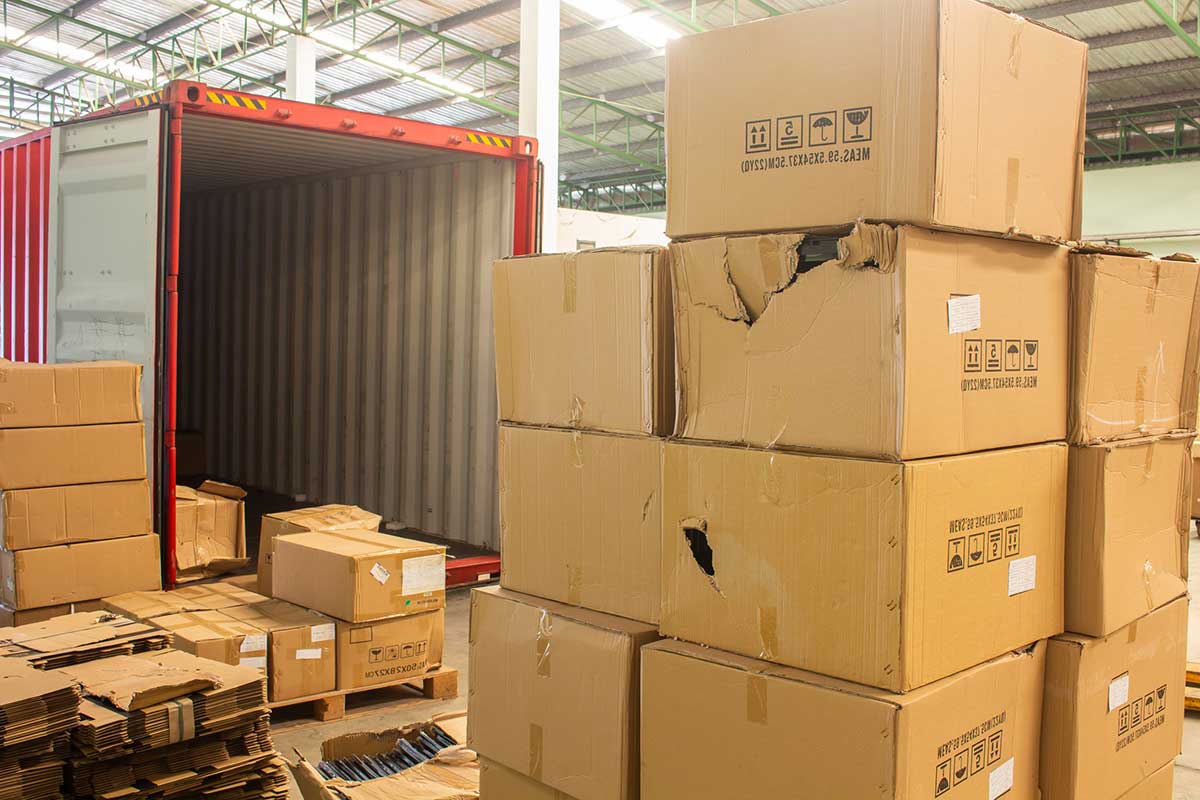
Freight damage and loss happen across every carrier, mode of transportation and on every lane. When they do, the shipper or consignee faces a claims process governed by federal statute, carrier tariffs, and bill of lading terms that most shipping operations staff have never read. Mistakes made in the first 24 hours after delivery, or before delivery, at the receiving dock, often determine whether a claim pays at full value, settles at a discount, or gets denied outright.
In this article we walk together through the legal framework for freight claims, the documentation every claim requires, the filing deadlines that control whether a claim is valid, and the common carrier defenses that defeat otherwise legitimate claims. It covers LTL, truckload, and intermodal freight under the standard rules that apply to domestic U.S. shipments.
The Legal Framework
The Carmack Amendment, codified at 49 U.S.C. Section 14706, establishes carrier liability for loss or damage to freight moving in interstate commerce.1 Congress originally enacted the Carmack Amendment back in 1906 to create a uniform federal standard that replaced the patchwork of state liability laws that had made freight claims unpredictable. The amendment above was passed in the ICC Termination Act (Public Law 104-88) back in 1995. Before 1995, motor carriers were generally required to file tariffs with the Interstate Commerce Commission unless they operated under a negotiated contract with the shipper. Today, tariff filing is only required for the transportation of household goods or property moved in non-contiguous domestic trade, and those tariffs are filed with the Surface Transportation Board. The amendment sets the default rule: a carrier is liable for the actual loss or injury to the property it transports.
Carmack liability is not absolute for the motor carriers. Carriers often limit their liability through released rates or provisions in their tariffs that cap recovery at a value below the actual market value of the freight. A shipper who does not declare a value or purchase excess liability coverage accepts the carrier’s released rate, which may be as low as $0.10 per pound for some commodity types. Please be aware that a significant number of LTL volume shipments, and LTL shipments involving used machinery, used goods, or other low-value items, often fall under $0.10 per pound in freight cost.
The Five Carmack Defenses
A carrier that receives a freight claim can avoid liability by proving that one of five causes produced the loss or damage. Shippers who understand these defenses can structure their claims to anticipate and rebut them.
| Defense | What the Carrier Must Prove |
|---|---|
| Act of God | Natural Disaster beyond carrier control caused the loss. |
| Public Enemy | Military or government action caused the loss |
| Shipper’s Fault | Improper packaging or loading caused the damage |
| Public Authority | Government Order caused the loss |
| Inherent Vice | Natural deterioration or defect in the goods caused the loss |
The shipper’s fault defense is the most common carrier rebuttal to freight damage claims, particularly for LTL freight. Carriers argue that the packaging failed, not the handling. Shippers counter with packaging certifications, carton testing results, and photographic evidence of the freight condition at origin.
Types of Freight Claims
Federal regulations under 49 CFR Part 370 recognize four types of freight claims. Each has distinct documentation requirements and timelines.2
| Claim Type | Definition | When It Happens | Key Documentation |
|---|---|---|---|
| Visible Damage | Damage apparent at delivery | Driver and consignee note exceptions on delivery receipt | Noted delivery receipt, photo, inspection report |
| Concealed Damage | Damage found after delivery with no noted exceptions | Discovered during unpacking or use | Photos, inspection report, Claim filed within 5 days of delivery |
| Shortage | Fewer pieces delivered than shipped | Discovered during unpacking or use | Photos, inspection report, Claim Filed within 5 days of delivery |
| Loss | Freight not delivered at all | Carrier confirms no delivery and freight can not be located | BOL, proof of shipment, market value invoice |
The Hardest Claim to Win: Concealed Damage
Concealed damage claims, or where the freight arrived without visible external damage but the contents were damaged, face the highest carrier denial rate. The carrier argues that the damage occurred after delivery because the packaging showed no signs of impact at the time of receipt. Shippers win concealed damage claims by demonstrating that the packaging was intact, the damage pattern is consistent with transit handling, and the discovery occurred promptly after delivery.
Best practices for concealed damage protection:
- Photograph all packages on receipt before moving them from the receiving dock
- Open and inspect all shipments as soon as possible
- Document the inspection date and findings with photos and a written report
- Report concealed damage to the carrier in writing within 5 days
- Retain the original packaging and all inner packing materials until the claim resolves
If damage wasn’t recorded on the delivery receipt at the time of delivery, you have just five business days to notify the carrier of concealed damage. After that deadline, the carrier may deny the claim on the basis that the shipment was signed for as clear and undamaged. This concealed damage ruling changed on April 18, 2015,3 when the National Motor Freight Classification® (NMFC)™ updated its guidelines and reduced the concealed damage reporting window from 15 days to five business days.
For many years the NMFC required notice of concealed damage within 15 days. That was shortened to 5 days in 2015, and additional requirements in connection with such claims were added. Item 200135-A reads as follows:4
ITEM 300135-A Reporting Concealed Damage
(a) When damage to, or loss of, contents of a shipping container is discovered by the consignee that could not have been determined at time of delivery it must be reported by the consignee to the delivering carrier upon discovery. (b) Reports must include a request for inspection by the carrier’s representative. (c) Notice of loss or damage and request for inspection may be given by telephone or in person, but in either event must be confirmed by a written or electronic communication. (d) While awaiting inspection by carrier, the consignee must hold the shipping container and its contents in the same condition they were in when damage was discovered, insofar as it is possible to do so. (e) Unless otherwise specified by the carrier, notice of loss or damage should be provided to the carrier within five (5) business days from the date of delivery. (f) If five (5) business days, or such other period as specified by the carrier, pass between the date of delivery of the shipment by carrier and date of report of loss or damage and request for inspection by consignee, it is incumbent upon the consignee to offer reasonable evidence to the carrier’s representative when inspection is made that loss or damage was not incurred by the consignee after delivery of shipment by carrier.
Claim Filing Deadlines: Carmack and Tariff Requirements
Freight claims operate under strict filing deadlines. A claim filed after the deadline is unenforceable regardless of how well-documented it is. The Carmack Amendment sets minimum standards, but carrier tariffs often impose shorter windows.
| Claim Action | Carmack Minimum | Typical Tariff Deadline* |
|---|---|---|
| File Claim with Carrier | 9 months from delivery (or from reasonable expected delivery for loss) | 9 months (Most carriers follow Carmack minimum) |
| Carrier Must Acknowledge Claim | 30 Days from Receipt of Claim | 30 Days from Receipt of Claim |
| Carrier Must pay, deny, or make settlement offer | 120 Days from Receipt of Claim | 120 Days from Receipt of Claim |
| File Civil Suit suit after claim denial | 2 Years from Carrier’s Denial | 2 Years from Carrier’s Denial |
| Reporting Concealed Damage | Not Specified in Carmack | 5 Days from Delivery |
The 9-month filing deadline runs from the date of delivery, or from the date the freight should have been delivered for loss claims. A shipper who discovers damage 8 months after delivery still has a valid claim if filed before the 9-month window closes. A shipper who waits 10 months does not.
Tariff Deadlines Can Be Shorter
Some carrier’s tariffs impose filing deadlines shorter than the Carmarck 9-month standard. Read your carrier’s tariff before the filing deadline passes. A claim filed within Carmack’s 9-month window but outside the carrier’s published tariff deadline may still be denied, requiring litigation to recover.
Document Requirements for a Complete Freight Claim Filing
49 CFR Part 370 identifies the documents a carrier may require before investigating a freight claim. 5Submitting a complete package on the first filing shortens the resolution timeline and prevents carriers from using document requests as a delay tactic.
Carmack Amendment (49 U.S.C. §14706)
The Carmack Amendment (49 U.S.C. §14706) establishes the federal standard for freight claims in the United States, clearly defining carrier liability, notice requirements, and evidence standards. Under this law, carriers are generally liable for loss or damage to goods while in transit, and shippers must provide timely notice of claims to preserve their rights. To support a successful claim, thorough documentation is essential. At a minimum, this should include the Bill of Lading (BOL) or Proof of Delivery (POD), photographs of damaged goods, salvage estimates and invoices or repair estimates.
Best practices recommend also gathering additional evidence such as a damage inspection report, freight weight tickets, packing lists, shipping receipts, correspondence with the carrier, and any relevant contracts or insurance documents. Together, this complete set of documentation helps establish the condition of the shipment, the value of lost or damaged goods, and compliance with legal and procedural requirements, maximizing the likelihood of a successful claim.
Filing Cargo Claims: 49 U.S.C. § 14706(e)(1)
The Carmack Amendment allows motor carriers to set time limits for filing cargo claims. However, carriers cannot require claims to be filed in less than nine months. For example, if a Bill of Lading states a six-month deadline, that provision is unenforceable. It’s also important to note that the Carmack Amendment does not require a nine-month deadline, it only sets the minimum allowable timeframe.
Acknowledgment of Cargo Claims: 49 CFR § 370.5
Once a properly filed cargo claim is received, the motor carrier (or its authorized agent, such as an insurance adjuster) must acknowledge receipt in writing within 30 days. The acknowledgment must also identify any additional documents or information needed to process the claim.
Investigation of Cargo Claims: 49 CFR § 370.7
Motor carriers must investigate cargo claims promptly. Although the regulation does not define a specific timeframe, the 120-day resolution requirement indicates that investigations are expected to be completed within that period.
Payment, Denial, or Settlement Offer: 49 CFR § 370.9
Within 120 days of receiving a claim, a motor carrier must do one of the following in writing:
- Pay the cargo claim
- Deny the claim
- Make a firm settlement offer
- Ask for more information
If the claim cannot be resolved within 120 days, the carrier must notify the claimant in writing, explain the reason for the delay, and provide a status update. This notice should be repeated every 30 days until the claim is resolved.
Filing Lawsuits for Cargo Claims: 49 U.S.C. § 14706(e)(1)
The Carmack Amendment also allows carriers to set deadlines for filing lawsuits related to cargo claims. If no deadline is stated in the transportation contract, the timeframe is typically determined by the applicable state statute of limitations. However, carriers cannot require lawsuits to be filed in less than two years.
Required Documents for Every Claim
- Original bill of lading. The BOL establishes the contract of carriage, the commodity description, the quantity shipped, and the freight terms. A copy is acceptable if the original is unavailable, but the carrier may request proof that the original was surrendered at delivery.
- Freight bill or pro number. Identifies the specific shipment in the carrier’s system. Include the carrier-assigned PRO number for LTL shipments or the bill number for truckload moves.
- Delivery receipt with exceptions noted. For visible damage and shortage claims, the delivery receipt is the primary evidence. A clean delivery receipt, one with no noted exceptions, makes visible damage claims significantly harder to win.
- Invoice for the freight. Establishes the commercial value of the goods. The carrier’s liability is capped at the lesser of the actual loss or the invoice value. Use the supplier invoice, not the retail price.
- Repair estimate or replacement cost. For damaged freight, a third-party repair estimate or replacement invoice documents the actual dollar loss. The carrier pays repair or replacement, whichever is lower.
- Photographs. Photos of the outer packaging, the inner packaging, and the damaged product are the most persuasive evidence in a freight claim. Take photos at the delivery dock before any freight moves.
- Inspection report. For large claims, request a carrier inspection at the delivery point before moving or discarding the freight. The carrier’s inspector generates a report that becomes part of the claim file.
Why Freight Claim Filing Get Denied
Carriers deny a freight claim filing for substantive and procedural reasons. Substantive denials argue that the carrier was not liable. Procedural denials argue that the shipper failed to follow the process correctly.
University of Tennessee supply chain research on freight claims shows that procedural deficiencies, such as missed deadlines, incomplete documentation, clean delivery receipts, account for a large portion of denied claims that the shipper could have won on the merits.6
| Denial Reason | Category | How to Prevent It |
|---|---|---|
| Filed After Deadline | Procedural | File Claims as soon as they occur |
| Clean Delivery Receipt | Procedural | Train staff to inspect shipments upon delivery and note exceptions |
| No Dollar Amount | Substantive | Include specific dollar claim in the written filing |
| Released Rate Applies | Substantive | Declare value on BOL for freight worth more than released rate |
| Improper Packaging | Substantive | Use packaging certified to ISTA or ASTM standards; document spec |
| Inherent Vice | Substantive | Document proper storage conditions and product testing data |
| Concealed Damage Filed too Late | Procedural | Inspect and report within 5 days of delivery |
| Freight Not in Carrier’s Custody | Substantive | Confirm carrier PRO matches shipment before filing; avoid wrong-carrier claims |
Special Situations in Freight Claim Filing
Hazardous Materials Claims
Freight claims involving hazardous materials require documentation of the material’s proper shipping name, hazard class, and packing group in addition to standard loss and damage documentation.
Salvage and Mitigation
The Carmack Amendment requires claimants to mitigate their losses. A shipper cannot let damaged freight sit unusable and then claim full replacement value if the carrier can show the freight had salvage value. Shippers should get salvage bids on damaged goods and document them. If the carrier accepts the claim, the carrier takes title to the salvage.
Third-Party Claims and Broker Liability
When a freight broker arranges a shipment, the motor carrier that physically moves the freight holds Carmack liability for loss and damage. The broker is generally not liable as a carrier. However, a broker can help file the claim on the behalf of the shipper, which is a service provided by TLI.
LTL Terminal Inspections
FMCSA regulations require LTL carriers to maintain proper cargo handling procedures, but terminal inspections are not routine.7 When freight damage appears to have occurred at a carrier terminal rather than in transit, requesting the carrier’s terminal handling records for the shipment can support the claim. These records show when the freight arrived at each terminal, what condition it was in, and who handled it.
Utilizing an Expert for Freight Claims
A third party can assist shippers with managing and mitigating freight claims throughout the process. While the third party does not assume liability for the claim itself, they can help coordinate with the carrier and support the resolution process.
At TLI, we have been assisting shippers with freight claims for more than 30 years. Our team works on your behalf to help pursue the full eligible claim amount with the carrier, and this support is included as part of our managed transportation services. Contact us today to learn how we can support your team when a freight claim arises:
Frequently Asked Questions
The Carmack Amendment sets a 9-month deadline from the date of delivery, or from the date freight was reasonably expected to be delivered for loss claims. Some carrier tariffs impose shorter deadlines. Always check the carrier’s tariff before the deadline passes. Courts have upheld tariff deadlines shorter than 9 months.
A driver cannot prevent you from noting exceptions. Write the exceptions on the delivery receipt regardless of what the driver says. If the driver refuses to allow exceptions, note ‘driver refused to allow exceptions noted — freight accepted under protest’ on the receipt. Photograph the freight before it leaves the trailer.
You can accept the partial settlement, reject it, or negotiate. Accepting a settlement with a release of all claims means you cannot pursue additional recovery later. If the offer is significantly below the actual loss, request the carrier’s claim file, the carrier must make its investigation file available. Review the file before accepting a discounted settlement.
Yes — improper packaging is one of the five Carmack defenses. The carrier must prove that the packaging caused the damage, not just that the packaging was imperfect. Shippers with packaging certified to ISTA or ASTM standards can rebut this defense by showing the packaging met industry standards for the freight type.
Under the Carmack Amendment, the motor carrier that physically moves the freight holds liability for loss and damage. Brokers are generally not liable as carriers. File the claim with the motor carrier.
Cargo Claim References:
- 49 U.S.C. Section 14706 – Carmack Amendment. Carrier liability for loss or damage to property. law.cornell.edu/uscode/text/49/14706 ↩︎
- 49 CFR Part 370 – Principles and Practices for the Investigation and Voluntary Disposition of Loss and Damage Claims. ecfr.gov/current/title-49/subtitle-B/chapter-III/part-370 ↩︎
- National Automatic Food Equipment Manufacturers Association, National Motor Freight Transportation Association (NMFTA) Initiates Major Damage Claim (Apr. 18, 2015), https://nafem.org/2015/04/18/national-motor-freight-transportation-association-nmfta-initiates-major-damage-claim/ ↩︎
- Transportation & Logistics Council, Concealed Damage and Shortage Claims (2022), https://tlcouncil.org/wp-content/uploads/2022/10/concealed_damage_and_shortage_claims.pdf ↩︎
- Albeit. ↩︎
- University of Tennessee, Global Supply Chain Institute. Supply Chain Risk and Claims Research. haslam.utk.edu/gscm ↩︎
- Federal Motor Carrier Safety Administration. Regulations. 49 CFR Parts 300-399. fmcsa.dot.gov/regulations ↩︎
