
Why static routing guides fail, how resilient shippers adapt, and how TLI helps companies build more flexible freight strategies
Most routing guides are designed for stable markets.
The transportation market is no longer stable.
Transportation leaders are operating in a very different environment than they were just a few years ago. With change, comes the necessity of improving processes.
Supply chains are no longer being disrupted by isolated events. Volatility has become a permanent operating condition. Tariff uncertainty throughout 2025-2026, inflation, labor disruptions, severe weather, fuel fluctuations, carrier exits, cybersecurity threats, and consumer sentiment/demand have all
created an environment where transportation strategies must be built for adaptation to remain stability.
Yet many shippers are still managing freight with outdated operating models. Many shippers are still managing freight using outdated operating models, including static routing guides and legacy procurement practices. Without the right TMS technology, such as dynamic rating engines, combined with limited carrier networks and procurement decisions based on outdated assumptions, transportation strategies can quickly fall out of sync with current market realities. The result is a growing disconnect between how supply chains are structured and how freight markets actually operate.
The companies outperforming their competitors right now are not necessarily those with the lowest rates. They are the companies that have built transportation optionality into their supply chains. At TLI, we define transportation optionality as the ability to quickly shift between multiple viable transportation, carrier, mode and sourcing strategies without sacrificing service or losing cost control. In simple terms, optionality means you are never stuck with only one answer, you are empowered with contingency plans.
If a core carrier begins rejecting tenders, a region experiences weather disruption, or market conditions suddenly change, your business already has alternative paths in place. Instead of scrambling for solutions in real time, your team can execute against a prebuilt strategy.
Why Static Routing Guides Break During Market Volatility
As shocking as it may sound, many transportation teams still use static routing guides as though they are fixed systems.
A routing guide typically establishes carrier hierarchies that are lane specific based on pricing assumptions, and operational rules for how freight should move. In theory, this creates consistency and procurement discipline.
In practice, static routing guides often break down as soon as market conditions shift. The full truckload (FTL) spot market is also highly volatile, and unless a lane has sufficient volume to support contracting, it becomes difficult to maintain consistent cost expectations and performance reliability.
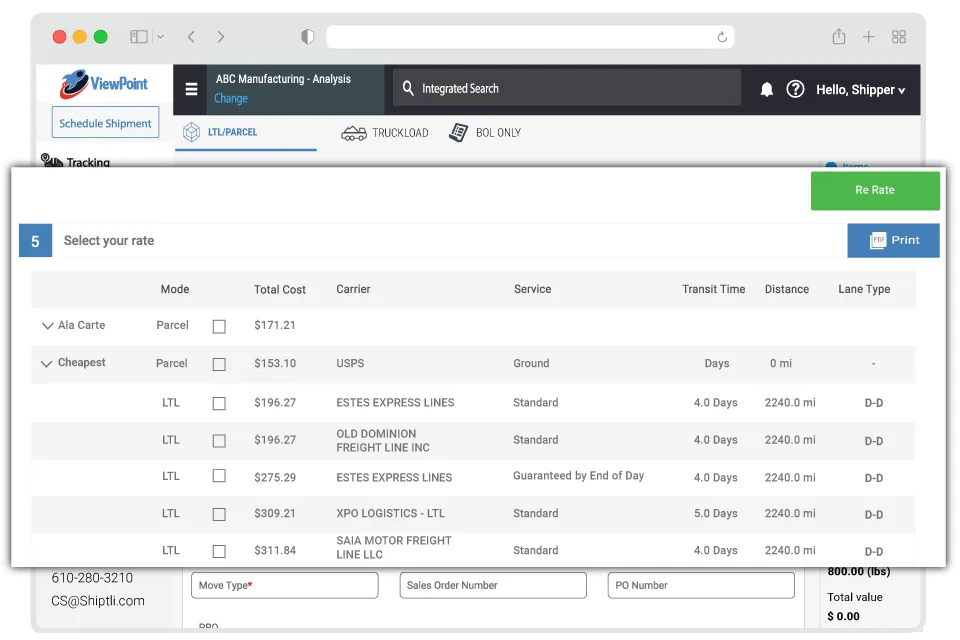
These challenges extend further in LTL environments, where the lowest-cost carrier can vary based on weight per hundred (CWT), freight class, and the accessorials applied, among other factors. Because of this variability, maintaining optimal cost and service performance requires more dynamic decisioning than traditional static routing approaches can provide.
A routing guide built around last year’s assumptions cannot account for:
- carrier capacity constraints,
- rising accessorial exposure,
- regional weather exposure (i.e. snow, and hurricane),
- fuel volatility
- service degradation
- equipment failure
- customer demand changes,
- lane-specific market disruptions
When these variables change, companies often find themselves forcing freight through a system that is no longer optimal. This leads to predictable problems. Teams begin manually overriding routing decisions. Freight moves to the spot market unexpectedly. Customer commitments are missed. Internal supply chain teams spend excessive time managing exceptions rather than executing strategy. A proper routing guide is a dynamic tool that adjusts automatically based off the parameters that inherently change leading up to the shipment being tendered.
What Transportation Optionality Actually Looks Like
Transportation optionality does not mean having dozens of carriers and no discipline. It means having the proper technology in place along with intentional flexibility. A shipper with strong optionality typically has multiple pathways available depending on business conditions. For example, if the primary motor carrier on an LTL lane posits a massive general rate increase (GRI), or the order size suddenly increases that shipper can easily shift freight strategies towards:
- an alternative regional carrier
- partial truckload,
- rail,
- pool distribution,
- zone skipping.
Likewise, if a major national carrier begins underperforming, the shipper already has backup providers onboarded and operationally integrated. At TLI, this is a major focus of how we support customers. Rather than helping clients optimize only for rate, we help them build flexible transportation systems designed to perform under changing conditions.
Transportation Strategy Comparison: Static vs. Flexible Networks
| Category | Static Transportation Model | Flexible |
|---|---|---|
| Routing Guide | Fixed annual design | Dynamic and continuously reviewed |
| Carrier Strategy | Limited preferred carriers | Diversified carrier ecosystem |
| Procurement Philosophy | Rate-focused | Total cost and service focused |
| Disruption Response | Reactive | Preplanned scenario execution |
| Decision Speed | Slower approval chains | Faster decentralized execution |
| Risk Exposure | Higher concentration risk | Distributed operational risk |
| Cost Stability | Vulnerable to disruption spikes | Better long-term control |
This is where many companies begin shifting toward a Total Quality mindset.
What Total Quality Shipping Means
Many shippers still evaluate LTL providers primarily on base rates alone. This is an incomplete methodology. True LTL performance should be evaluated across the full operational lifecycle.
At TLI, a Total Quality LTL approach considers:
- transit reliability,
- claims performance,
- billing accuracy,
- communication responsiveness,
- mode optimization opportunities,
- accessorial exposure,
- API integration,
- network fit, and
- long-term service consistency.
This creates a more accurate view of transportation performance.
For example, a lower-rate provider with poor billing discipline or high claims frequency can create significantly more total cost than a slightly higher-priced provider with stronger operational quality.
Shippers often underestimate how much operational noise impacts total logistics spend. Transportation should not be optimized in isolation. It should be optimized as part of business continuity strategy. Before the next disruption occurs, transportation leaders should pressure-test their operating model.