
What Can Shippers Do With Their Logistics Data
Your shipping data is worth more than your incumbent carriers or broker wants you to believe. Every load you move creates a data point. Origin, destination, weight, class, pallet count, ship date, accessorials, dimensions, this data when properly aggregated tells you exactly what you should be paying for freight, and it tells TLI exactly how to get you a better rate. Most shippers never pull this data together. They accept whatever pricing shows up on an invoice and move on. That’s the old way, and it costs money. This page walks through what data to collect, where to get it, and what TLI does with it once you send it over.
Why Your Shipping Data Matters More Than Ever
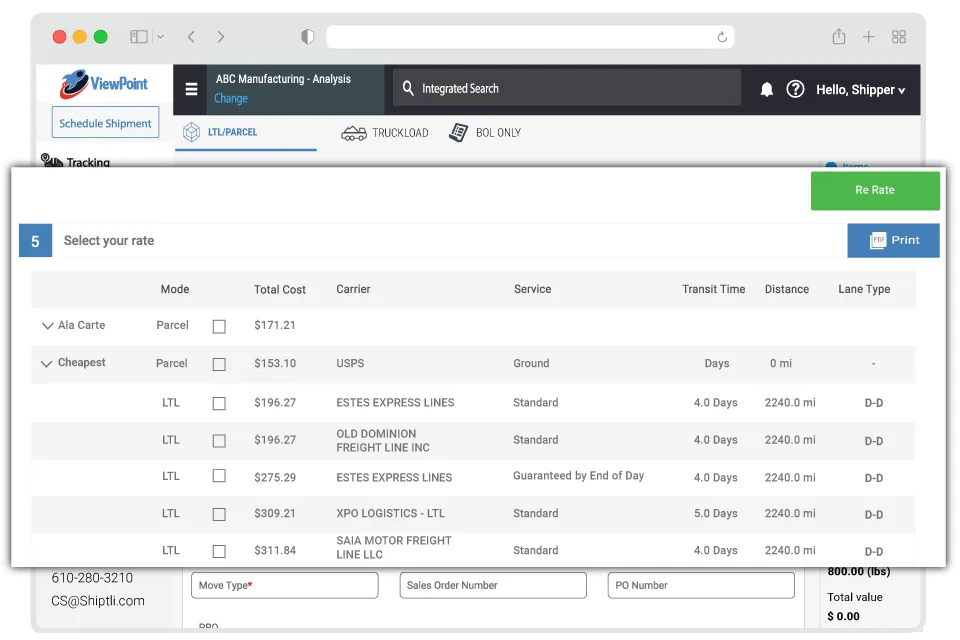
Carriers price freight based on what they know. They also however are forced to price freight based off what they don’t know. When a carrier bids on a lane without seeing your actual shipment history, they fill the gaps with assumptions. Assumptions run in the carrier’s favor, not yours. They are forced to pad the rate to cover the risk of the unknown: unpredictable weight, inconsistent pickup windows, dimensional surprises, cargo liability, accessorial charges that show up after the fact.
Custom contracts close that gap. When TLI builds a contract around your actual data, your real lanes, your real weight distribution, your real ship dates, carriers price against certainty instead of guesswork. Certainty is cheaper than guesswork, every time. This is also why “old school” freight management doesn’t cut it anymore, as it results in shippers being forced to pay the poor data-management premium.
Spreadsheets built from memory, static routing guides, verbal rate quotes, and once-a-year bid events can’t compete with modern data-driven procurement. Shippers who manage freight like a spreadsheet problem lose to shippers who manage it like a data problem. The gap between the two only grows as your company scales up larger.
The Data Points TLI Needs and Why Each One Matters
You don’t need a data science team to get started. You need these fields, pulled consistently, for as much shipment history as you can gather:
| Data Field | Why Shippers Need It |
|---|---|
| Origin ZIP | Establishes true lane density and identifies consolidation opportunities near your pickup points. |
| Destination ZIP | Pinpoints delivery clusters for multi-stop truckload and backhaul savings. |
| Weight | Drives hundredweight break analysis and flags shipments priced above the correct weight tier. |
| Freight class | Confirms whether you’re paying class-based rates when density-based pricing would save more. |
| Pallet count | Enables pallet-based pricing models and supports load consolidation math. |
| Lane (origin-destination pair) | Reveals your highest-volume lanes, where dedicated or contracted pricing delivers the biggest savings. |
| Ship dates | Surfaces same-day and next-day consolidation windows and seasonal volume patterns. |
| Accessorials (liftgate, inside delivery, detention, etc.) | Identifies recurring accessorial charges that can be negotiated into base rates instead of billed separately. |
| Dimensions | Feeds density-based pricing, which frequently beats class-based pricing on irregular or bulky freight. |
How to Pull Your Shipping Data
Every shipper has one of three starting points. Pick the one that matches your situation:
- Ask your incumbent vendor: If you’re currently working with a carrier or broker, your shipment history belongs to you. Request a full export of every load: origin, destination, weight, class, dates, and invoiced charges. You’re entitled to your own data. If a vendor resists sending it, that resistance tells you something about how they’ve been pricing you. If you need the vendor data request template, reach out to TLI and we can send you a copy for free.
- Pull It From Your Accounting System, TMS or ERP: If you run a transportation management system or an ERP with shipping modules, this data already exists inside your own systems. Most platforms support a standard export to CSV or Excel. Pull at least 1–3 months of history for a meaningful analysis.
- No TMS, No ERP, No Clean Export? Start Simple: If none of the above applies, don’t let that stop you. TLI can deploy ViewPoint TMS to automatically capture and organize this data from every shipment going forward. And if a clean historical export genuinely isn’t possible right now, start manually: set aside your freight invoices for the next four weeks.
TLI will sign an NDA, provide a secure shared drive, and build your baseline data set directly from those invoices. Four weeks of consistent tracking is enough to start the analysis. Freight pricing is a data problem now, not a relationship problem. The shippers getting the best rates aren’t the ones with the friendliest rep, rather they’re the ones whose broker actually knows their freight. Send TLI your data, and TLI runs it through a real rating engine, launches an RFP built on facts instead of assumptions, and hands you pricing you can defend.
Building an Accurate Shipper Profile
The details below might feel like a lot of questions to source on the front end, but each one directly affects how carriers price your freight and how confidently they’ll commit capacity to your lanes. The more complete your shipper profile, the more accurately TLI can negotiate on your behalf in the transportation RFP. Vague or missing information doesn’t protect you from cost; it just means carriers price in uncertainty, and you pay the risk premium that may not even exist. Precise information lets us negotiate precisely, which is how we keep pricing fair and competitive for you.
Here’s what we ask, and why it matters from a motor carrier’s point of view:
Shipping and Receiving Hours
Your standard shipping and receiving windows, and any special requirements: appointment scheduling, dock reservation systems, driver check-in procedures, special pickup numbers, live vs. drop-and-hook expectations, or facility-specific rules (PPE requirements, no-idling policies, limited dock doors, etc.).
Drivers run on Hours of Service (HOS) limits regulated by the FMCSA. A driver who arrives on time but sits for three hours waiting for a dock is burning drive time they can’t get back, and that lost time comes directly out of the carrier’s productivity for the day. Detention charges exist for exactly this reason. When carriers experience chronic delays at your facility, they either price the detention risk into their rates or decline to bid on future freight.
When we know your hours and appointment process up front, we can set realistic expectations with carriers before they bid, which reduces detention disputes and helps us negotiate a rate that reflects your actual facility, not a worst-case guess.
Freight Packaging and Photos
Photos of how your freight is typically packaged and palletized. Is it built within pallet dimensions or does it overhang? Is it shrink-wrapped and banded securely, or does it tend to arrive loosely packed?
Poor packaging is one of the biggest hidden drivers of freight claims. Overhanging freight restricts how carriers load trailers, increases the risk of freight shifting in transit, and can damage other shipments sharing the trailer. Poorly secured freight with no shrink wrap, no banding, unstable pallet stacking is far more likely to shift, crush, or arrive damaged, and carriers know this. A carrier that has taken repeated cargo claims on a lane will raise their rate to cover that exposure, or they’ll stop bidding on it entirely.
Well-packaged freight is cheaper to move. Photo documentation of properly packaged and secured freight gives carriers confidence in your operation, allowing us to negotiate from a position of proven low risk instead of relying on assumptions. This is one of the easiest ways to earn a better base freight rate.
Carrier Preferences and Exclusions
Whether there are any carriers you prefer not to work with due to past service issues, claims history, compliance concerns, or any other reason.
This isn’t about carrier pricing directly, but it protects your service quality and keeps our carrier vetting aligned with your standards. TLI works from a network of 30,000+ vetted carriers, so exclusions rarely limit your options, but they do prevent us from re-introducing a carrier relationship that didn’t work for you before.
Cargo Liability Requirements
Identify any cargo liability requirements carriers must meet, such as a minimum dollar-per-pound liability limit or sufficient coverage for your product or pallet value.
Standard carrier cargo liability under the Carmack Amendment is often based on a released or minimum valuation, frequently well below the actual value of high-value or fragile freight. When your product value exceeds a carrier’s standard cargo liability limits, you create a financial exposure that must be addressed through higher-liability carriers, excess cargo insurance, or negotiated contract terms. Carriers that assume greater liability account for that additional risk by charging higher rates.
Knowing your actual cargo liability requirement up front means we’re negotiating the right coverage from the start, rather than discovering a liability gap after a claim happens. It also means we’re not overpaying for excess liability coverage on freight that doesn’t need it.
Freight Claims History
An estimate of your freight claims history. Roughly what percentage of your total shipments result in a filed claim?
Claims frequency is one of the clearest signals carriers use to price a lane. A shipper with a low claims rate is a lower-risk customer, full stop. That claims history reflects well on packaging, handling, and freight characteristics, and carriers will price accordingly. Frequent claims increase your risk profile. Carriers adjust their pricing until you demonstrate that the risk is understood and under control.
This is your track record working in your favor. If your claims rate is low, we can use that history as leverage to negotiate better rates. If it’s higher than it should be, we can work with you to bring that number down, which directly lowers your freight costs over time. At TLI, we’ve helped clients recover $1.2m+ in cargo claims settlements, last year, tied to issues like this, so we know what to look for.
Stackability
We need to know if your freight is stackable or non-stackable. If it’s partially stackable, roughly what percentage of shipments would qualify.
Stackability directly affects trailer utilization. Non-stackable freight consumes valuable floor space, reduces loading efficiency, and can turn a full truckload into a partial shipment—or eliminate carriers whose equipment can no longer accommodate the load. Carriers price non-stackable freight differently because it changes their revenue per trailer.
Accurate stackability information lets us match your freight to the right equipment and carrier type from the start, and negotiate a rate based on your freight’s actual trailer utilization rather than a conservative default.
Delivery Accessorials: i.e. Residential, Limited Access, Liftgate, and Specialty Warehouses
Whether any of your shipments go to residential addresses, limited-access locations, sites requiring a liftgate, or food/retail distribution warehouses. Based on your product, we may not expect this to apply, but if it does, an estimated percentage of shipments affected is helpful.
These delivery types all require extra equipment, extra time, or extra compliance steps that standard commercial dock deliveries don’t. Residential and limited-access deliveries often mean a driver navigating tight streets or locations without a dock. Liftgate deliveries require specific equipment not every truck carries. Food and retail warehouses frequently have strict appointment windows, compliance requirements (like food-grade trailer certifications), and penalty clauses for late or non-compliant delivery. Each of these carries its own accessorial charge because each one changes the carrier’s cost to serve that stop.
If these accessorials genuinely don’t apply to your freight, saying so up front means carriers won’t price in contingency for a scenario that never happens. If they do apply to a portion of your shipments, knowing the percentage lets us negotiate accessorial rates as a known, quotable cost instead of a surprise charge that gets disputed after the fact.
The goal of this profile isn’t paperwork for its own sake, it’s precision in your data-management. The more accurately we understand your freight, your facilities, and your history, the more precisely we can negotiate on your behalf, and the more confident you can be that your rate reflects your actual risk, not an assumed worst case.
What TLI Does With Your Data Once You Send It
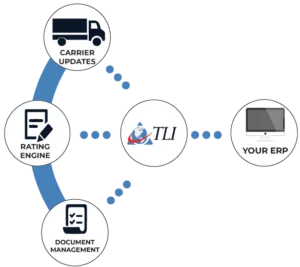
Raw shipment data is only useful if something runs against it. TLI’s proprietary rating engine, built into our ViewPoint TMS platform, is what turns your history into pricing leverage. Without a rating engine, carrier proposals are pricing guesses. With one, every proposal gets tested against your actual freight profile before you sign anything.
| Analysis | What It Reveals |
|---|---|
| Hundredweight break analysis | Flags shipments billed at the wrong weight tier and corrects pricing to the tier you actually qualify for. |
| Same-day / next-day load consolidation | Groups compatible shipments moving on similar dates and lanes into fewer, fuller loads. |
| Multi-stop FTL routing | Combines multiple destinations into a single truckload move instead of separate LTL shipments. |
| Class studies | Tests whether your freight is classified correctly and whether reclassification lowers your rate. |
| Density-based pricing | Prices freight by actual density instead of NMFC class alone, often cheaper for dense or oddly shaped freight. |
| Lane-specific pricing | Builds contracted rates around your highest-volume lanes instead of a single blanket rate. |
| Point-to-point pricing | Locks in a flat rate between two specific, high-frequency locations. |
| Pallet pricing | Prices by pallet count and configuration, useful for standardized LTL and partial truckload freight. |
These examples represent only a portion of the supply chain factors TLI analyzes. We use the findings to launch a carrier RFP built around your actual freight data, allowing carriers to price known volumes, lanes, and requirements instead of making assumptions. The result is a more accurate contract with tighter margins, fewer unexpected accessorials, and a transportation program designed specifically for your operation.
Frequently Asked Questions
Send origin ZIP, destination ZIP, weight, freight class, pallet count, lane, ship date, accessorials, and dimensions for as much shipment history as you have. One to four months gives the clearest picture.
Pull your shipment history from your TMS, ERP, or incumbent carrier, and send it to a 3PL with a rating engine. TLI runs that history through its own proprietary rating engine inside ViewPoint TMS before launching a carrier RFP, so pricing reflects your actual freight profile instead of a standard rate card.
A hundredweight break is a weight threshold where the per-hundred-pound rate drops. Shipments billed just under a break often qualify for the next tier’s lower rate. Analyzing your weight data catches these missed breaks, and advises where to put attention in negotiations.
Class-based pricing assigns a freight class based on shipment density (PCF), handling characteristics, stowability, and liability risk. Density-based pricing rates freight purely on weight relative to size. Dense freight often prices lower under a density-based model than under class alone.
Yes. TLI can set you up on ViewPoint TMS so future shipments capture data automatically. If a historical export isn’t available, TLI can build a data set from four weeks of invoices under an NDA, using a secure shared drive.
A broker managing your data should sign an NDA before receiving anything and store it in a secure, access-controlled system. TLI signs an NDA and uses a secure shared drive for any shipper sending historical invoices or shipment data.
Without a rating engine, every carrier proposal is essentially an educated guess. A rating engine tests proposed rates against your actual shipment history—including weight, density, lanes, shipment dates, and freight volume—to show exactly what the new pricing would have cost. That means you negotiate with hard data instead of assumptions, giving you measurable savings instead of estimated ones.
Carriers price in a margin cushion for whatever they can’t verify: inconsistent weight, unpredictable pickup windows, or unclear accessorial history. Sharing detailed, accurate shipment data removes the unknowns a carrier would otherwise price around resulting in better base rates.