
What Is Freight Contract Negotiation?
Freight contract negotiation is the process shippers use to define how transportation services will be priced, executed, and measured over a set period of time. It is not limited to agreeing on a rate per mile or per hundredweight. Instead, it establishes the full commercial framework that governs how freight moves through a carrier network.
A freight contract sets the rules for how a shipper and carrier work together. This includes base pricing, fuel surcharge formulas, accessorial charges, transit expectations, and claims responsibility. Freight contracts vary significantly by mode of transportation. For example smaller, LTL shipments may have linear feet based contracts, density based contracts along with custom fuel tables and accessorial structures. Shipping contracts also define operational requirements such as tender acceptance rates, capacity commitments, service level targets, and payment terms. Increasingly, contracts also need to include technology requirements like EDI integration, visibility tools, and reporting standards. Shippers delegate contract management to 3PLs because we are armed with the technological tools for scenario planning and actualized rating engines so the costs are optimized and transparent.
Why Freight Contracts Drive Total Cost
There is a large volume of misunderstanding about what goes into the freight costs. Freight cost is not determined by linehaul rates alone. In practice, accessorial fees, service failures, fuel, detention, and inefficient routing (particularly on multi-stops) often have a larger financial impact over time.
Because of this, strong negotiation focuses on total landed transportation cost, not just the initial bid rate. This is where many shippers lose savings when contracts look competitive on paper but fail under real operating conditions.
Most freight contract negotiations happen through structured sourcing events or RFP processes. Shippers begin by sending their historical shipment data to RFP experts. We then analyze the lane density, carrier performance, accessorial use, and market benchmarks. We then invite carriers to bid on specific lanes or networks. After evaluating pricing and service proposals, shippers determine the scenario they want to move forward with and award freight based on a mix of cost, reliability, coverage, and strategic alignment, not price alone.
Pillar 1: Data-Driven Transportation RFP Development
Generic request-for-proposal templates produce generic results. Strategic freight rate contracting starts with understanding your unique freight profile.
Essential data points for FTL contract management:
- Historical lane volumes by origin-destination pairs
- Seasonal fluctuations and weekly shipping patterns
- Average load weights, dimensions, and commodity types
- Current tender acceptance rates by carrier
- Accessorial frequency (detention, lumper fees, redelivery)
- Geographic capacity challenges and service requirements
For LTL contract management, analyze:
- Shipment density patterns and freight class distributions
- Weight break optimization opportunities
- ZIP code pair frequency for regional vs. national coverage
- Dimensional weight impact under new density based standards
- Guaranteed vs. standard service usage ratios
TLI integrated dimensionalizer technology that helps determine the PCF automatically for shippers over four years ago, preparing for density based freight class changes before competitors even recognized the need. This forward-thinking approach to transportation contract management separates reactive bidding from strategic planning.
Pillar 2: Custom Pricing Structures That Reflect Your Reality
One-size-fits-all pricing destroys value for both shippers and carriers. Effective freight contract optimization builds rate structures around your specific operational characteristics:
For Truckload Contracting:
- Base rates per mile with clear minimums
- Weight break tiers that match your typical load profiles
- Fuel surcharge formulas tied to transparent indices
- Accessorial schedules with pre-negotiated rates (not percentage markups)
- Specialty service pricing for temperature control, hazmat, or high-value freight
For LTL Contracting:
- Discount off class-based pricing or CWT-based alternatives
- Guaranteed service premiums clearly defined
- Residential delivery, liftgate, and limited access fees
- Minimum charge structures that prevent quote-to-invoice variance
- Dimensional pricing rules aligned with carrier systems
Pillar 3: Volume Commitments and Carrier Alignment
Carriers price based on expected volume. If you can’t commit to lane density, expect higher rates. Strategic managed freight contracts establish realistic volume forecasts that carriers can build into their network planning.
This means:
- Sharing 12-month rolling forecasts by lane
- Communicating seasonal fluctuations proactively
- Establishing primary and secondary carrier assignments
- Creating backup capacity tiers for unexpected surges
- Rewarding carrier performance with volume stability
“In the auction stage, a carrier only bids for the shipping lanes that are operated by the carrier. Basically, a bid conveys the shipping rates and the capacities of a carrier on shipping lanes.” (Hu, Zhang, & Lim, 2016)
When carriers see volume consistency and transparent communication, they compete more aggressively for your contracted freight rates because the business becomes predictable and profitable for them. It is critical that shippers deliver on their volume commitments and do not dilute their buying power across too many motor carriers.
Pillar 4: Technology Integration for Seamless Execution
The best freight contract negotiation in the world fails without proper execution. Shipping technology bridges the gap between contracted rates and daily operations.
Critical technology requirements:
- Automated load tendering based on routing guides
- Real-time tracking and exception management
- Invoice audit systems that catch accessorial errors
- Performance dashboards showing carrier KPIs
- Rate benchmarking tools for continuous optimization
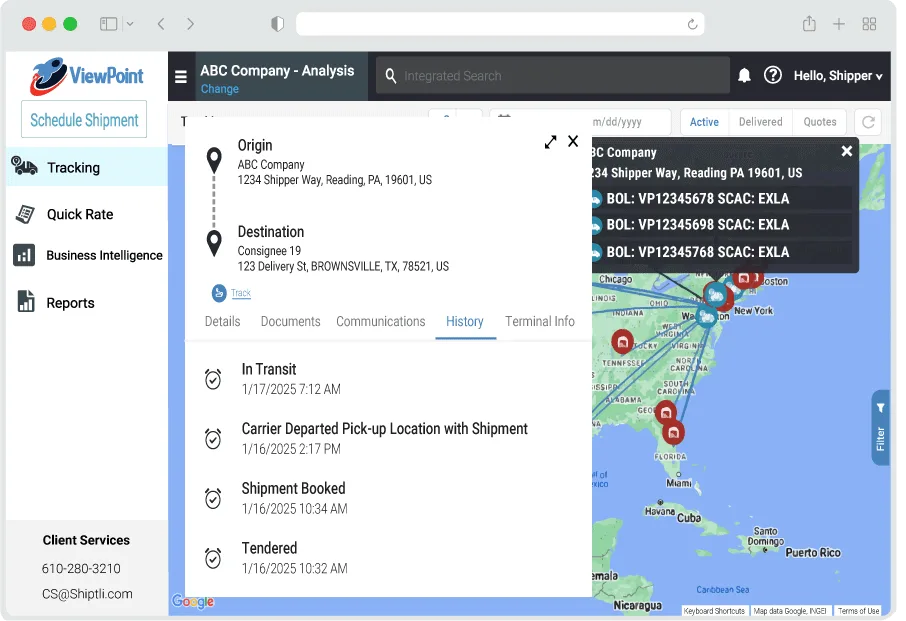
TLI invested over $2.4 million developing ViewPoint TMS, creating technology that doesn’t just track shipments but actively optimizes routing, audits invoices, and provides the data shippers need for informed freight contract management decisions.
Pillar 5: Relationship Management Beyond Procurement
Procurement teams typically engage carriers once or twice per year during bid events. Strategic transportation contract management requires ongoing dialogue.
Key relationship touchpoints:
- Quarterly business reviews with primary carriers
- Monthly performance scorecards with actionable feedback
- Real-time communication during service disruptions
- Joint process improvement initiatives
- Recognition programs for exceptional performance
TLI returned over $600,000 in freight invoice audit recoveries to customers in 2025 alone, demonstrating how active contract management uncovers savings that passive relationships miss entirely.
Pillar 6: Continuous Market Intelligence and Rate Validation
Freight markets change constantly. What represented a competitive rate six months ago might be above-market today, or a bargain during tight capacity. Freight contract negotiation directly impacts supply chain stability. Poorly structured contracts can lead to capacity shortages, inconsistent service, and higher long term transportation spend. Effective freight contract optimization requires continuous market validation.
Monitor these indicators:
- DAT and Freightwaves rate indices for spot market trends
- Carrier financial health and service quality reports
- Fuel price movements and surcharge index accuracy
- Industry capacity reports and economic forecasts
- Competitive bid results from parallel lanes
This intelligence informs when to execute mid-contract renegotiations, when to add carriers, and when current contracted freight rates position you favorably against market rates. Well structured contracts improve tender acceptance, reduce operational friction, and create predictable cost behavior across transportation networks.
Hu, Q., Zhang, Z., & Lim, A. (2016). Transportation service procurement problem with transit time. Transportation Research Part B: Methodological, 86, 19–36. https://www.sciencedirect.com/science/article/abs/pii/S0191261516000163